Tomato Burrata Salad: A Fresh and Creamy Summer Favorite
Tomato Burrata Salad is one of those dishes that proves simple ingredients can create something spectacular. Juicy summer tomatoes, luxuriously creamy burrata cheese, fragrant basil, fruity extra virgin olive oil, and a touch of balsamic come together in a salad that looks elegant enough for entertaining but requires almost no cooking.
At its best, a tomato burrata salad is all about contrast. The tomatoes should be ripe, juicy, and slightly acidic, while the burrata is mild, rich, and incredibly creamy. Fresh basil introduces an aromatic note, and flaky salt wakes up every ingredient on the plate. A drizzle of balsamic glaze provides just enough sweetness and acidity to tie everything together.
This easy burrata salad recipe is particularly useful during summer, when tomatoes are naturally sweet and flavorful. It can be served as a light lunch, an appetizer before dinner, a colorful side dish at a barbecue, or part of a larger Mediterranean-inspired spread.
Best of all, there is no oven to preheat and virtually no cooking involved. With good ingredients and a few minutes of preparation, Tomato Burrata Salad can be on the table in about 15 minutes.
What Is Burrata?
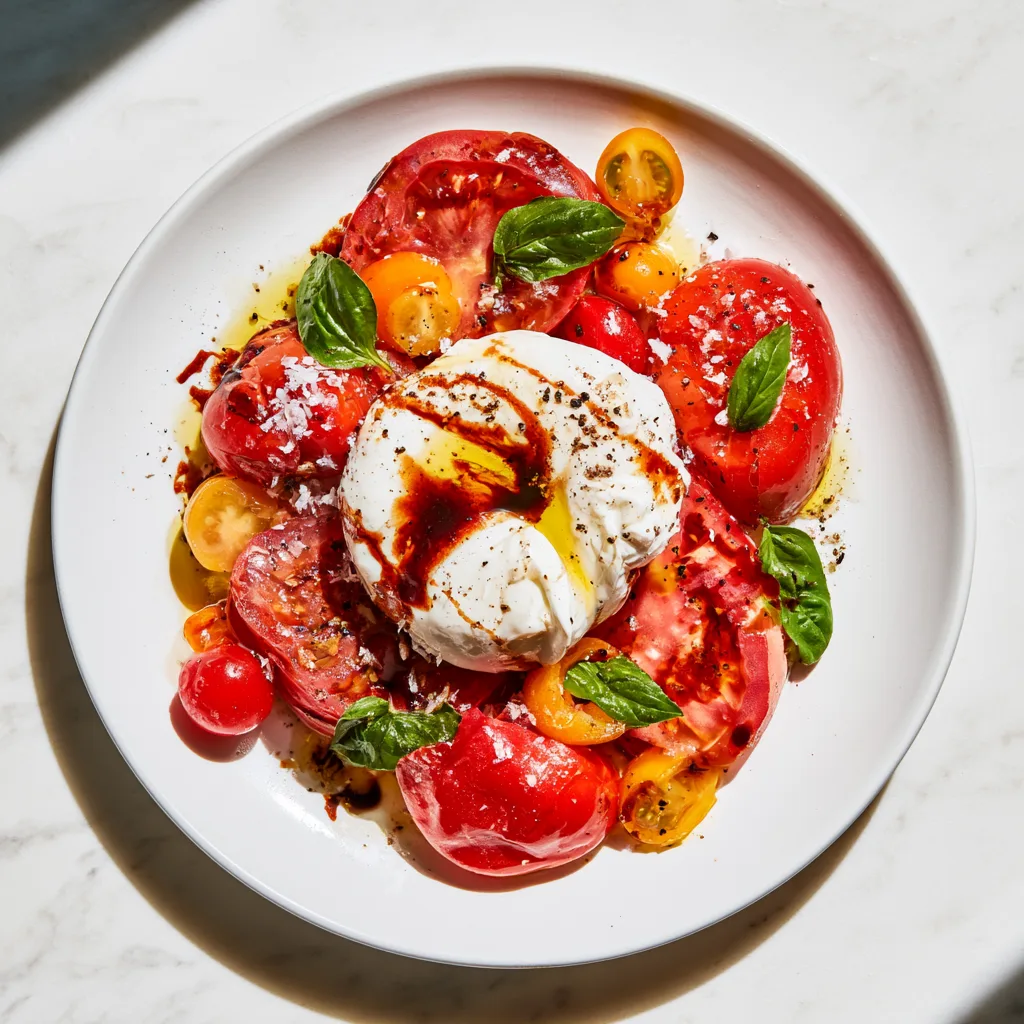
Burrata is an Italian cheese traditionally made from cow’s milk, although versions made with buffalo milk are also available. From the outside, it resembles a smooth ball of fresh mozzarella. Cutting into it reveals what makes burrata special: a soft center filled with stracciatella, a mixture of shredded cheese curds and cream.
That creamy interior gives burrata its distinctive texture.
Mozzarella is relatively firm and sliceable throughout, while burrata has a delicate exterior surrounding an almost spoonable center. Once opened over tomatoes, the creamy filling spreads across the plate and mingles with tomato juices and olive oil.
That is exactly why tomato and burrata salad works so beautifully. Each tomato becomes coated with a little creamy cheese and seasoned oil without requiring a separate heavy dressing.
Why Tomato Burrata Salad Works So Well
A successful salad needs more than ingredients placed together on a plate. The flavors and textures need to balance each other.
Ripe tomatoes bring sweetness, acidity, and plenty of juice. Burrata contributes richness and a cooling creaminess. Basil adds freshness, while extra virgin olive oil contributes a fruity, slightly peppery flavor.
Balsamic glaze brings concentrated sweet-tart character, but only a small amount is necessary. Too much can overpower the tomatoes and burrata.
Finally, flaky salt and black pepper provide seasoning and subtle texture.
The result is a summer tomato salad that tastes rich without becoming heavy.
Ingredients
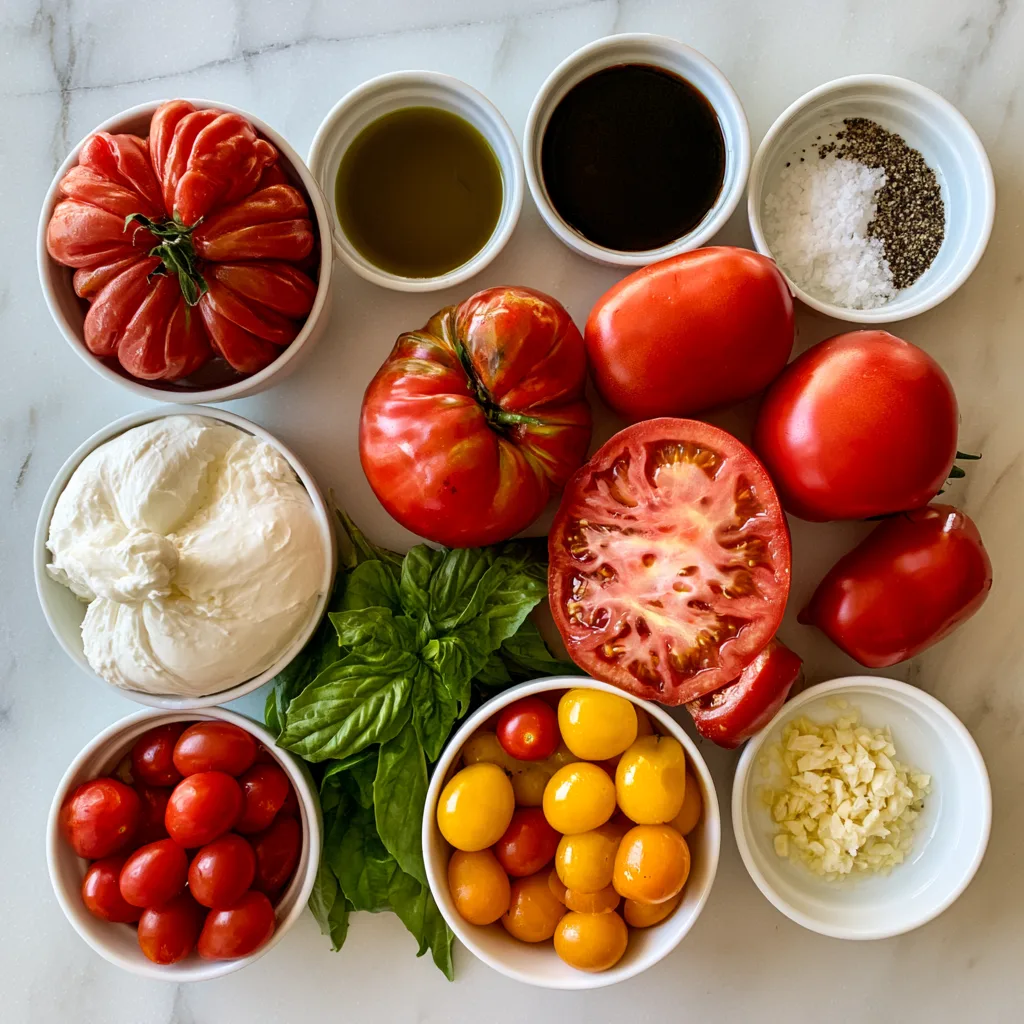
The ingredient list is deliberately short, making ingredient quality especially important.
- 2 large ripe heirloom tomatoes
- 1 1/2 cups cherry tomatoes, preferably mixed colors
- 8 ounces fresh burrata cheese
- 1/4 cup fresh basil leaves
- 2 tablespoons extra virgin olive oil
- 1 tablespoon balsamic glaze
- 1 small garlic clove, finely minced or grated
- 1/2 teaspoon flaky sea salt, plus more to taste
- 1/4 teaspoon freshly cracked black pepper
- Optional: crusty bread for serving
Choosing the Best Tomatoes
Tomatoes are the foundation of an heirloom tomato burrata salad, so choose the ripest ones available.
A ripe tomato should feel heavy for its size and have a noticeable tomato aroma near the stem. It should give slightly under gentle pressure without feeling mushy.
Heirloom tomatoes are particularly attractive because their different shapes, colors, and flavors create a visually impressive salad. Red, orange, yellow, green, or purple varieties can all be combined.
Cherry tomatoes add another texture and concentrated sweetness. Halving some while leaving smaller ones whole gives the finished salad a more natural appearance.
If heirloom tomatoes are unavailable, ripe vine tomatoes, beefsteak tomatoes, or Roma tomatoes can also work.
Instructions
- Prepare the tomatoes. Wash and dry all tomatoes thoroughly. Cut the large tomatoes into approximately 1/4-inch-thick slices or irregular wedges. Halve the cherry tomatoes.
- Season the tomatoes. Arrange the tomatoes on a large serving plate or shallow platter. Sprinkle lightly with flaky sea salt and allow them to stand for about 5 minutes. This draws out some of their flavorful juices.
- Prepare the dressing. In a small bowl, combine the extra virgin olive oil with the finely minced or grated garlic. Let it sit briefly while the tomatoes rest.
- Add the burrata. Drain the burrata carefully and pat away excess liquid with a clean paper towel if necessary. Place the whole burrata ball in the center of the tomatoes.
- Add basil. Scatter fresh basil leaves around the tomatoes and burrata. Small leaves can remain whole; larger leaves can be gently torn by hand.
- Dress the salad. Drizzle the garlic-infused olive oil evenly over the tomatoes and burrata. Follow with a light drizzle of balsamic glaze.
- Season. Finish with freshly cracked black pepper and additional flaky sea salt according to taste.
- Serve immediately. For the most appealing presentation, bring the salad to the table with the burrata intact and cut it open immediately before serving so its creamy center spills naturally onto the tomatoes.
The Secret to Better Tomato Flavor
One of the easiest ways to improve fresh tomato salad is also one of the simplest: season the tomatoes before assembling everything else.
Salt does more than make tomatoes taste salty. It draws moisture toward the surface, creating a naturally flavorful tomato liquid.
When this liquid combines with olive oil, burrata cream, and balsamic glaze, it essentially becomes part of the dressing.
Allowing salted tomatoes to rest for just five minutes can therefore noticeably improve the final salad.
Avoid letting them sit for too long, however, because heavily salted tomatoes eventually release enough moisture to become soft.
Should Burrata Be Served Cold?
Burrata should be stored refrigerated for food safety, but its flavor and texture are often best when it is not refrigerator-cold at serving time.
Remove the burrata from the refrigerator about 15 to 20 minutes before assembling the salad. This allows the cheese to lose some of its chill while you prepare the tomatoes.
Extremely cold burrata can taste muted and its center may seem firmer. Slightly tempered burrata has a silkier consistency and fuller dairy flavor.
Do not leave fresh burrata sitting at room temperature for extended periods.
Tips for the Best Burrata Salad Recipe
Use room-temperature tomatoes
Refrigeration can dull the flavor and aroma of fresh tomatoes. Whenever possible, use tomatoes stored at room temperature.
Choose good extra virgin olive oil
Because the olive oil is used raw, its flavor remains noticeable. A fruity extra virgin olive oil with a mildly peppery finish complements both tomatoes and cheese.
Don’t drown the salad in balsamic
Balsamic glaze is concentrated. A thin drizzle provides sweetness and acidity without turning the salad into a balsamic-flavored dish.
Add basil at the end
Fresh basil can bruise and darken when handled excessively. Tear large leaves gently rather than chopping them far in advance.
Season in layers
Seasoning the tomatoes first and adding another small pinch of salt at the end produces more balanced flavor than dumping all the salt over the finished plate.
Tomato Burrata Salad Variations
The classic combination is delicious on its own, but the basic recipe can easily be adapted.
Peach and Burrata Salad
Add sliced ripe peaches or nectarines to the tomatoes. Their sweetness pairs beautifully with creamy burrata and basil.
Prosciutto Burrata Salad
Arrange thin ribbons of prosciutto around the tomatoes for a salty, savory addition. This variation works particularly well as part of an appetizer platter.
Arugula Tomato Burrata Salad
Place a handful of baby arugula underneath the tomatoes. Its peppery flavor adds another layer of freshness while turning the dish into a more substantial green salad.
Pesto Burrata Salad
Replace the balsamic glaze with several spoonfuls of fresh basil pesto. Thin the pesto with a little olive oil so it can be drizzled easily.
Spicy Tomato Burrata Salad
Add crushed red pepper flakes or a small amount of chili oil for gentle heat.
Lemon Burrata Salad
Skip the balsamic and finish the salad with fresh lemon zest and a squeeze of lemon juice. This version is particularly bright and refreshing.
What to Serve With Tomato Burrata Salad
A fresh tomato and burrata salad works beautifully as either an appetizer or side dish.
Crusty bread is perhaps the best accompaniment because it can absorb the mixture of tomato juice, olive oil, balsamic, and creamy burrata left on the plate.
Grilled sourdough, toasted ciabatta, focaccia, or a sliced baguette all work well.
For a complete summer dinner, serve the salad alongside grilled chicken, steak, shrimp, salmon, or grilled vegetables. It also pairs naturally with pasta dishes and Italian-inspired meals.
For entertaining, place Tomato Burrata Salad alongside olives, roasted peppers, bread, marinated vegetables, and other antipasto-style dishes.
Turning It Into a Light Meal
Although Tomato Burrata Salad makes an excellent appetizer, it can easily become lunch or a light dinner.
Serve a generous portion with grilled bread and add greens such as arugula. For additional protein, include grilled chicken, shrimp, chickpeas, or thinly sliced prosciutto.
Another option is to spoon the tomatoes and burrata over toasted sourdough. The bread absorbs the juices while providing enough structure to make the salad more filling.
Can Tomato Burrata Salad Be Made Ahead?
This salad is best assembled shortly before serving.
The individual ingredients, however, can be prepared ahead to save time.
Tomatoes can be washed and dried earlier in the day, while the garlic and olive oil can be mixed in advance and refrigerated. Basil should remain whole until serving, and the burrata should stay refrigerated in its original liquid until needed.
Slice the tomatoes shortly before serving for the freshest texture.
Once fully assembled, the salad will gradually become watery because salted tomatoes release juice and burrata releases moisture. This is delicious when eaten immediately with bread but less attractive after several hours.
Storing Leftovers
If leftovers are unavoidable, transfer them to an airtight container and refrigerate promptly.
Eat the salad within one day for the best quality. The tomatoes will soften considerably in the refrigerator, and the burrata will no longer have quite the same luxurious texture.
Rather than serving leftovers as a composed salad, consider turning them into something new. Spoon the tomato and burrata mixture over toasted bread, toss it with freshly cooked pasta, or add it to a sandwich.
Burrata vs. Mozzarella in Tomato Salad
Fresh mozzarella and burrata can both be paired successfully with tomatoes, but they create different experiences.
Mozzarella has a mild dairy flavor and springy texture that holds its shape after slicing. It is ideal for classic Caprese salad.
Burrata is considerably creamier. Cutting the cheese releases its rich center, creating a sauce-like coating over the tomatoes.
For a salad intended to feel especially luxurious while remaining simple, burrata is difficult to beat.
A Beautiful Salad for Summer Entertaining
Presentation is one reason Tomato Burrata Salad works so well for entertaining.
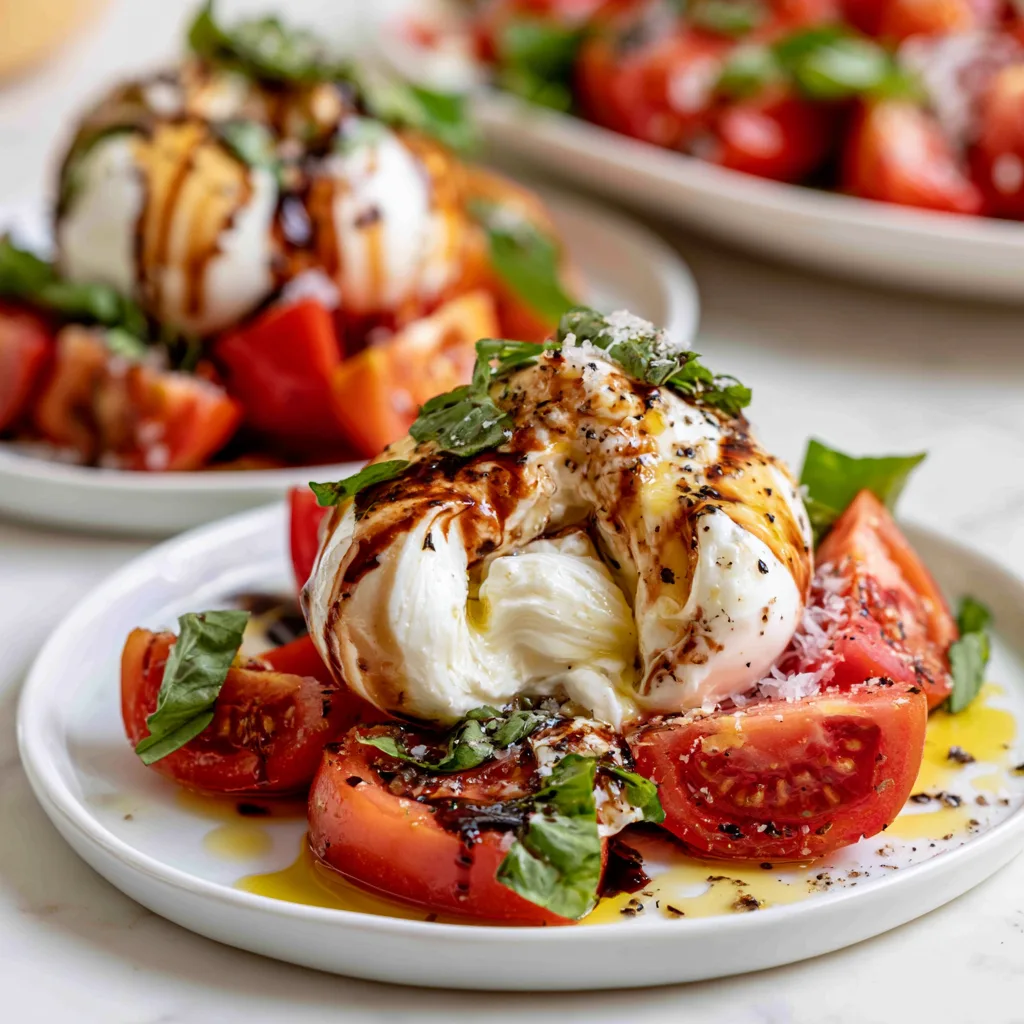
Rather than mixing everything in a bowl, arrange the ingredients on a broad white platter. Alternate large tomato slices with clusters of cherry tomatoes, leaving some open space so the composition does not feel crowded.
Place the burrata near the center and scatter basil naturally around it.
Finish with olive oil, balsamic glaze, flaky salt, and black pepper immediately before bringing it to the table.
Keeping the burrata whole until serving creates a dramatic moment when it is cut open and its creamy center spills across the tomatoes.
Common Mistakes to Avoid
Using underripe tomatoes is the biggest problem. Burrata is deliberately mild, so it depends on sweet, flavorful tomatoes for contrast.
Another common mistake is adding too many ingredients. Garlic, balsamic, herbs, and seasonings should enhance the tomatoes and cheese rather than compete with them.
Avoid using excessive balsamic glaze. Its concentrated sweetness can quickly dominate delicate burrata.
Finally, don’t assemble the salad hours ahead. Freshness is central to the appeal of this dish.
Frequently Asked Questions
Can I use mozzarella instead of burrata?
Yes. Fresh mozzarella is the closest substitute, although the salad will not have burrata’s creamy center.
Do I need balsamic glaze?
No. Excellent tomatoes, burrata, olive oil, basil, salt, and pepper are enough for a delicious salad. Balsamic glaze is an optional sweet-tart accent.
Can I use regular balsamic vinegar?
Yes, but use it sparingly because regular balsamic vinegar is thinner and more acidic than balsamic glaze.
What tomatoes are best?
Ripe heirloom tomatoes are excellent, particularly when mixed with cherry tomatoes. The most important factor is ripeness rather than a specific variety.
Should burrata be sliced before serving?
It can be, but leaving it whole creates a more striking presentation. Cut into the burrata at the table or immediately before serving.
Final Thoughts
Tomato Burrata Salad captures everything that makes summer cooking appealing: fresh ingredients, bold natural flavors, minimal preparation, and a beautiful presentation.
The combination of ripe tomatoes and creamy burrata needs very little help. Good olive oil, basil, flaky salt, black pepper, and a restrained drizzle of balsamic provide enough seasoning while allowing the two main ingredients to remain the focus.
Whether served as an appetizer for a summer dinner party, a side dish for grilled food, or a simple lunch with crusty bread, this heirloom tomato burrata salad delivers impressive flavor in about 15 minutes.
When tomatoes are at their seasonal peak, there may be no better reason to keep dinner simple.
Tomato Burrata Salad
Ingredients
Equipment
Method
- Wash and dry the tomatoes. Slice the heirloom tomatoes into approximately 1/4-inch slices or wedges and halve the cherry tomatoes.
- Arrange the tomatoes across a large serving plate. Sprinkle lightly with flaky sea salt and allow them to rest for about 5 minutes.
- Combine the extra virgin olive oil and finely minced or grated garlic in a small bowl.
- Drain the burrata and gently pat away excess liquid if necessary. Place the whole burrata in the center of the tomatoes.
- Scatter fresh basil leaves around the tomatoes and burrata, gently tearing larger leaves if desired.
- Drizzle the garlic-infused olive oil over the tomatoes and burrata, followed by the balsamic glaze.
- Finish with freshly cracked black pepper and additional flaky sea salt to taste.
- Serve immediately with crusty bread if desired. Cut the burrata open just before serving so the creamy center spreads over the seasoned tomatoes.