Julia Child’s Paella a l’Americaine: Chicken and Seafood Paella
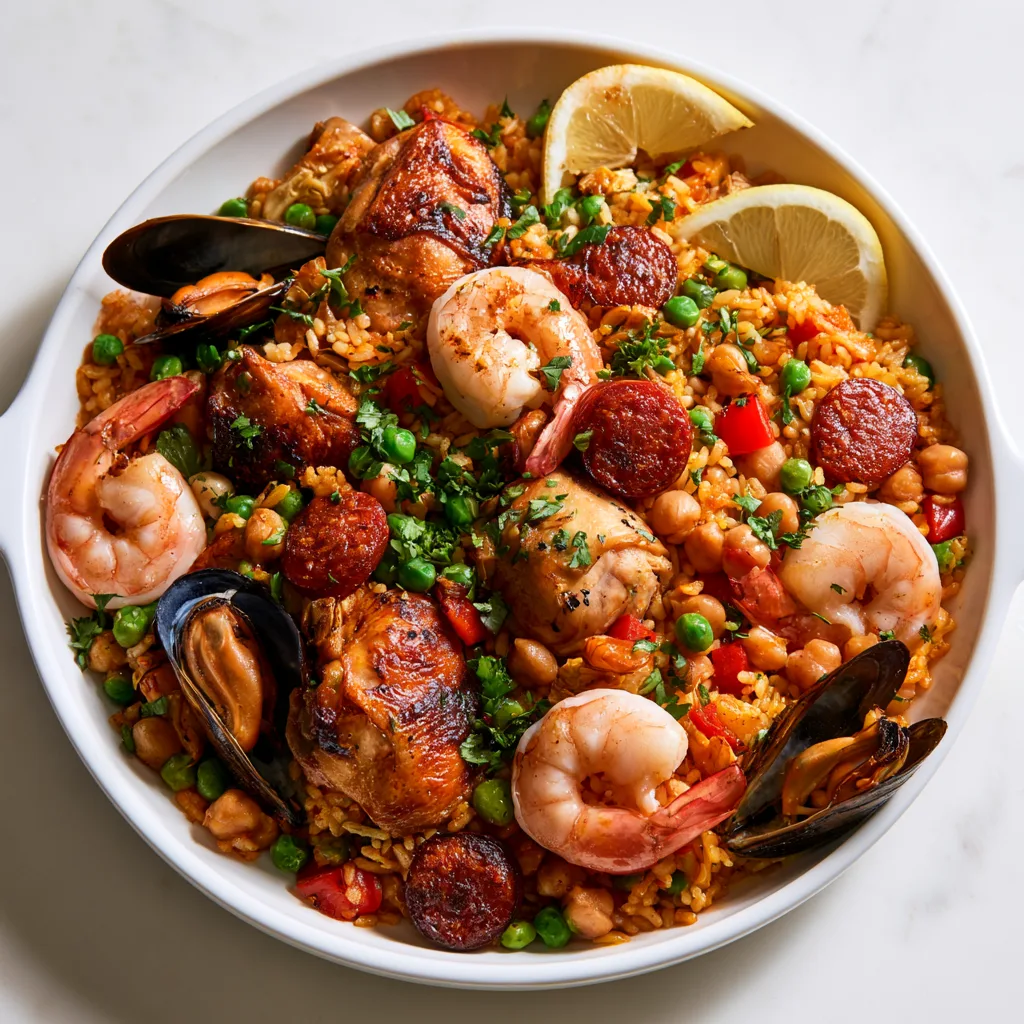
Julia Child’s Paella a l’Americaine is the kind of dinner that transforms an ordinary table into a centerpiece-worthy feast. Golden saffron rice forms the base, while browned chicken, savory chorizo, smoky bacon, tender shrimp, mussels, colorful vegetables, chickpeas, and fresh lemon create layer after layer of flavor.
This FoodieMoms version is an original adaptation inspired by the American-style paella associated with Julia Child rather than a reproduction of published cookbook instructions. It keeps the generous, abundant character of the dish while presenting the preparation in a practical format for modern home kitchens.
Unlike minimalist paellas centered on only one or two proteins, this American-style paella is deliberately lavish. Chicken provides hearty substance, chorizo brings spice, bacon adds smoky richness, shrimp contribute sweetness, and mussels give the rice unmistakable seafood character. Saffron, paprika, garlic, tomatoes, herbs, and wine tie everything together.
The result is especially suited to Sunday dinners, family celebrations, holiday gatherings, dinner parties, or any occasion when one impressive pan needs to feed several hungry people.
Julia Child became famous in part for translating ambitious European cooking techniques into instructions American home cooks could confidently follow. Her work emphasized careful testing, precise directions, and helping cooks understand what should happen at each stage rather than merely providing ingredient lists. That philosophy makes paella a particularly fitting dish to revisit: it looks elaborate, but success comes mostly from organization, timing, and understanding the rice.
What Is Paella a l’Americaine?
Paella is traditionally associated with Spain, particularly Valencia, but the dish has developed countless regional and international interpretations. Its defining feature is not simply the seafood often pictured in restaurant versions. Rice, the cooking vessel, seasoning, broth, and the way the grains absorb flavor are equally important.
The version known as Paella a l’Americaine takes a generous mixed-protein approach. Published descriptions of Julia Child-inspired versions commonly combine chicken, sausage, bacon, shrimp, mussels, saffron rice, tomatoes, peppers, peas, chickpeas, garlic, and herbs.
That abundance is exactly what makes the dish so inviting. Instead of preparing separate chicken, seafood, vegetable, and rice courses, nearly everything comes together in a single large pan.
Every spoonful tastes slightly different. One bite may contain smoky chorizo and tomato. Another may bring saffron rice with shrimp and lemon. Pieces near the bottom can develop a deeply toasted flavor, while rice surrounding the chicken absorbs its savory juices.
Why You’ll Love This Chicken and Seafood Paella
There are many reasons this chicken and seafood paella deserves a place in a special-occasion recipe collection.
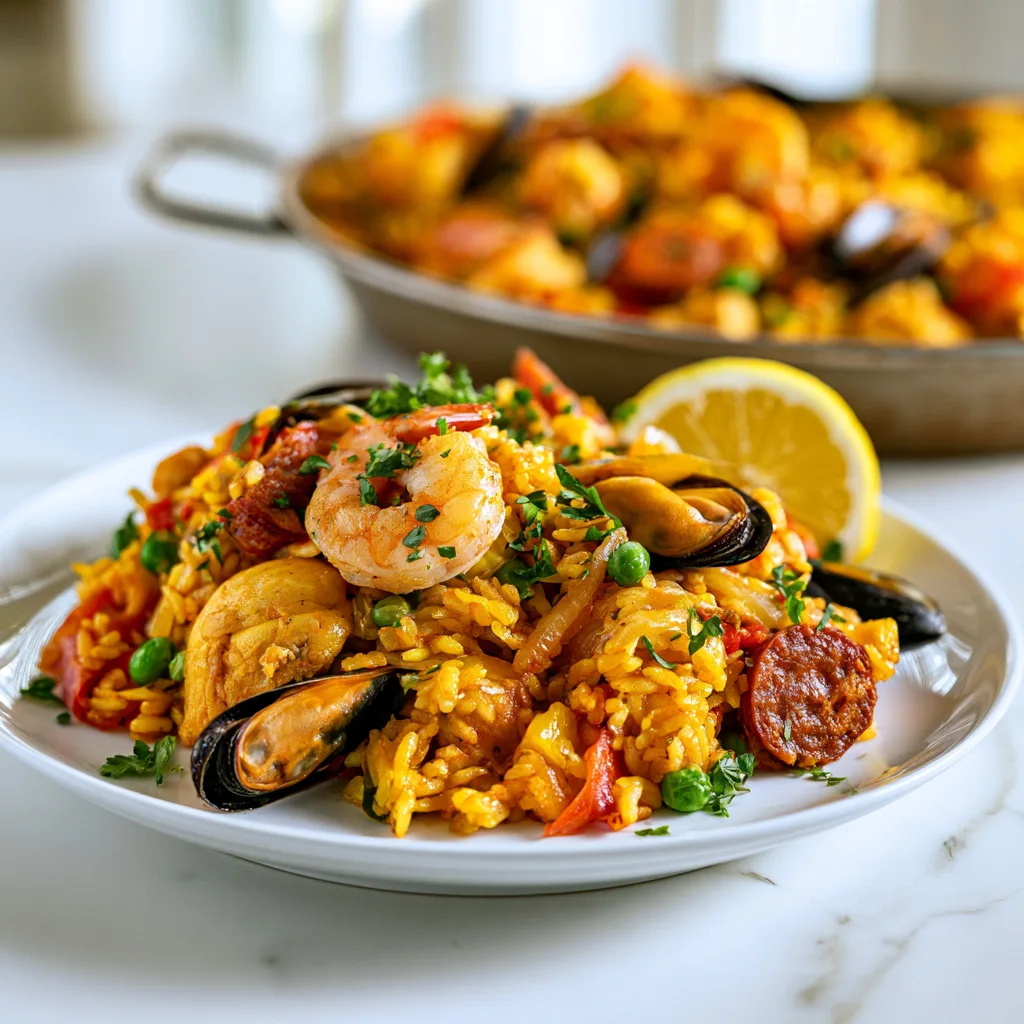
First, it is visually spectacular. Golden rice surrounded by pink shrimp, dark mussel shells, browned chicken, bright peas, red peppers, herbs, and lemon naturally creates a dramatic presentation.
Second, it feeds a crowd without requiring numerous side dishes. A wide pan of paella can provide protein, grains, vegetables, and seafood in one complete meal.
Third, much of the preparation can be organized before cooking. Vegetables can be chopped, seafood cleaned, chicken seasoned, stock measured, and spices assembled ahead of time.
Finally, the recipe is flexible. Mussels can be exchanged for clams, the amount of seafood can be increased, and different cuts of chicken can be used while keeping the same basic cooking method.
Ingredients
For the Paella
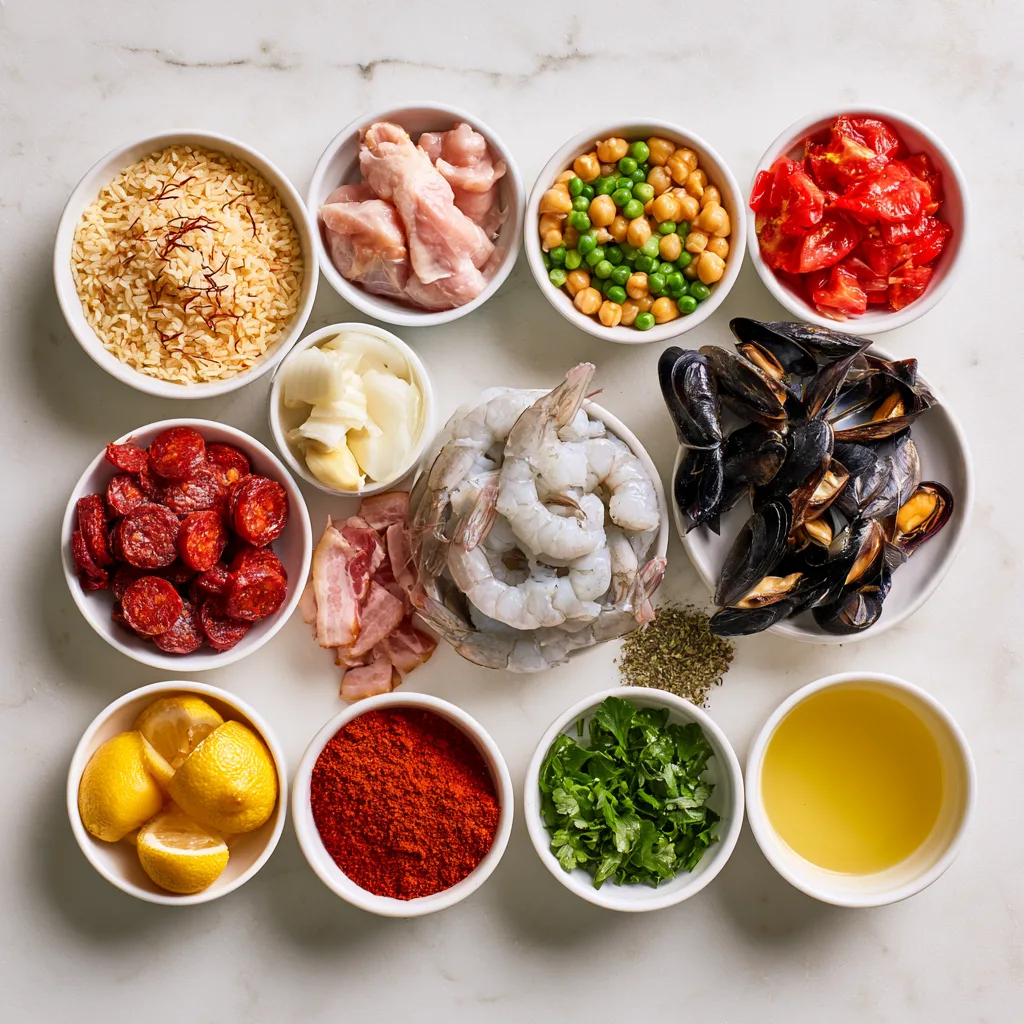
- 4 ounces thick-cut bacon, cut into small strips
- 12 ounces fresh chorizo sausage, casings removed and broken into chunks
- 2 pounds bone-in chicken thighs and drumsticks, patted dry
- 1 teaspoon kosher salt, plus more as needed
- 1/2 teaspoon freshly ground black pepper
- 1 tablespoon olive oil, if needed
- 1 medium yellow onion, finely chopped
- 1 red bell pepper, thinly sliced
- 4 garlic cloves, minced
- 3 Roma tomatoes, seeded and chopped
- 1 teaspoon sweet paprika
- 1/2 teaspoon dried thyme
- 1/2 teaspoon dried oregano
- 1/4 teaspoon ground coriander
- 1 bay leaf
- 1/2 cup dry white wine
- 4 1/2 cups low-sodium chicken stock
- 1/2 teaspoon saffron threads, lightly crushed
- 2 cups short-grain rice such as bomba or Arborio, not rinsed
- 1 cup canned chickpeas, drained and rinsed
- 1 pound large shrimp, peeled and deveined
- 1 1/2 pounds fresh mussels, scrubbed and debearded
- 1 cup frozen green peas, thawed
- 1 tablespoon fresh lemon juice
- 1/4 cup chopped fresh parsley
- 2 lemons, cut into wedges
Why Saffron Matters
Saffron is one of the most recognizable ingredients in a classic saffron rice recipe. Even a small quantity contributes a distinctive floral aroma, subtle earthy character, and beautiful golden color.
Because saffron is potent, more is not necessarily better. About half a teaspoon is enough for a large pan.
Adding the saffron to warm stock before the stock reaches the rice helps distribute its flavor and color throughout the dish instead of leaving concentrated patches.
If possible, use actual saffron threads rather than powdered substitutes. The flavor is difficult to duplicate with another spice.
Choosing the Right Rice
Rice is the structural foundation of paella.
Spanish bomba rice is an excellent choice because it absorbs substantial liquid while maintaining individual grains. Arborio is more commonly associated with risotto, but it can work well when bomba rice is unavailable.
The most important difference between paella and risotto is the handling.
Risotto is deliberately stirred to release starch and produce creaminess. Paella should not be continuously stirred once the stock has been incorporated. You want defined grains rather than a creamy consistency.
Do not rinse the rice for this recipe. The rice goes directly into the flavorful tomato and spice mixture before the stock is added.
Instructions
1. Infuse the Stock
Place the chicken stock in a medium saucepan and warm it over low heat.
Stir in the saffron threads and allow them to infuse while the other ingredients cook. Keep the stock hot but do not let it boil aggressively.
Warm stock helps the rice begin cooking immediately once the liquid reaches the pan.
2. Render the Bacon
Set a 15-inch paella pan or very wide oven-safe skillet over medium heat.
Add the bacon and cook until some of its fat has rendered and the pieces are lightly crisp.
Remove the bacon with a slotted spoon and place it on a plate.
Leave the flavorful drippings in the pan.
3. Brown the Chorizo
Add the chorizo to the bacon fat.
Cook for about 3 to 4 minutes, turning the pieces so they brown on several sides.
Transfer the chorizo to the plate with the bacon.
The goal is not to cook the sausage completely at this stage. Browning builds flavor while the sausage finishes later with the rice.
4. Brown the Chicken
Season the chicken with salt and black pepper.
Add a little olive oil to the pan if there is not enough rendered fat remaining.
Arrange the chicken in the hot pan without overcrowding and brown it thoroughly, approximately 8 to 10 minutes total.
Transfer the chicken to another plate.
It will not necessarily be fully cooked yet.
5. Build the Vegetable Base
Add the onion and red bell pepper to the same pan.
Cook for about 5 minutes until the onion begins to soften.
Add the garlic, tomatoes, paprika, thyme, oregano, coriander, and bay leaf.
Cook for another 2 minutes, stirring occasionally.
The tomatoes should begin breaking down into a thick, aromatic mixture that coats the bottom of the pan.
6. Deglaze With Wine
Pour in the dry white wine.
Use a wooden spoon to gently scrape the browned chicken, sausage, and bacon bits from the bottom of the pan.
Allow the wine to simmer for 2 to 3 minutes.
This step pulls concentrated flavor back into the finished one-pan paella instead of leaving it stuck to the cookware.
7. Add the Rice
Stir the short-grain rice and chickpeas into the seasoned tomato mixture.
Cook for about 1 minute, turning the grains so they become lightly coated.
Pour in the hot saffron-infused stock.
Stir once to distribute the rice evenly across the pan.
From this point forward, avoid frequent stirring.
8. Return the Meats
Nestle the browned chicken into the rice.
Scatter the chorizo and bacon throughout the pan.
Bring the liquid to a steady simmer and reduce the heat to medium-low.
Cook uncovered for about 18 minutes.
Rotate the pan occasionally if your stovetop heats unevenly, but avoid stirring the rice.
9. Add Shrimp and Mussels
Arrange the shrimp and mussels over the surface.
Press the mussels lightly into the rice with their hinged sides downward where possible.
Cover the pan loosely with foil.
Cook approximately 8 to 10 minutes, or until the shrimp are opaque, the mussels have opened, and the chicken reaches an internal temperature of 165°F (74°C).
Discard any mussels that remain closed after cooking.
10. Finish With Peas and Lemon
Scatter the thawed peas over the top.
Cook for another 2 minutes.
Remove the pan from the heat and drizzle the paella with fresh lemon juice.
Allow it to rest for 5 to 10 minutes.
Sprinkle generously with parsley and arrange lemon wedges around the pan before serving.
The Secret to a Flavorful Paella Bottom
One of the pleasures associated with paella is the deeply toasted layer that can develop where the rice meets the pan.
This does not mean burning the rice.
Near the end of cooking, listen carefully. Once most liquid has disappeared, you may hear a gentle crackling sound from the bottom. That indicates the rice is beginning to toast.
If you smell burning, immediately reduce or remove the heat.
A wide metal paella pan makes this effect easier to achieve because the rice sits in a shallow layer.
Tips for the Best Julia Child’s Paella a l’Americaine
Use the widest pan available. A shallow layer of rice cooks more evenly than a deep pot full of rice and toppings.
Prepare everything first. Once the browning starts, the recipe moves steadily. Clean the seafood, chop the vegetables, measure the wine, prepare the stock, and organize the spices before heating the pan.
Pat the chicken dry. Wet chicken steams rather than browns.
Keep the stock hot. Adding cold stock suddenly drops the cooking temperature.
Do not constantly stir the rice. A few early movements are fine, but continual stirring works against the texture associated with paella.
Add seafood late. Shrimp and mussels cook considerably faster than chicken.
Rest before serving. Five to ten minutes gives remaining moisture time to settle into the rice.
Serve directly from the pan. Paella is at its most dramatic when guests can see the entire colorful arrangement.
Recipe Variations
Clam and Shrimp Paella
Replace the mussels with scrubbed littleneck clams. Their briny juices blend beautifully with the saffron stock.
Extra Seafood Version
Add cleaned squid rings during the final phase of cooking or include a few lobster tails for a more elaborate celebration meal.
Chicken-Forward Version
For guests who prefer less seafood, reduce the mussels and shrimp and add extra chicken thighs.
Spicier Paella
Use a hot fresh chorizo or add a small pinch of crushed red pepper to the tomato mixture.
No-Wine Variation
Replace the white wine with additional chicken stock and finish with a little extra lemon juice for acidity.
What to Serve With Paella a l’Americaine
Because this dish is substantial, simple accompaniments work best.
A crisp green salad dressed with lemon vinaigrette provides a refreshing contrast to the rich rice and meat.
Roasted asparagus, green beans, or lightly charred vegetables are excellent options when extra vegetables are desired.
Crusty bread can also be served for soaking up the flavorful juices around the seafood.
For entertaining, put the paella pan in the center of the table with a bowl of lemon wedges and a large serving spoon.
The presentation needs very little decoration.
Can Paella Be Made Ahead?
Paella tastes best shortly after cooking because the rice and seafood are at their ideal texture.
However, much of the preparation can be completed in advance.
The vegetables may be chopped several hours ahead. Chicken can be seasoned and refrigerated. Mussels can be cleaned shortly before cooking, and the stock and seasonings can be measured.
For a dinner party, completing all preparation before guests arrive makes the final cooking process considerably easier.
Avoid cooking the entire dish hours in advance and repeatedly reheating it. Shrimp can become rubbery and rice may lose its characteristic texture.
How to Store Leftovers
Transfer leftovers to airtight containers within two hours of cooking.
Refrigerate for up to 2 days when seafood is included.
Reheat individual portions thoroughly in a skillet or microwave. Adding a tablespoon or two of stock can prevent the rice from becoming overly dry.
Only reheat the amount you plan to eat.
Freezing is possible, but seafood texture can suffer after thawing, so freshly prepared paella is preferable.
A Celebratory One-Pan Dinner
What makes Julia Child’s Paella a l’Americaine memorable is not one single ingredient but the way contrasting ingredients meet in the same pan.
There is the smokiness of bacon, the spice of chorizo, the savory richness of chicken, the sweetness of shrimp, the ocean flavor of mussels, the fragrance of saffron, and the brightness of lemon.
Tomatoes and wine give the rice depth. Chickpeas make it more substantial. Peas and peppers add sweetness and color. Garlic and herbs run quietly underneath everything.
It is unapologetically generous food.
And although the finished paella looks elaborate, the method follows a logical progression: brown the meats, build the aromatic base, deglaze, add rice and stock, return the chicken, then finish with seafood.
Once that rhythm becomes familiar, paella becomes far less intimidating.
For families who love recipes that can double as both dinner and centerpiece, this American-style paella delivers. It is substantial enough for a holiday gathering, colorful enough for entertaining, and comforting enough for a long weekend dinner when everyone is gathered around the table.
Serve it directly from the pan with plenty of lemon, and allow every guest to scoop up a slightly different combination of saffron rice, chicken, sausage, shellfish, and vegetables.
That abundant, shared-table quality is exactly what makes this dish worth cooking.
Julia Child’s Paella a l’Americaine
Ingredients
Equipment
Method
- Warm the chicken stock in a saucepan over low heat. Stir in the saffron and keep the stock hot while you prepare the paella.
- Place the paella pan over medium heat. Cook the bacon until lightly crisp and its fat has rendered, then transfer the bacon to a plate with a slotted spoon.
- Brown the chorizo in the bacon drippings for 3 to 4 minutes. Transfer it to the plate with the bacon.
- Season the chicken with salt and pepper. Add olive oil to the pan if needed, then brown the chicken well on both sides, about 8 to 10 minutes total. Transfer to a plate; it will finish cooking later.
- Add the onion and red bell pepper to the pan and cook until softened, about 5 minutes. Stir in the garlic, tomatoes, paprika, thyme, oregano, coriander, and bay leaf and cook for 2 minutes.
- Pour in the white wine and scrape up the browned bits from the bottom of the pan. Simmer for 2 to 3 minutes, until the wine has reduced slightly.
- Stir in the rice and chickpeas until the grains are coated with the seasoned tomato mixture. Pour in the hot saffron stock and stir once to distribute everything evenly.
- Return the chicken, chorizo, and bacon to the pan, nestling them into the rice. Simmer uncovered over medium-low heat for about 18 minutes. Avoid frequent stirring so the rice can cook evenly and develop a lightly toasted bottom.
- Arrange the shrimp and mussels over the rice. Cover loosely with foil and cook for 8 to 10 minutes, until the shrimp are opaque, the mussels open, the chicken reaches 165°F (74°C), and the rice is tender. Discard any mussels that remain closed.
- Scatter the peas over the paella and cook for 2 more minutes. Remove from the heat, drizzle with lemon juice, and rest for 5 to 10 minutes before garnishing with parsley and lemon wedges.