
Pan-Seared Duck Breast with Honey Sauce
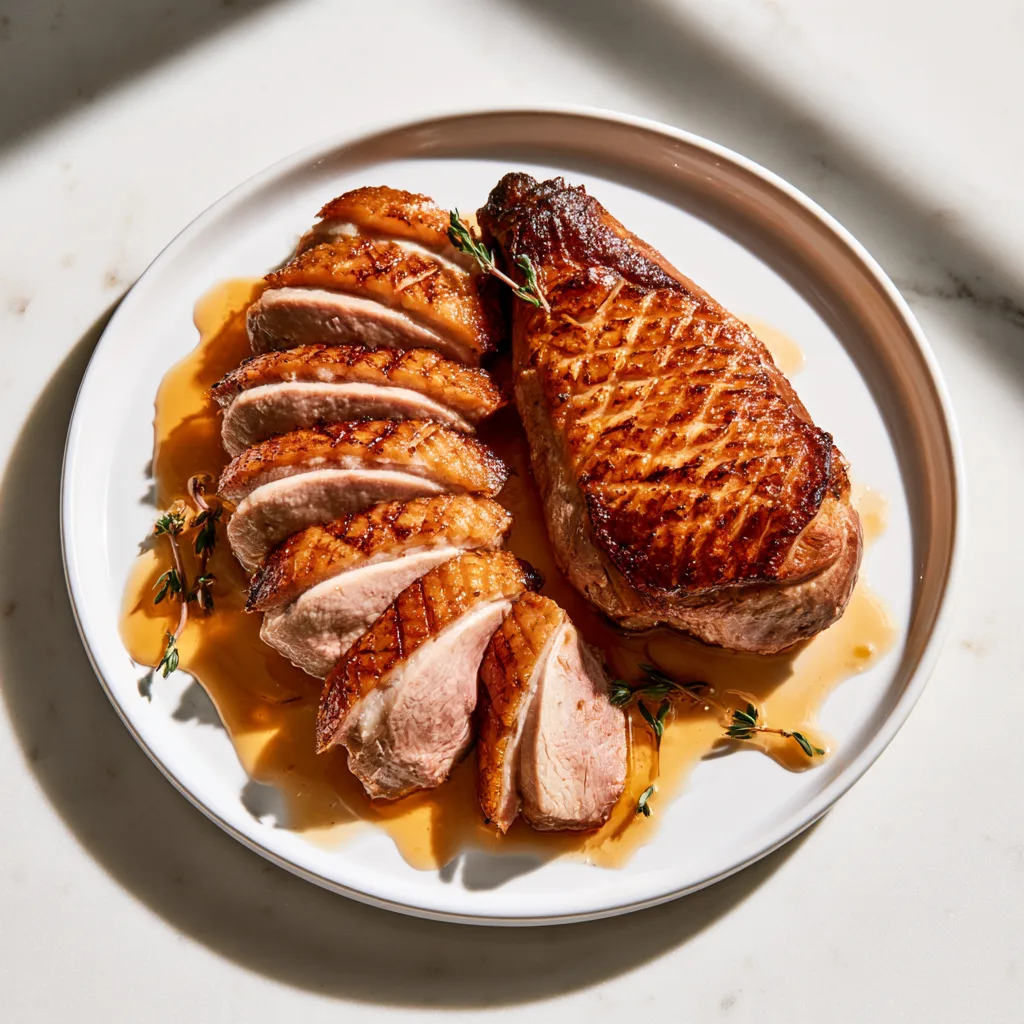
Pan-seared duck breast with honey sauce is an elegant dinner that combines beautifully crispy skin, flavorful meat, and a glossy sweet and savory glaze. The golden-brown duck pairs wonderfully with a homemade honey sauce featuring garlic, ginger, soy sauce, and a touch of acidity.
Although duck breast is frequently associated with fine dining, preparing it at home is surprisingly manageable. Unlike roasting a whole duck, cooking individual breasts in a skillet gives you greater control over the texture and allows you to create a delicious meal without spending hours in the kitchen.
The secret to an excellent crispy skin duck breast is starting with a cold skillet. This simple technique allows the natural fat beneath the skin to render gradually, creating a beautifully browned exterior without requiring additional cooking oil.
Meanwhile, the honey sauce comes together in just a few minutes using ingredients that may already be in your kitchen. Its sweetness complements the rich duck, while soy sauce, vinegar, garlic, and ginger create a balanced, savory finish.
Whether you’re planning a romantic dinner, preparing something special for guests, or experimenting with duck for the first time, this recipe delivers an impressive meal with straightforward preparation.
Why You’ll Love This Pan-Seared Duck Breast Recipe
There are several reasons why this honey glazed duck breast deserves a place in your dinner rotation.
First, the contrast between crispy skin and tender meat makes every bite interesting. Duck naturally contains a flavorful layer of fat beneath its skin, which becomes wonderfully crisp when cooked correctly.
Second, the sauce offers a combination of flavors that works particularly well with duck. Honey contributes sweetness, soy sauce adds savory depth, and apple cider vinegar provides enough acidity to balance the richness.
Another advantage is the relatively short preparation time. The entire meal takes approximately 40 minutes, making it suitable for a special weeknight dinner as well as more elaborate weekend occasions.
The presentation is equally appealing. Sliced duck breast arranged over a little glossy honey sauce looks beautiful on a simple white plate, especially when finished with fresh herbs.
Finally, the recipe is adaptable. The sauce can be adjusted with citrus, herbs, or a little additional ginger, allowing you to create different flavor combinations while keeping the cooking method consistent.
Recipe Overview
- Preparation Time: 15 minutes
- Cooking Time: 25 minutes
- Total Time: 40 minutes
- Servings: 2
- Difficulty: Medium
- Course: Main Course, Dinner
- Cuisine: French-Inspired, American
This recipe makes two generous servings and is especially suitable for a dinner for two. For a larger gathering, the ingredients can be increased, although the duck breasts may need to be cooked in batches.
Ingredients
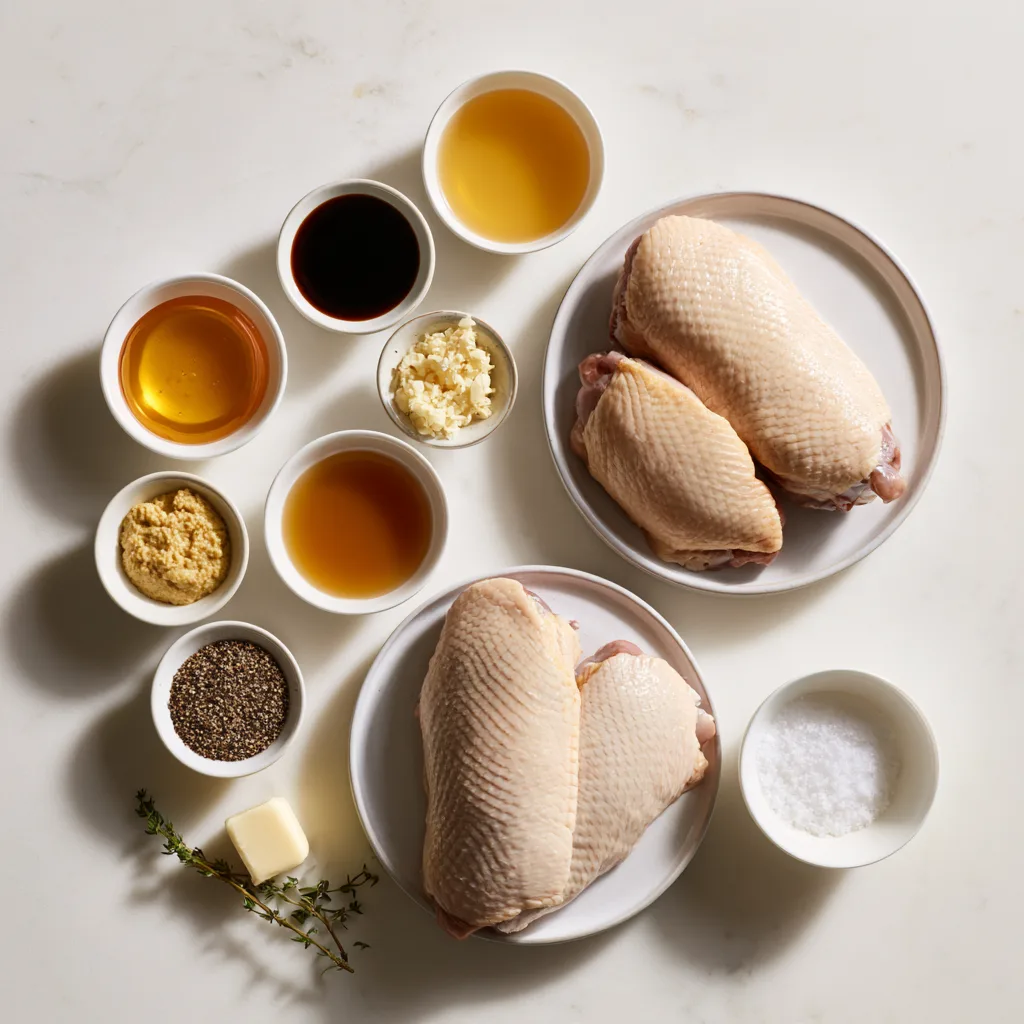
The ingredients are divided into three simple groups: the duck breast, the honey sauce, and optional garnishes.
For the Duck Breast
- 2 boneless, skin-on duck breasts (approximately 6–8 ounces each)
- 3/4 teaspoon kosher salt
- 1/4 teaspoon freshly ground black pepper
For the Honey Sauce
- 3 tablespoons honey
- 2 tablespoons low-sodium soy sauce
- 2 tablespoons apple cider vinegar
- 1/4 cup low-sodium chicken broth
- 2 garlic cloves, minced
- 1 teaspoon freshly grated ginger
- 1 teaspoon Dijon mustard
- 1 teaspoon unsalted butter
Optional Garnishes
- 2 sprigs fresh thyme
- 1 teaspoon finely grated orange zest
Understanding the Key Ingredients
Duck Breast
Skin-on duck breast is essential for achieving the characteristic crispy exterior of this dish.
The layer of fat beneath the skin gradually melts during cooking, helping the skin brown while contributing rich flavor.
Look for duck breasts with intact skin and a reasonably even thickness. Boneless breasts are easier to prepare and slice, making them particularly convenient for home cooking.
If the breasts are significantly different in size, monitor them individually because they may finish cooking at different times.
Honey
Honey is responsible for the sauce’s natural sweetness and glossy appearance.
A mild honey, such as clover or wildflower, works particularly well because it complements the duck without overwhelming the other flavors.
Stronger varieties can also be used, although they may produce a more pronounced flavor.
Because honey contains natural sugars that can burn at high temperatures, it is added after the duck has finished searing rather than during the initial cooking process.
Soy Sauce
Soy sauce provides the savory component that balances the sweetness of the honey.
Low-sodium soy sauce is recommended because the sauce reduces slightly as it cooks, concentrating its flavors.
Regular soy sauce can be substituted, but the finished sauce may taste saltier.
Apple Cider Vinegar
Apple cider vinegar prevents the sauce from becoming excessively sweet.
Its gentle acidity cuts through the richness of the duck and creates a more balanced finish.
Rice vinegar is a suitable alternative if you prefer something slightly milder.
Garlic and Ginger
Fresh garlic and ginger add warmth, fragrance, and complexity.
Garlic creates a savory foundation, while ginger introduces a subtle sharpness that pairs beautifully with honey.
Fresh ingredients provide the most vibrant flavor, although a small amount of dried ginger can be substituted when necessary.
Dijon Mustard and Butter
Dijon mustard adds a subtle tanginess and helps bring the sauce ingredients together.
Butter is stirred into the finished sauce to create a smoother texture and a slightly richer flavor.
Neither ingredient should dominate the dish; both support the overall balance.
Equipment You’ll Need
A few basic kitchen tools are all that is necessary.
A heavy-bottomed skillet is particularly useful because it distributes heat evenly. Stainless steel and cast iron are both suitable choices.
You’ll also need a sharp knife for scoring the skin, tongs for turning the breasts, and a small bowl for mixing the sauce.
An instant-read meat thermometer is strongly recommended. Duck breasts vary in thickness, so checking the internal temperature is more reliable than following cooking times alone.
Finally, prepare a clean plate for resting the cooked meat and a cutting board for slicing.
How to Make Pan-Seared Duck Breast with Honey Sauce
Follow these instructions for beautifully browned duck and a flavorful homemade honey sauce.
Step 1: Prepare the Duck Breast
Remove the duck breasts from their packaging and pat them thoroughly dry with paper towels.
Place each breast skin-side up on a cutting board.
Using a sharp knife, carefully score the skin in a shallow diagonal pattern. Rotate the breast and repeat in the opposite direction to create small diamond shapes.
Cut through the skin and some of the fat, but avoid cutting into the meat itself.
This scoring technique helps the fat render more evenly and prevents the skin from tightening excessively during cooking.
Season both sides with kosher salt and black pepper.
Step 2: Prepare the Honey Sauce
In a small mixing bowl, combine the honey, low-sodium soy sauce, apple cider vinegar, chicken broth, minced garlic, grated ginger, and Dijon mustard.
Whisk until everything is well combined.
Set the mixture aside while preparing the duck.
Mixing the sauce beforehand is helpful because the pan will already be hot when the duck finishes cooking.
Step 3: Start the Duck in a Cold Skillet
Place the seasoned duck breasts skin-side down in a cold, dry skillet.
Do not add oil or butter.
Turn the heat to medium-low and allow the skillet to warm gradually.
As the temperature increases, the fat beneath the duck skin will begin melting into the pan.
Cook the breasts skin-side down for approximately 10–14 minutes, depending on their thickness and the amount of fat beneath the skin.
Carefully pour or spoon excess rendered fat into a heatproof container when necessary.
The goal is deeply golden, crisp skin rather than aggressive browning.
Step 4: Flip and Finish Cooking
Once the skin is golden and crispy, turn the duck breasts using tongs.
Continue cooking the meat side for approximately 6–10 minutes, or longer if necessary.
Reduce the heat if the exterior begins browning too quickly.
Insert an instant-read thermometer into the thickest part of each breast.
For food safety, the USDA recommends cooking duck and other poultry to an internal temperature of 165°F (74°C). Cooking times are approximate, and the thermometer reading should determine when the duck is ready.
Step 5: Rest the Duck
Transfer the cooked duck breasts to a clean plate, keeping the crispy skin facing upward.
Allow them to rest for approximately 5 minutes.
Resting gives the meat a chance to settle before slicing and helps reduce the amount of juice lost when cutting.
Avoid wrapping the breasts tightly in foil because trapped steam can soften the crispy skin.
Step 6: Prepare the Honey Sauce
While the duck rests, carefully pour excess fat from the skillet, leaving approximately 1 teaspoon behind.
Return the skillet to medium-low heat.
Pour in the prepared honey sauce mixture and gently scrape the bottom of the pan to incorporate the flavorful browned bits.
Allow the sauce to simmer gently for approximately 3–5 minutes, stirring occasionally.
The mixture should become glossy and slightly thicker, coating the back of a spoon without turning into a heavy syrup.
Step 7: Finish the Sauce
Remove the skillet from the heat.
Stir in the teaspoon of unsalted butter until completely incorporated.
Taste the sauce and adjust the balance if necessary.
A few drops of apple cider vinegar can brighten an overly sweet sauce, while a small amount of honey can soften excessive sharpness.
If the sauce becomes too thick, add a splash of chicken broth or water.
Step 8: Slice and Serve
Place the rested duck breasts on a cutting board.
Using a sharp knife, slice them diagonally against the grain into even pieces.
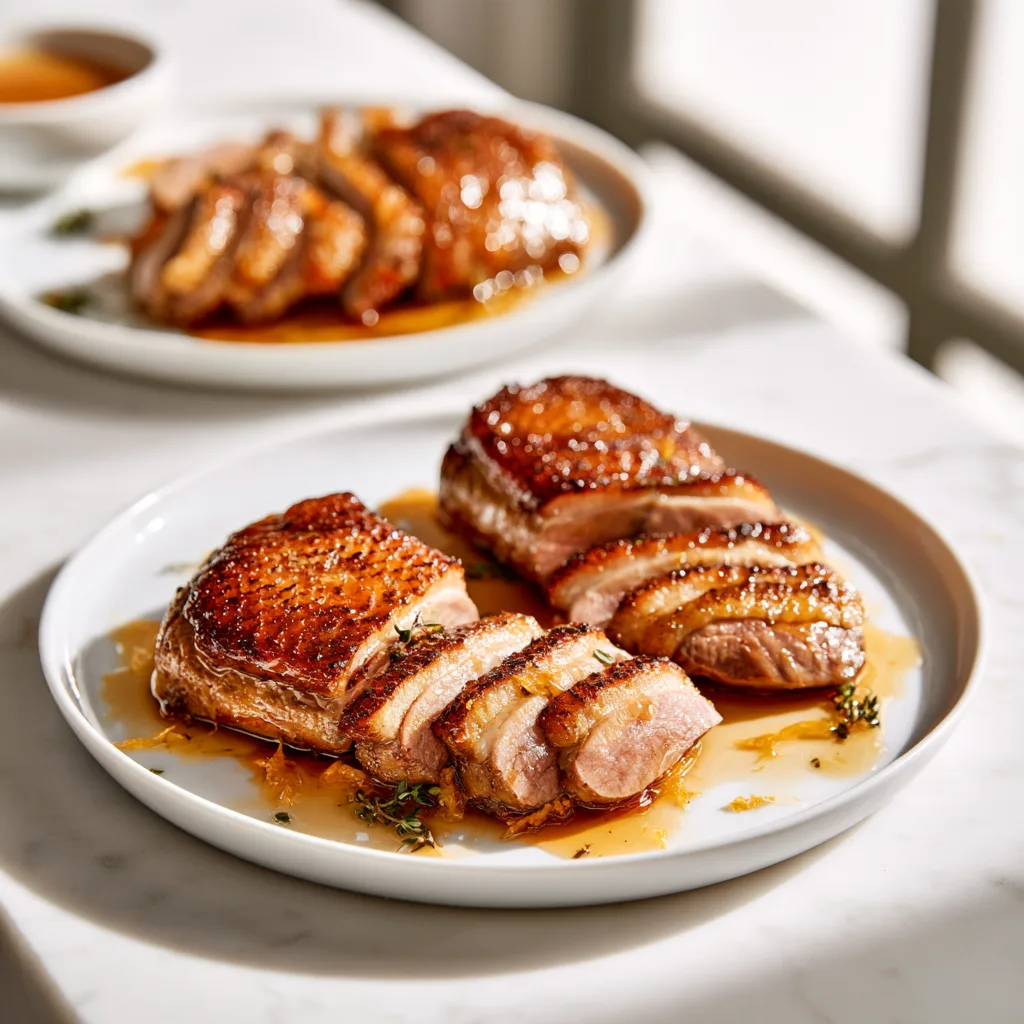
Arrange the slices on warm serving plates with the crispy skin facing upward.
Spoon the honey sauce beneath or around the duck rather than directly over the skin. This preserves the contrasting crispy texture.
Finish with fresh thyme and a little orange zest if desired.
Serve immediately while the duck and sauce are warm.
The Secret to Perfectly Crispy Duck Skin
Achieving crispy duck skin is often the most challenging part of preparing duck breast.
Fortunately, a few straightforward techniques can make a significant difference.
Always Start with Dry Skin
Moisture prevents effective browning.
Before seasoning, thoroughly pat the skin dry with paper towels.
For additional preparation, the breasts can be placed uncovered on a plate in the refrigerator for several hours to help dry the skin. Keep them properly refrigerated until cooking.
Use a Cold Pan
Unlike many other meats, duck breast benefits from beginning the cooking process in a cold skillet.
Gradual heating allows the thick layer of fat beneath the skin to melt before the exterior becomes excessively dark.
Starting over very high heat can brown the surface before enough fat has rendered.
Avoid Excessive Heat
Medium-low heat is generally sufficient during the initial rendering stage.
If the skin browns too quickly, reduce the temperature.
Patience during this stage produces better results than attempting to rush the process.
Don’t Overcrowd the Skillet
The breasts need enough space for heat to circulate and moisture to escape.
If preparing more than two portions, use a sufficiently large skillet or cook the duck in batches.
Overcrowding can create steam and interfere with crisping.
Keep the Sauce Away from the Skin
For the best texture, avoid coating the crispy skin with sauce before serving.
Instead, arrange the duck over the honey glaze or spoon the sauce around the sliced meat.
This allows each bite to combine crisp skin, flavorful duck, and sauce without sacrificing texture.
How to Balance the Sweet and Savory Honey Sauce
The sauce is what transforms this simple pan-seared duck into a complete dinner.
Its flavor depends on balancing four important elements: sweetness, saltiness, acidity, and aromatic warmth.
Honey provides sweetness, while soy sauce introduces savory depth.
Apple cider vinegar adds acidity, preventing the sauce from feeling too heavy.
Garlic and ginger bring the ingredients together with a slightly aromatic finish.
Dijon mustard adds another subtle layer of sharpness, while butter creates a smooth, glossy consistency.
The sauce should taste balanced rather than overwhelmingly sweet.
If you prefer a stronger savory flavor, add a small amount of additional soy sauce. For a brighter finish, increase the vinegar slightly.
Be cautious when reducing the mixture. The natural sugars in honey can become sticky or burn when exposed to excessive heat.
A gentle simmer is sufficient to achieve the desired consistency.
What to Serve with Honey Glazed Duck Breast
Choosing the right side dishes helps create a balanced meal.
Because duck breast is naturally rich and the sauce contains honey, sides with mild, earthy, or slightly acidic flavors are especially suitable.
Creamy Mashed Potatoes
Mashed potatoes are an excellent accompaniment because their smooth texture contrasts with the crispy duck skin.
They also absorb some of the honey sauce, creating a comforting combination.
For a lighter variation, consider mashed cauliflower.
Roasted Root Vegetables
Roasted carrots, parsnips, or sweet potatoes complement the natural sweetness of the glaze.
Their slightly caramelized edges enhance the overall presentation.
Season the vegetables simply with olive oil, salt, pepper, and fresh herbs to avoid overwhelming the sauce.
Sautéed Green Beans
Green beans provide freshness and a pleasant contrast to the richness of the meat.
Quickly sauté them with garlic and a little olive oil, keeping them slightly crisp.
A squeeze of lemon juice just before serving adds brightness.
Wild Rice
Wild rice is another excellent option for this easy duck breast dinner.
Its nutty flavor pairs nicely with duck, while its texture provides an interesting alternative to potatoes.
A simple wild rice pilaf with herbs makes an elegant accompaniment.
Fresh Green Salad
For a lighter meal, serve the duck alongside mixed greens with a citrus vinaigrette.
Peppery arugula, fresh spinach, and thinly sliced apples are particularly good choices.
The acidity of the dressing helps balance the sweet honey sauce.
Delicious Recipe Variations
One of the advantages of this recipe is how easily the honey sauce can be customized.
Orange Honey Duck Breast
Add 2 tablespoons of fresh orange juice and a little grated orange zest to the sauce.
The citrus introduces a brighter flavor that works especially well during autumn and winter.
Allow the sauce to simmer until it reaches the desired consistency.
Honey Balsamic Duck Breast
Replace the apple cider vinegar with balsamic vinegar.
This creates a darker, slightly sweeter sauce with deeper fruity notes.
Because balsamic vinegar varies in sweetness, taste the sauce before adding additional honey.
Spicy Honey Duck Breast
Add a small pinch of red pepper flakes or a little chili paste to the sauce.
The gentle heat contrasts beautifully with the sweetness of the honey.
Start with a small amount and increase gradually.
Herb-Infused Duck Breast
Add fresh rosemary or additional thyme to the sauce during its brief simmer.
The herbs introduce earthy aromas that complement the richness of the meat.
Remove any large herb stems before serving.
Garlic-Forward Honey Sauce
For a more pronounced savory flavor, increase the garlic from two cloves to three.
This variation works particularly well when serving the duck with mashed potatoes or rice.
Common Mistakes to Avoid
Even a straightforward duck breast recipe can produce disappointing results if a few important details are overlooked.
Starting with a hot skillet: Excessive initial heat may brown the skin before the underlying fat has rendered. Begin with a cold skillet and increase the temperature gradually.
Cutting too deeply when scoring: Scoring through the meat can interfere with even cooking. The knife should cut through the skin and fat without deeply penetrating the breast.
Leaving too much fat in the skillet: Duck releases a considerable amount of fat. Carefully remove excess fat during cooking to prevent splattering and maintain consistent browning.
Adding honey too early: Honey can burn when exposed to prolonged high heat. Prepare the sauce after the duck has finished searing.
Skipping the thermometer: Duck breasts vary in size and thickness. Checking the internal temperature is the safest way to determine when the meat is fully cooked.
Slicing immediately: Allowing the duck to rest briefly before slicing helps retain moisture.
Pouring sauce over the crispy skin: Serving the sauce beneath the duck helps maintain the texture that makes this dish so appealing.
Can You Prepare Duck Breast Ahead of Time?
Although pan-seared duck breast is best served freshly cooked, several parts of this recipe can be prepared in advance.
The honey sauce ingredients can be combined and refrigerated in a covered container for up to 24 hours.
Before cooking, whisk the mixture again to distribute the ingredients evenly.
The duck breasts can also be scored and seasoned several hours before cooking.
Keep them covered or properly protected in the refrigerator until you’re ready to prepare the meal.
For a dinner party, consider preparing your side dishes first. That way, you can focus on cooking the duck and finishing the sauce shortly before serving.
How to Store and Reheat Leftovers
Leftover duck breast should be refrigerated promptly in an airtight container.
For best quality, consume refrigerated leftovers within 3–4 days.
Keep the remaining honey sauce in a separate container when possible. This prevents the skin from becoming unnecessarily soft during storage.
To reheat, place the duck in a covered oven-safe dish with a small splash of broth and warm gently in a moderate oven. Reheat leftovers thoroughly to 165°F (74°C).
The skin may not regain all its original crispness, but keeping the sauce separate helps preserve the best possible texture.
Warm the honey sauce in a small saucepan over low heat, adding a splash of water or broth if needed.
Freezing is possible, although the texture of the skin will change after thawing and reheating. For the best dining experience, freshly cooked duck is preferable.
Frequently Asked Questions
How do you cook duck breast without drying it out?
Begin by rendering the skin slowly over medium-low heat rather than cooking the entire breast over high heat.
Once the skin is crispy, turn the duck and continue cooking while monitoring the internal temperature.
A meat thermometer helps prevent unnecessary cooking beyond the recommended temperature.
Rest the duck briefly before slicing to reduce moisture loss.
Do you need oil to pan-sear duck breast?
No. Skin-on duck breast contains a natural layer of fat that renders during cooking.
Starting the meat skin-side down in a cold skillet allows this fat to melt gradually.
The rendered fat provides enough lubrication for the cooking process, making additional oil unnecessary.
Why is my duck breast skin chewy instead of crispy?
Chewy skin usually indicates that insufficient fat has rendered or that the surface contained too much moisture.
Thoroughly drying the duck before cooking and starting with a cold skillet can help.
Keep the heat moderate and allow enough time for the fat beneath the skin to melt.
Avoid covering the duck tightly after cooking, since trapped steam can soften the skin.
What kind of honey works best for duck breast?
Mild honey varieties such as clover or wildflower are excellent choices.
They provide sweetness without overpowering the garlic, ginger, and soy sauce.
More distinctive honey varieties may also work, but their stronger flavors can alter the balance of the finished sauce.
Can I use frozen duck breast?
Yes, provided the duck is completely thawed before cooking.
The safest approach is to thaw frozen duck breast in the refrigerator.
Once thawed, pat the meat thoroughly dry before scoring and seasoning.
Avoid cooking partially frozen breasts using this method because the skin and interior may cook unevenly.
Can I substitute maple syrup for honey?
Maple syrup can replace honey if you prefer a slightly different flavor.
It creates a sauce with a subtle caramel-like character that pairs nicely with duck.
However, maple syrup is generally thinner than honey, so the sauce may require a little additional reduction.
Monitor the mixture carefully to prevent scorching.
What temperature should duck breast reach?
Duck breast is sometimes served pink in restaurant preparations, but those lower-temperature approaches do not meet USDA consumer food-safety guidance.
The USDA recommends that duck and other poultry reach an internal temperature of 165°F (74°C).
Use an instant-read thermometer in the thickest part of the meat to verify the temperature.
Can I double this recipe for four people?
Absolutely.
Double all the ingredients and prepare four duck breasts instead of two.
If your skillet cannot accommodate all four breasts without crowding, cook them in batches or use two skillets.
You can prepare the honey sauce together in one pan after the duck is cooked.
What can I do with leftover duck fat?
Rendered duck fat is excellent for cooking potatoes and vegetables.
Strain the fat through a fine sieve to remove any browned particles, then transfer it to a clean container.
Refrigerate it promptly and use it for another cooked dish.
For example, potatoes roasted with a small amount of duck fat develop a particularly flavorful exterior.
A Little Culinary Inspiration
Duck has a long history in European and Asian cooking traditions, with many cuisines combining its rich flavor with fruit, sweetness, and acidity.
French cooking is particularly well known for pairing duck with citrus-based sauces, while various Asian-inspired preparations use combinations of honey, soy sauce, ginger, and aromatic spices.
This pan-seared duck breast recipe brings together elements of both approaches.
The cooking technique emphasizes the naturally crispy skin associated with classic pan-seared duck, while the honey and soy sauce introduce a flavorful sweet and savory contrast.
The result is a versatile dish that feels sophisticated without requiring complicated ingredients or specialized equipment.
Final Thoughts
Pan-seared duck breast with honey sauce is an excellent choice when you want to prepare something a little more special than an everyday dinner.
The combination of golden crispy skin, flavorful duck, and a glossy honey glaze creates a beautiful balance of texture and taste.
With the right cooking technique, a few basic ingredients, and approximately 40 minutes, this elegant dish becomes an approachable option for home cooks.
Serve it with creamy mashed potatoes, roasted vegetables, or a fresh green salad for a complete meal that works beautifully for date nights, celebrations, and memorable family dinners.
Pan-Seared Duck Breast with Honey Sauce
Ingredients
Equipment
Method
- Pat the duck breasts completely dry. Score the skin in a shallow crosshatch pattern without cutting into the meat. Season both sides with salt and black pepper.
- In a small bowl, whisk together honey, soy sauce, apple cider vinegar, chicken broth, garlic, ginger, and Dijon mustard. Set aside.
- Place the duck breasts skin-side down in a cold, dry heavy skillet. Set the heat to medium-low and cook for 10–14 minutes, pouring excess rendered fat into a heatproof container as needed, until the skin is golden and crisp.
- Flip the duck and cook the meat side for approximately 6–10 minutes, or longer if needed, until an instant-read thermometer inserted in the thickest part reaches 165°F (74°C), the USDA safe minimum temperature for poultry. Lower the heat if the exterior browns too quickly.
- Transfer the duck to a clean plate, skin-side up, and rest for 5 minutes. Prepare the sauce while it rests.
- Pour off excess fat from the skillet, leaving about 1 teaspoon. Add the honey mixture over medium-low heat, scrape up the browned bits, and simmer gently for 3–5 minutes until glossy and lightly thickened.
- Remove the skillet from the heat and stir in the butter. If the sauce becomes too thick, loosen it with a small splash of broth or water.
- Slice the duck against the grain. Arrange slices skin-side up and spoon the warm honey sauce around or beneath the meat to preserve the crispy skin.
- Garnish with thyme if desired and serve immediately.


