Creamy Goat Cheese Polenta With Ratatouille: Easy Vegetarian Dinner
Creamy Goat Cheese Polenta With Ratatouille is a comforting, colorful, and satisfying vegetarian dish that brings together two incredible flavors: rich, velvety polenta and rustic, Mediterranean-inspired vegetables. The combination of tangy goat cheese, buttery cornmeal, and tender vegetables simmered in a fragrant tomato sauce creates a meal that feels both elegant and wonderfully homemade.
Perfect for cozy family dinners, relaxed weekend meals, or entertaining guests, this creamy polenta recipe transforms everyday ingredients into something special. The naturally sweet flavors of zucchini, eggplant, bell peppers, and tomatoes complement the subtle tanginess of goat cheese, creating a balanced dish with layers of flavor and texture.
Despite its impressive appearance, this vegetarian dinner recipe is surprisingly approachable. With a little vegetable chopping, some gentle simmering, and a few minutes of stirring, you can prepare a beautiful homemade meal in approximately one hour.
Whether you’re exploring new meatless dinner ideas or simply looking for a delicious way to enjoy seasonal vegetables, this creamy goat cheese polenta with ratatouille deserves a place on your dinner table.
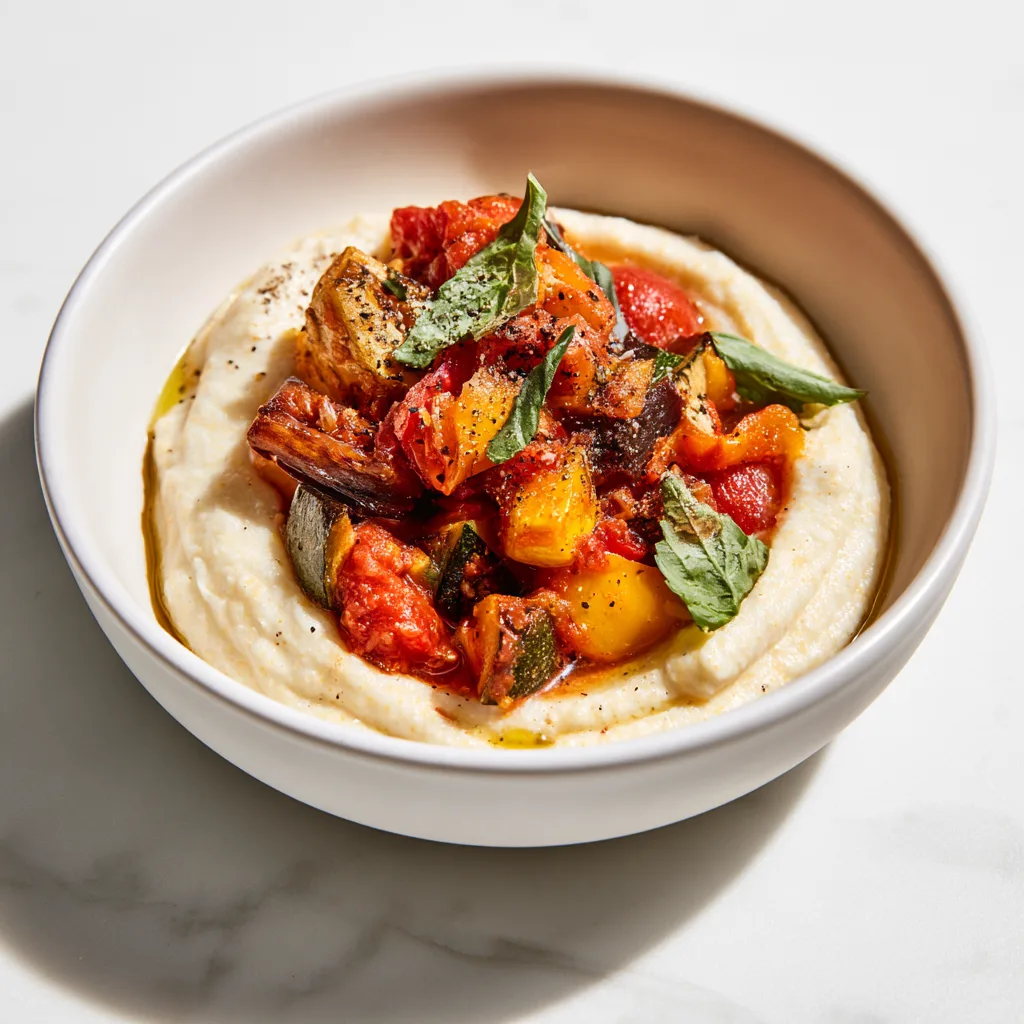
Why You’ll Love This Creamy Goat Cheese Polenta With Ratatouille
There are plenty of reasons to fall in love with this comforting combination of creamy polenta and homemade ratatouille.
Rich and creamy texture: Soft goat cheese melts beautifully into warm polenta, adding a luxurious consistency and a slightly tangy flavor that makes every bite irresistible.
Colorful, vegetable-packed topping: The ratatouille features eggplant, zucchini, yellow squash, bell peppers, and tomatoes, creating a vibrant mixture of vegetables with naturally complementary flavors.
Perfect for vegetarian meals: This dish makes a satisfying meatless main course without relying on complicated ingredients or elaborate cooking techniques.
Elegant yet approachable: Although it looks like something from a cozy countryside restaurant, the entire meal comes together using basic kitchen equipment.
Easy to customize: You can adjust the vegetables, experiment with herbs, or change the type of cheese depending on your preferences.
Excellent for entertaining: The ratatouille can be prepared ahead of time, allowing you to focus on making the polenta fresh just before serving.
The contrast between the creamy base and the rustic vegetable topping is what makes this combination particularly memorable.
What Is Goat Cheese Polenta With Ratatouille?
This dish combines two classic preparations from different European culinary traditions.
Polenta is a traditional Italian dish made from ground cornmeal cooked in liquid until it develops a soft, creamy consistency. Depending on how it is prepared, polenta can be served as a comforting porridge-like side dish or allowed to cool and firm up before slicing.
In this version, goat cheese and butter are stirred into freshly cooked polenta, giving it a silky texture and a distinctive tangy flavor.
Ratatouille is a vegetable dish associated with the Provence region of southern France. It typically features summer vegetables such as eggplant, zucchini, peppers, and tomatoes, slowly cooked with olive oil, garlic, and herbs.
Traditional preparations vary, but the essential idea is to allow the vegetables to soften while developing a rich, savory flavor.
When served together, these two preparations create a delicious fusion of French and Italian influences.
The creamy polenta provides a mild, comforting foundation, while the ratatouille adds freshness, acidity, and depth.
Ingredients for Creamy Goat Cheese Polenta With Ratatouille
This recipe uses simple, accessible ingredients that work together to create a flavorful and satisfying meal.
For the Homemade Ratatouille
- 3 tablespoons olive oil, divided
- 1 medium eggplant, cut into ¾-inch cubes
- 1 medium zucchini, diced
- 1 medium yellow squash, diced
- 1 red bell pepper, diced
- 1 yellow bell pepper, diced
- 1 medium yellow onion, diced
- 4 garlic cloves, minced
- 1 tablespoon tomato paste
- 1 can (14.5 ounces) diced tomatoes, including juices
- 1 teaspoon dried thyme
- 1 teaspoon kosher salt, or to taste
- ½ teaspoon freshly ground black pepper
- ¼ teaspoon red pepper flakes, optional
- ¼ cup chopped fresh basil
For the Creamy Goat Cheese Polenta
- 1 cup quick-cooking yellow polenta
- 3 cups low-sodium vegetable broth
- 1 cup whole milk
- 4 ounces soft goat cheese, crumbled
- 2 tablespoons unsalted butter
- ¼ teaspoon kosher salt, or to taste
- ¼ teaspoon freshly ground black pepper
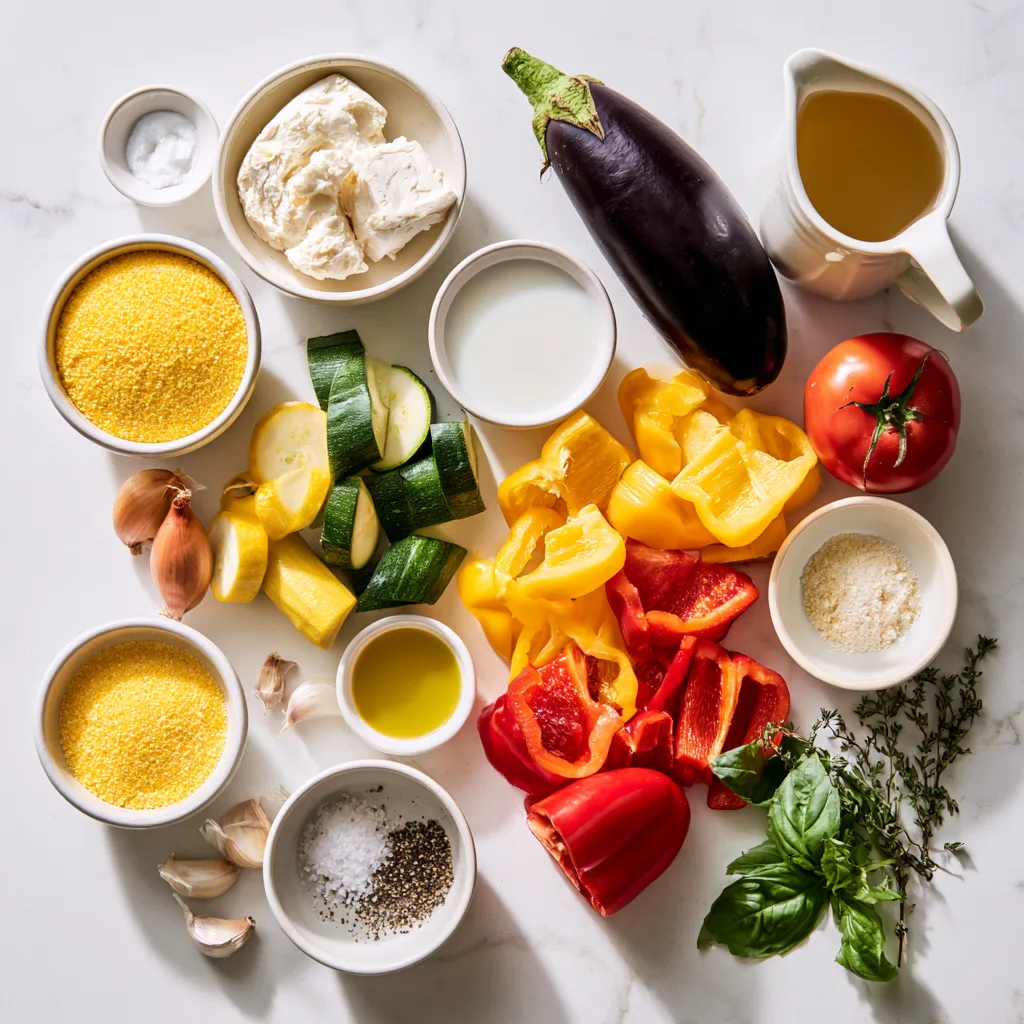
Ingredient Notes
Eggplant: Choose an eggplant with smooth, shiny skin and a firm texture. Fresh eggplant becomes tender and silky when cooked, helping create the signature consistency of homemade ratatouille.
Zucchini and yellow squash: These vegetables bring mild sweetness and a delicate texture. Using both varieties also creates an attractive contrast of green and yellow.
Bell peppers: Red and yellow peppers add color and natural sweetness. Their flavor becomes richer and more mellow during cooking.
Tomatoes: Canned diced tomatoes provide a convenient, consistent base for the sauce. Fresh tomatoes can also work, particularly when they are ripe and flavorful.
Goat cheese: Soft, plain goat cheese is ideal because it melts easily into warm polenta. Avoid firm, aged varieties for this particular preparation.
Polenta: Quick-cooking polenta helps keep preparation time manageable. Traditional coarse polenta can also be used, but it generally requires a longer cooking time and potentially more liquid.
Vegetable broth: Using vegetable broth instead of water adds savory depth to the polenta without overpowering its delicate corn flavor.
How to Make Creamy Goat Cheese Polenta With Ratatouille
The secret to making this dish delicious is preparing the ratatouille so the vegetables become tender without completely losing their individual textures.
Cooking the vegetables in stages also helps develop their flavors before they are combined with the tomato sauce.
Step 1: Prepare the Vegetables
Wash and dry all the fresh vegetables.
Cut the eggplant into approximately ¾-inch cubes, then dice the zucchini, yellow squash, bell peppers, and onion into similarly sized pieces.
Mince the garlic and chop the fresh basil.
Keeping the vegetable pieces relatively uniform helps everything cook evenly and gives the finished ratatouille a beautifully rustic appearance.
Step 2: Cook the Eggplant
Heat 1 tablespoon of olive oil in a large skillet over medium-high heat.
Add the diced eggplant and cook for approximately 6–8 minutes, stirring occasionally, until the pieces begin to soften and develop lightly golden edges.
Transfer the eggplant to a plate.
Eggplant absorbs oil quickly, so avoid continually adding more oil unless the pan becomes excessively dry.
A large skillet gives the vegetables enough room to cook without immediately steaming.
Step 3: Sauté the Zucchini and Yellow Squash
Add another tablespoon of olive oil to the same skillet.
Add the diced zucchini and yellow squash.
Cook for approximately 4–5 minutes, stirring occasionally, until the vegetables begin to soften and develop a little color.
They should still retain some structure because they will continue cooking in the tomato sauce.
Transfer the squash to the plate with the eggplant.
Step 4: Cook the Onion, Peppers, and Garlic
Reduce the heat to medium and add the remaining tablespoon of olive oil.
Add the diced onion and bell peppers.
Cook for approximately 5–6 minutes, stirring occasionally, until the onion becomes translucent and the peppers begin to soften.
Stir in the minced garlic and tomato paste.
Cook for another minute, stirring constantly, until the garlic becomes fragrant and the tomato paste darkens slightly.
This brief cooking step helps deepen the flavor of the tomato sauce.
Step 5: Simmer the Ratatouille
Return the cooked eggplant, zucchini, and yellow squash to the skillet.
Add the diced tomatoes with their juices, dried thyme, salt, black pepper, and optional red pepper flakes.
Stir gently to combine.
Reduce the heat to medium-low and simmer uncovered for approximately 12–15 minutes, stirring occasionally.
The vegetables should become tender while the tomato sauce thickens slightly.
If the mixture becomes too dry, add a small splash of water.
Taste and adjust the seasoning as needed.
Keep the ratatouille warm over low heat while preparing the polenta.
Step 6: Prepare the Creamy Polenta
When the ratatouille is nearly finished, combine the vegetable broth and whole milk in a medium saucepan.
Bring the mixture to a gentle simmer over medium heat.
Slowly sprinkle in the quick-cooking polenta while whisking continuously.
Reduce the heat to low and cook according to the package directions, generally about 5–8 minutes, stirring frequently.
The polenta should gradually thicken into a smooth, creamy mixture.
If it becomes too thick, add a little additional warm broth, milk, or water until the desired consistency is reached.
Step 7: Add the Goat Cheese
Remove the saucepan from the heat.
Add the crumbled goat cheese, unsalted butter, salt, and black pepper.
Stir until the butter and goat cheese melt completely into the warm polenta.
Taste and adjust the seasoning.
The finished polenta should be creamy, smooth, and soft enough to spread gently across a serving bowl.
Step 8: Assemble and Serve
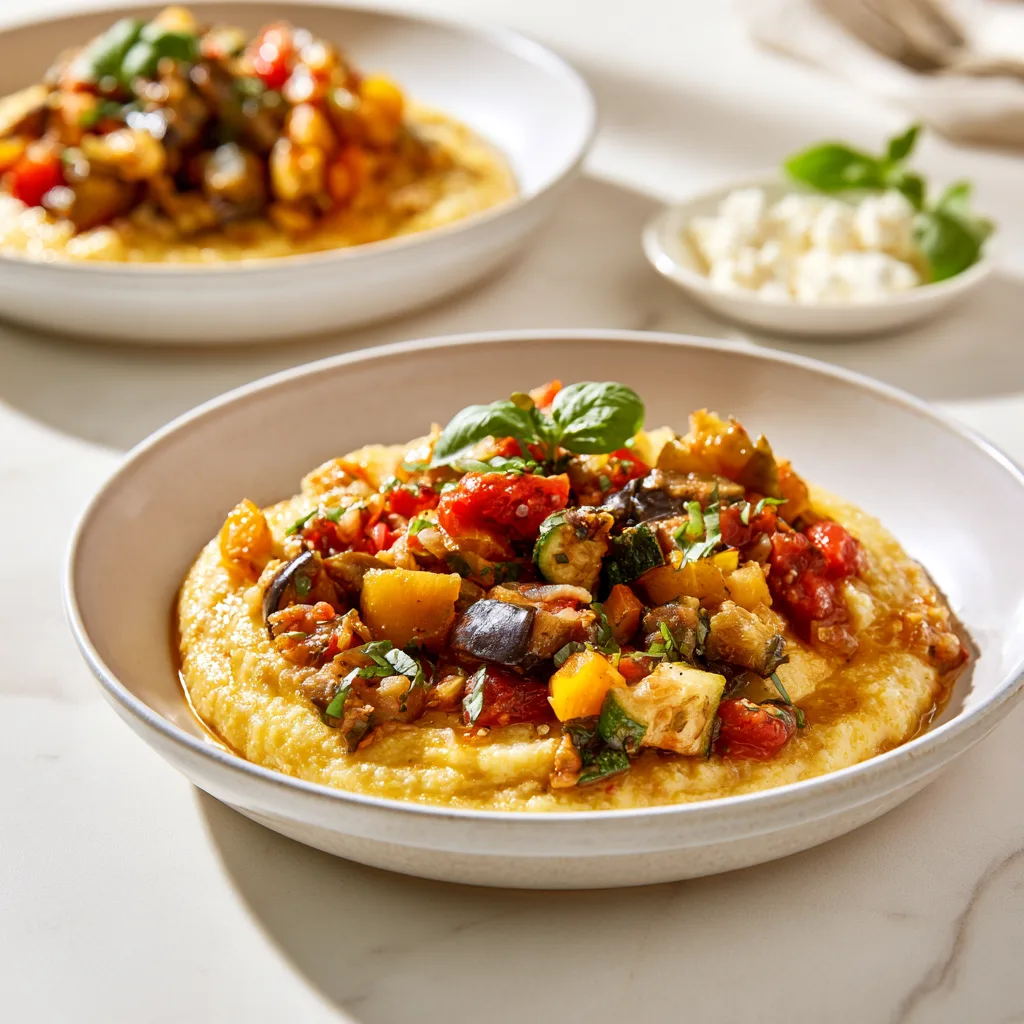
Spoon a generous portion of creamy goat cheese polenta into each shallow serving bowl.
Create a small indentation in the center and spoon the warm homemade ratatouille over the top.
Sprinkle with freshly chopped basil.
Serve immediately while the polenta is warm and creamy.
For a beautiful presentation, allow some of the golden polenta to remain visible around the colorful vegetable topping.
Tips for Making Perfect Creamy Goat Cheese Polenta
Although polenta requires only a few ingredients, a handful of simple techniques can make a noticeable difference in the finished dish.
Add the Polenta Gradually
One of the most common problems when preparing polenta is the formation of lumps.
To prevent this, slowly sprinkle the dry polenta into the simmering liquid while whisking continuously.
Adding all the cornmeal at once can cause the grains to stick together before they hydrate evenly.
Keep the Heat Gentle
Polenta thickens as the cornmeal absorbs liquid.
Cooking it over excessively high heat can cause sticking, scorching, or vigorous bubbling.
Once the polenta begins to thicken, reduce the heat and continue stirring frequently.
Choose the Right Goat Cheese
Soft goat cheese works particularly well because it incorporates easily into warm polenta.
Plain, fresh goat cheese provides a pleasant tanginess without competing with the vegetables.
Flavored goat cheese can also be delicious, but varieties containing strong herbs or garlic may change the overall flavor balance.
Adjust the Consistency Before Serving
Polenta continues to thicken as it cools.
For the creamiest results, aim for a slightly looser consistency than you might initially expect.
If the polenta becomes too firm while waiting for the vegetables, stir in a few tablespoons of warm milk or broth.
Season at the End
Both vegetable broth and goat cheese contribute saltiness.
Taste the polenta after adding the cheese before deciding whether additional salt is necessary.
This prevents the finished dish from becoming overly salty.
Secrets to Flavorful Homemade Ratatouille
Ratatouille celebrates the natural flavors of vegetables, but the cooking technique makes a significant difference.
Avoid overcrowding the pan. Cooking vegetables in separate batches allows them to develop some color rather than simply steaming in their own moisture.
Cut vegetables evenly. Similar-sized pieces cook more consistently and create a more attractive finished dish.
Cook off excess moisture. Eggplant, zucchini, and tomatoes naturally contain considerable amounts of water. Simmering the ratatouille uncovered helps concentrate the sauce.
Use good-quality olive oil. Olive oil contributes richness and complements the Mediterranean-inspired ingredients.
Don’t overcook the vegetables. The finished ratatouille should be tender, but individual pieces of eggplant, zucchini, and peppers should remain recognizable.
Add fresh basil toward the end. Basil has a delicate aroma that is best preserved by adding it just before serving.
The finished ratatouille should have a thick, lightly saucy consistency rather than resemble vegetable soup.
Delicious Variations to Try
One of the best things about creamy goat cheese polenta with ratatouille is how easily it can be adapted.
Roasted Vegetable Ratatouille
For a slightly different flavor, roast the diced vegetables in the oven instead of sautéing them.
Toss the eggplant, zucchini, squash, peppers, and onion with olive oil, salt, and pepper.
Spread them across one or two baking sheets and roast at 425°F (220°C) until tender and lightly caramelized.
Combine the roasted vegetables with the prepared tomato sauce and simmer briefly.
Roasting produces sweeter, more concentrated vegetable flavors and adds lightly browned edges.
Extra-Cheesy Polenta
For an even richer variation, stir ¼ cup of freshly grated Parmesan cheese into the polenta along with the goat cheese.
Parmesan adds a savory, nutty note that pairs beautifully with the tangy goat cheese.
Choose vegetarian-friendly hard cheese if you want to keep the entire meal vegetarian.
Spicy Ratatouille
Increase the red pepper flakes to ½ teaspoon for a gentle kick of heat.
For a more pronounced spicy flavor, add a pinch of smoked paprika or a small amount of finely chopped fresh chili.
Dairy-Free Alternative
For a dairy-free variation, replace the whole milk with additional vegetable broth and use olive oil instead of butter.
Omit the goat cheese or substitute a suitable dairy-free soft cheese alternative.
The resulting polenta will have a different flavor but can still be wonderfully creamy.
Seasonal Vegetable Variation
Ratatouille is especially delicious with fresh summer vegetables, but you can adapt the topping throughout the year.
Mushrooms, additional zucchini, or different varieties of sweet peppers can all make interesting additions.
Keep the vegetable pieces reasonably uniform and adjust their cooking times as necessary.
What to Serve With Goat Cheese Polenta and Ratatouille
This dish is satisfying enough to serve as a complete vegetarian main course, but a few simple accompaniments can create an even more memorable meal.
Fresh Green Salad
A crisp salad with mixed greens, cucumber, and a light lemon vinaigrette provides a refreshing contrast to the creamy polenta.
The acidity of the dressing helps balance the richness of the goat cheese.
Crusty Artisan Bread
A slice of warm, crusty bread is perfect for soaking up the flavorful tomato sauce from the ratatouille.
Sourdough, rustic country bread, or a simple baguette all work beautifully.
Roasted Chickpeas
For additional plant-based protein and texture, serve the dish with a small portion of seasoned roasted chickpeas.
Their crunchy exterior contrasts nicely with the soft polenta and vegetables.
Simple Roasted Greens
Roasted asparagus, broccoli, or green beans can complement the meal without overwhelming its flavors.
Keep the seasoning simple with olive oil, salt, and a little lemon juice.
Can You Make This Recipe Ahead of Time?
Yes! Creamy goat cheese polenta with ratatouille is an excellent choice for preparing part of your meal in advance.
The ratatouille is particularly well suited to make-ahead cooking because its flavors continue to blend as it rests.
You can prepare the vegetable mixture up to three days before serving and store it in an airtight container in the refrigerator.
When you’re ready to eat, reheat it gently in a skillet over medium-low heat, adding a small splash of water if the sauce has thickened too much.
For the best texture, prepare the creamy polenta shortly before serving.
Freshly cooked polenta has a soft, silky consistency that naturally becomes firmer as it cools.
If you need to prepare everything in advance, the polenta can still be reheated successfully with additional liquid.
Simply warm it slowly in a saucepan while stirring in milk, broth, or water until it becomes creamy again.
How to Store and Reheat Leftovers
Proper storage helps preserve the flavor and texture of both components.
Refrigerating
Allow the food to cool promptly, then transfer the ratatouille and polenta into separate airtight containers.
Refrigerate within two hours of cooking.
Both components can generally be kept in the refrigerator for 3–4 days.
Storing them separately makes reheating easier and prevents the tomato sauce from soaking completely into the polenta.
Reheating the Polenta
Place the leftover polenta in a saucepan over low heat.
Add a few tablespoons of milk, vegetable broth, or water.
Stir frequently until the mixture becomes smooth and creamy again.
Add more liquid gradually if necessary, and heat thoroughly before serving.
Reheating the Ratatouille
Warm the ratatouille in a skillet or saucepan over medium-low heat, stirring occasionally.
If the sauce has thickened significantly during storage, add a splash of water.
Heat until thoroughly warmed.
Freezing
Ratatouille can be frozen in airtight, freezer-safe containers for approximately 2–3 months for best quality.
Thaw overnight in the refrigerator before reheating.
Polenta can also be frozen, although its texture may change after thawing.
For the creamiest presentation, freshly prepared polenta is recommended.
Common Mistakes to Avoid
Even simple recipes benefit from a little extra attention.
Using the wrong type of polenta: Quick-cooking polenta and traditional coarse polenta have different cooking requirements. Always check the package instructions before beginning.
Adding the polenta too quickly: Pouring in the cornmeal all at once increases the likelihood of lumps.
Cooking every vegetable together from the beginning: Different vegetables release different amounts of moisture. Cooking them in stages helps achieve a richer flavor and better texture.
Using too much liquid in the ratatouille: The vegetable topping should be moist and saucy, but not watery. Allow excess liquid to evaporate before serving.
Letting the polenta sit uncovered for too long: Polenta firms up quickly as it cools. Prepare it shortly before serving or keep it warm with a little additional liquid.
Forgetting to taste before serving: The tanginess of goat cheese, acidity of tomatoes, and sweetness of peppers should feel balanced. Small adjustments to salt and pepper can make a big difference.
Frequently Asked Questions
Can I Use Regular Cornmeal Instead of Polenta?
Yes, but the texture and cooking time may differ.
Polenta is generally made using cornmeal with a particular grind, and products labeled for polenta are designed to produce a characteristic texture.
Fine cornmeal cooks differently from coarser varieties and may produce a smoother or thicker result.
If using standard cornmeal, check the package directions and adjust the liquid and cooking time accordingly.
What Does Goat Cheese Taste Like in Polenta?
Goat cheese gives polenta a mild tanginess and rich, creamy texture.
Its flavor complements the natural sweetness of cornmeal without completely overpowering it.
When combined with the tomato-based ratatouille, the cheese adds depth and balances the acidity of the vegetables.
The final flavor is savory, slightly tangy, and comforting.
Can I Make Ratatouille Without Eggplant?
Absolutely.
Although eggplant is a traditional ingredient in ratatouille, you can omit it if necessary.
Replace it with additional zucchini, yellow squash, mushrooms, or another vegetable that holds its shape during cooking.
The flavor and texture will be slightly different, but the finished topping can still be delicious.
Is Creamy Goat Cheese Polenta With Ratatouille Gluten-Free?
The ingredients used in this recipe are naturally free from gluten-containing grains, but individual packaged products may vary.
If preparing the meal for someone who must avoid gluten, choose polenta, broth, spices, and other packaged ingredients that are verified gluten-free and suitable for their dietary needs.
Always check product labels for possible cross-contact.
Can I Use Fresh Tomatoes Instead of Canned Tomatoes?
Yes!
Fresh, ripe tomatoes work especially well during summer when they are naturally sweet and flavorful.
Replace the canned tomatoes with approximately 2 cups of chopped fresh tomatoes.
You may need to simmer the ratatouille a little longer to allow excess moisture to evaporate and the sauce to thicken.
Why Is My Polenta Too Thick?
Polenta naturally thickens as the cornmeal absorbs liquid and continues to firm up as it cools.
If your polenta becomes too thick, simply stir in warm vegetable broth, milk, or water a little at a time.
Continue stirring over low heat until the mixture reaches a smooth, spoonable consistency.
Can I Substitute Another Cheese for Goat Cheese?
Yes.
Cream cheese creates a milder, creamy result, while mascarpone produces a richer, more delicate flavor.
Ricotta can also work, although the texture may be slightly different.
For a more savory variation, combine a small amount of Parmesan with butter and milk.
Keep in mind that each substitution changes the distinctive tangy character of traditional goat cheese polenta.
Is This Recipe Suitable for Meal Prep?
Yes, especially if you store the components separately.
Prepare the ratatouille in advance and divide it into individual containers.
Cook the polenta fresh when possible, or refrigerate portions and reheat them with additional liquid.
For convenient weekday meals, you can also chop the vegetables ahead of time and refrigerate them separately until you’re ready to cook.
A Mediterranean-Inspired Comfort Food Combination
One of the most appealing qualities of creamy goat cheese polenta with ratatouille is the way it brings together contrasting culinary traditions in a single bowl.
Ratatouille celebrates fresh vegetables, olive oil, garlic, and herbs, while polenta provides a hearty, comforting foundation made from simple cornmeal.
Goat cheese introduces a creamy tanginess that connects the mild sweetness of the polenta with the rich tomato-based vegetable topping.
Together, these elements create a meal that feels rustic yet refined.
The bright colors of the vegetables also make this dish particularly attractive for family gatherings, dinner parties, and seasonal celebrations.
It’s a wonderful example of how simple ingredients can become something memorable when prepared thoughtfully.
Final Thoughts
Creamy Goat Cheese Polenta With Ratatouille is a delicious way to turn fresh vegetables and pantry staples into a comforting vegetarian dinner.
The combination of silky goat cheese polenta, tender vegetables, aromatic herbs, and rich tomato sauce offers a beautiful balance of creamy and rustic textures.
Whether you’re preparing a cozy weeknight meal, introducing more meatless dishes into your routine, or serving guests something colorful and satisfying, this recipe is versatile enough for many occasions.
With straightforward preparation, customizable ingredients, and excellent make-ahead options, creamy goat cheese polenta with ratatouille is a comforting dish worth returning to throughout the year.
Creamy Goat Cheese Polenta With Ratatouille
Ingredients
Equipment
Method
- Wash and dry all vegetables. Cut eggplant into 3/4-inch cubes, dice zucchini, yellow squash, bell peppers, and onion into similarly sized pieces. Mince garlic and chop fresh basil.
- Heat 1 tablespoon olive oil in a large skillet over medium-high heat. Add diced eggplant and cook for 6-8 minutes, stirring occasionally, until softened and lightly golden. Transfer to a plate.
- Add another tablespoon of olive oil to the skillet. Add diced zucchini and yellow squash. Cook for 4-5 minutes until slightly softened and lightly colored. Transfer to the plate with the eggplant.
- Reduce heat to medium and add the remaining tablespoon of olive oil. Add onion and bell peppers, cooking for 5-6 minutes until softened. Stir in minced garlic and tomato paste, cooking for another minute until fragrant.
- Return eggplant, zucchini, and yellow squash to the skillet. Add canned diced tomatoes with juices, dried thyme, salt, black pepper, and optional red pepper flakes. Stir gently and simmer uncovered over medium-low heat for 12-15 minutes until vegetables are tender and sauce thickens slightly. Add a splash of water if needed. Adjust seasoning and keep warm.
- When ratatouille is nearly finished, combine vegetable broth and whole milk in a medium saucepan. Bring to a gentle simmer over medium heat. Slowly whisk in quick-cooking polenta. Reduce heat to low and cook according to package directions, approximately 5-8 minutes, stirring frequently until smooth and creamy.
- Remove polenta from heat. Stir in crumbled goat cheese, unsalted butter, salt, and black pepper until completely melted and incorporated. If polenta is too thick, add a little warm milk, vegetable broth, or water until it reaches a soft, creamy consistency.
- Spoon creamy goat cheese polenta into four shallow serving bowls. Top each portion with warm homemade ratatouille. Garnish with freshly chopped basil and serve immediately.