Buttermilk Brined Turkey: Juicy Thanksgiving Roast With Golden Skin
A beautiful holiday turkey should make everyone excited to sit down for dinner, not leave the cook worrying about dry breast meat. Buttermilk Brined Turkey brings together an easy overnight marinade, a balanced savory spice blend, and gentle oven roasting to produce meat that is flavorful from the first slice to the last. The skin turns a rich golden color, the kitchen smells like a proper holiday feast, and the ingredients are familiar enough for a relaxed family celebration.
The secret begins before the oven is even switched on. A whole turkey spends up to 24 hours in seasoned buttermilk, allowing salt to work its way into the meat while the cultured dairy lightly tenderizes the surface. A touch of maple syrup rounds out smoked paprika, garlic, thyme, and black pepper without making the finished bird taste sweet. After a thorough pat-dry, a little melted butter helps the skin roast beautifully.
This buttermilk turkey recipe is designed for a 10- to 12-pound whole, unstuffed bird and serves about 10 people, depending on appetites and the number of side dishes. It works especially well for Thanksgiving, Christmas, Sunday lunch, or any gathering where a dependable centerpiece matters.
Why Brine a Turkey in Buttermilk?
Traditional wet brines are often made with water, salt, sugar, and aromatics. Buttermilk offers a different approach. It contains mild lactic acid, which can soften proteins near the surface of the turkey, while the salt seasons the meat and helps it retain moisture during cooking. The tangy dairy flavor mellows considerably in the oven, leaving a savory, rounded finish rather than an obviously sour taste.
The two ingredients play different roles. Salt does most of the deeper seasoning work; buttermilk contributes its gentle acidity and helps create a flavorful coating. Neither ingredient eliminates the risk of overcooking, which is why a thermometer is still essential. The best combination for a juicy Thanksgiving turkey is thoughtful brining plus accurate cooking.
This recipe also uses a simple aromatic mixture instead of a complicated collection of seasonings. Smoked paprika contributes color and subtle warmth, coriander adds a delicate citrus-like note, and rosemary brings a familiar holiday aroma. The result is comforting and distinctive without overpowering the natural flavor of turkey.
Buttermilk Brined Turkey at a Glance
- Servings: Approximately 10
- Prep time: 30 minutes
- Refrigerated brining time: 1,440 minutes (24 hours)
- Estimated cooking time: 195 minutes, depending on the bird and oven
- Resting time: 30 minutes
- Total planned time: 1,695 minutes, including brining and resting
- Oven temperature: 325°F (163°C)
- Doneness: 165°F (74°C) in the thickest breast, innermost thigh, and innermost wing
The roasting time is a planning estimate rather than a promise. A 10-pound bird may finish earlier than a 12-pound bird, and oven performance varies. Begin checking its internal temperature before the estimated cooking time expires.
Ingredients
For the Buttermilk Brine
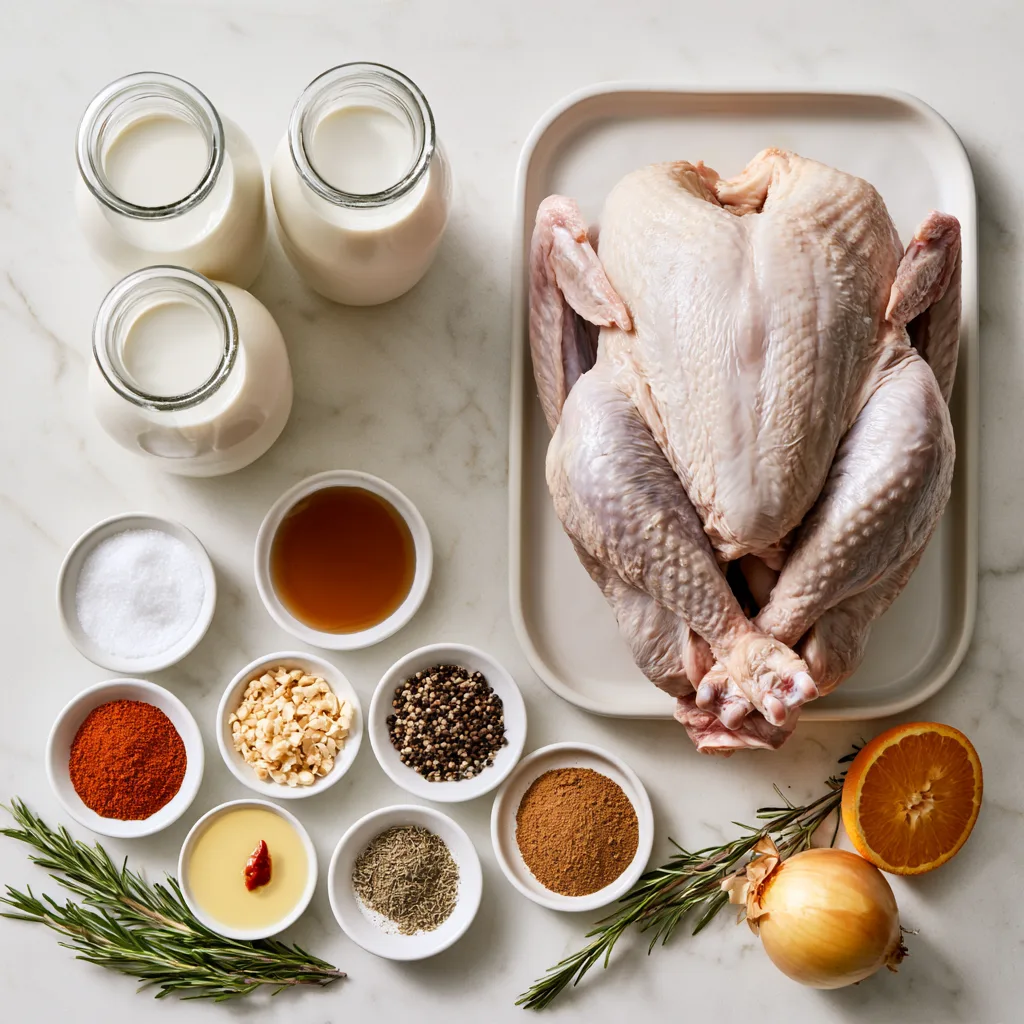
- 1 whole turkey (10–12 pounds), fully thawed, giblets and neck removed, preferably not pre-brined or enhanced
- 8 cups (2 quarts) plain cultured buttermilk
- 50 g kosher salt, measured by weight for accuracy
- 2 tablespoons pure maple syrup
- 6 garlic cloves, lightly crushed
- 1 tablespoon smoked paprika
- 2 teaspoons onion powder
- 2 teaspoons freshly ground black pepper
- 1 teaspoon ground coriander
- 1 teaspoon dried thyme
- 1/2 teaspoon cayenne pepper, optional
For Roasting
- 3 tablespoons unsalted butter, melted
- 1 orange, cut into quarters
- 1 medium yellow onion, cut into quarters
- 3 fresh rosemary sprigs
- 1 cup low-sodium chicken or turkey broth, for the roasting pan
Choosing the Right Ingredients
Turkey: Look for a natural bird that has not already been injected with a salty solution. Packaging that mentions “self-basting,” “enhanced,” or “contains a solution” is a sign to check carefully; adding a full brine to a turkey that is already salted can produce an overly salty result. If using a frozen bird, allow enough time for it to thaw completely in the refrigerator before brining.
Buttermilk: Choose plain, unsweetened cultured buttermilk, not a flavored dairy drink. Its smooth consistency helps distribute the spices around the bird. You need enough mixture to coat the turkey generously inside a large food-safe brining bag; it does not have to float freely in a bucket of liquid.
Salt: Weigh the salt if possible. Different kosher salt brands have different crystal sizes, so the same number of tablespoons can contain surprisingly different amounts of sodium. Using 50 grams makes the seasoning easier to repeat successfully.
Maple syrup and spices: Maple syrup provides background balance, not a dessert-like sweetness. Smoked paprika offers a deeper flavor than ordinary sweet paprika, while cayenne can be left out completely for a mild family-friendly version.
Equipment You’ll Need
Gather an extra-large food-safe brining bag or nonreactive covered container, a sturdy roasting pan fitted with a rack, a large mixing bowl, a whisk, paper towels, and an accurate instant-read or leave-in meat thermometer. Place the brining bag inside a deep tray or stockpot before filling it to catch potential leaks.
Check that the turkey and its container will fit inside the refrigerator before you begin. Holiday refrigerators fill quickly, and cold storage is not optional when working with raw poultry and dairy.
How to Make Buttermilk Brined Turkey
Instructions
1. Thaw the turkey safely. If frozen, thaw the bird in its original packaging on a tray in the refrigerator. Allow roughly one day for every 4–5 pounds. For a 10- to 12-pound turkey, plan on approximately three days, allowing a little extra time if your refrigerator is crowded. Do not thaw it on the countertop.
2. Prepare the turkey. Remove the packaging, neck, and giblets. Check both cavities. There is no need to wash or rinse the turkey; that can spread raw poultry juices around the sink. Set the bird inside a large food-safe brining bag supported by a deep pan.
3. Mix the seasoned buttermilk. In a large bowl, whisk the buttermilk with the weighed kosher salt, maple syrup, crushed garlic, smoked paprika, onion powder, black pepper, coriander, thyme, and optional cayenne. Continue mixing until the salt has dissolved as evenly as possible and the spices are distributed throughout the liquid.
4. Coat and refrigerate. Pour the brine into the bag around the turkey, gently shifting the bird so the liquid reaches the underside and the cavity. Press out excess air, seal securely, and set the bag in its leakproof tray. Refrigerate at 40°F (4°C) or below for 18–24 hours, turning the sealed bag once halfway through if practical. Do not leave it on the counter to marinate.
5. Prepare for roasting. When brining is complete, preheat the oven to 325°F (163°C). Lift the turkey from the bag, let the excess liquid drip away, and discard the used brine. Gently remove heavy clumps of buttermilk or garlic with paper towels, then pat the entire bird thoroughly dry. Do not rinse it.
6. Add aromatics and butter. Position the turkey breast-side up on the rack in a roasting pan. Tuck the wing tips underneath and loosely tie the drumsticks if desired. Place the orange quarters, onion quarters, and rosemary inside the cavity without packing them tightly. Brush the outside with melted unsalted butter. There is no need to add more salt after brining.
7. Prepare the pan. Pour the low-sodium broth into the bottom of the roasting pan, below the rack rather than over the skin. This helps protect drippings from scorching and leaves a flavorful base for optional gravy. Make sure the turkey sits above the liquid instead of simmering in it.
8. Roast until almost done. Transfer the pan to the oven. For a 10- to 12-pound unstuffed bird, allow roughly 165–225 minutes as a broad planning window, with about 195 minutes as the working estimate. Start checking the temperature around 150 minutes. If the skin begins to darken too quickly, cover the browned areas loosely with foil.
9. Verify safe doneness. Insert a meat thermometer into the thickest part of the breast, the innermost thigh, and the innermost wing, staying away from bone. Each location must reach at least 165°F (74°C) before the turkey is removed from the oven. Do not judge doneness by the color of juices or a pop-up timer alone. FoodSafety.gov
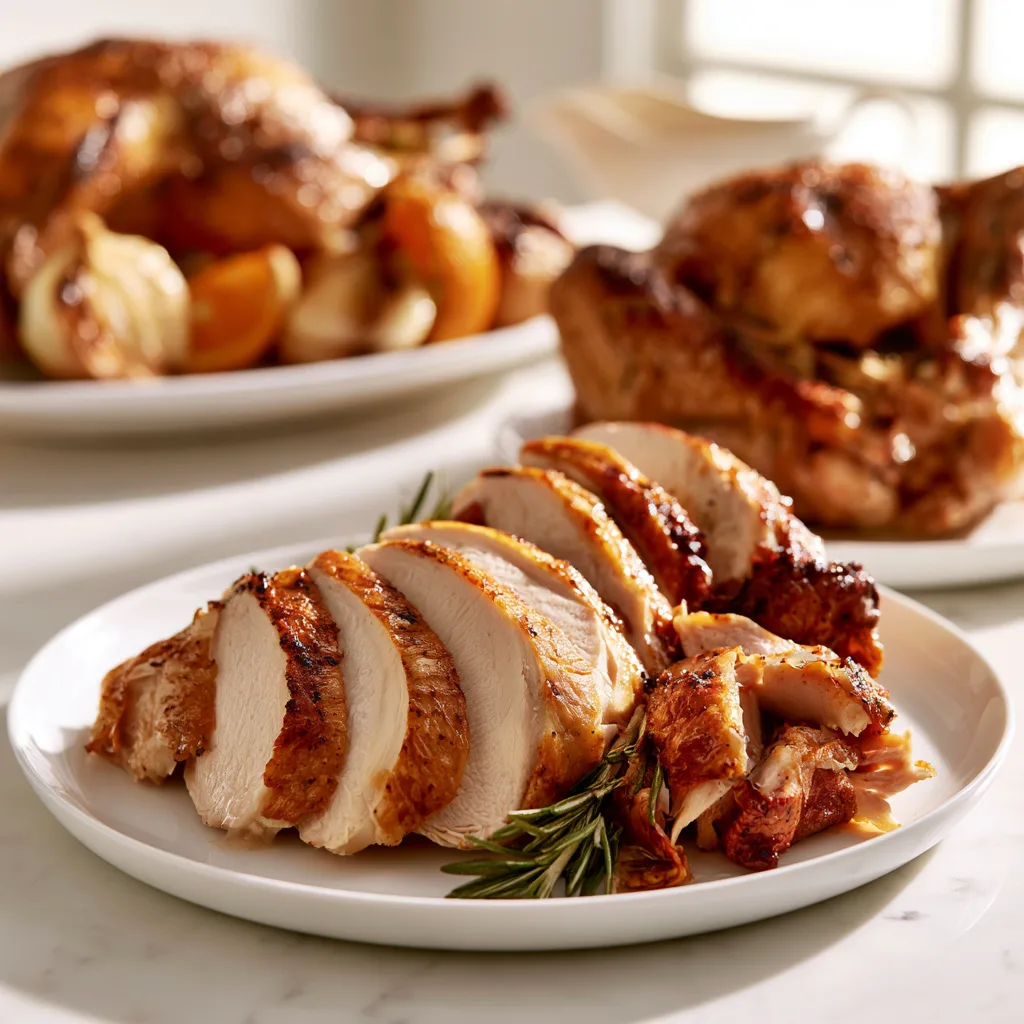
10. Rest, carve, and serve. Transfer the cooked turkey to a clean platter or carving board and rest it for about 30 minutes before cutting. Remove and discard the cooked cavity aromatics, carve the legs and thighs first, and then slice the breast meat across the grain. Spoon over a little warm pan juice or serve gravy on the side.
Tips for Golden Skin and Tender Meat
Dry the Surface Thoroughly
Moisture on the outside of the bird must evaporate before the skin can brown efficiently. Buttermilk is wonderful for the marinade, but a thick wet coating can cause uneven dark patches in the oven. Blot away the excess until the surface feels mostly dry. A thin trace of seasoning is fine; a dripping layer is not.
Keep the Oven at a Consistent Temperature
Opening the oven repeatedly lets heat escape and makes timing unpredictable. Check the skin through the oven window when possible. If the pan appears dry, add a small splash of hot broth or water to the bottom rather than pouring liquid over the turkey.
Trust the Thermometer
Large birds rarely cook at precisely the same rate from one kitchen to another. Breast meat, thigh meat, and the area near the wing joint can all register different temperatures. Checking multiple locations is the best way to avoid a nicely browned but undercooked bird. The safe target is 165°F everywhere specified, even if the turkey looks ready sooner.
Avoid Overbrining
A longer soak is not automatically better. For this recipe, 18–24 hours provides a useful window for seasoning, and there is no need to stretch the buttermilk bath into multiple days. Keep the brine refrigerated throughout and discard it afterward. Never use raw poultry brine as a finishing sauce or uncooked gravy ingredient.
Plan for Refrigerator Space
The most overlooked part of how to brine a turkey in buttermilk is the space it requires. Test-fit the raw turkey, sealed brining bag, and leak-catching tray in the refrigerator a day ahead. This small step prevents a last-minute scramble when the rest of the holiday groceries arrive.
Flavor Variations
Herb-forward holiday turkey: Replace the coriander with one additional teaspoon of dried thyme and add a little finely chopped fresh sage to the brine. The finished flavor leans toward classic Thanksgiving stuffing herbs.
Gentle citrus version: Add the finely grated zest of one orange to the buttermilk mixture. Citrus zest is more aromatic than orange juice and will not unnecessarily thin the brine. Keep the orange quarters in the cavity for roasting.
Spicy smoked turkey: Increase the cayenne to one teaspoon and add an additional half teaspoon of smoked paprika. This gives the roasted skin more heat while preserving the savory character of the dish.
Dairy-free alternative: If avoiding dairy, use a conventional saltwater brine formulated for turkey instead. Dairy-free milk substitutes do not reliably behave like cultured buttermilk and should not be treated as a direct one-for-one swap for the same result.
For a smaller gathering, turkey breast can be more practical than a whole bird, but it needs a separately adjusted brine quantity and cooking schedule. The times in this article are specifically for a 10- to 12-pound whole turkey.
What to Serve With Buttermilk Brined Turkey
A rich, gently tangy turkey pairs beautifully with side dishes that add contrast. Creamy mashed potatoes and a savory gravy make a traditional foundation, while roasted carrots or Brussels sprouts bring caramelized vegetable flavor. Cranberry sauce cuts through the richness, and a crisp apple-fennel salad offers something fresh between heavier bites.
For a Thanksgiving table, consider a menu of roasted buttermilk turkey, cornbread dressing baked in its own dish, green beans, sweet potato casserole, dinner rolls, and cranberry-orange sauce. Keeping the dressing separate from the bird also makes checking doneness simpler.
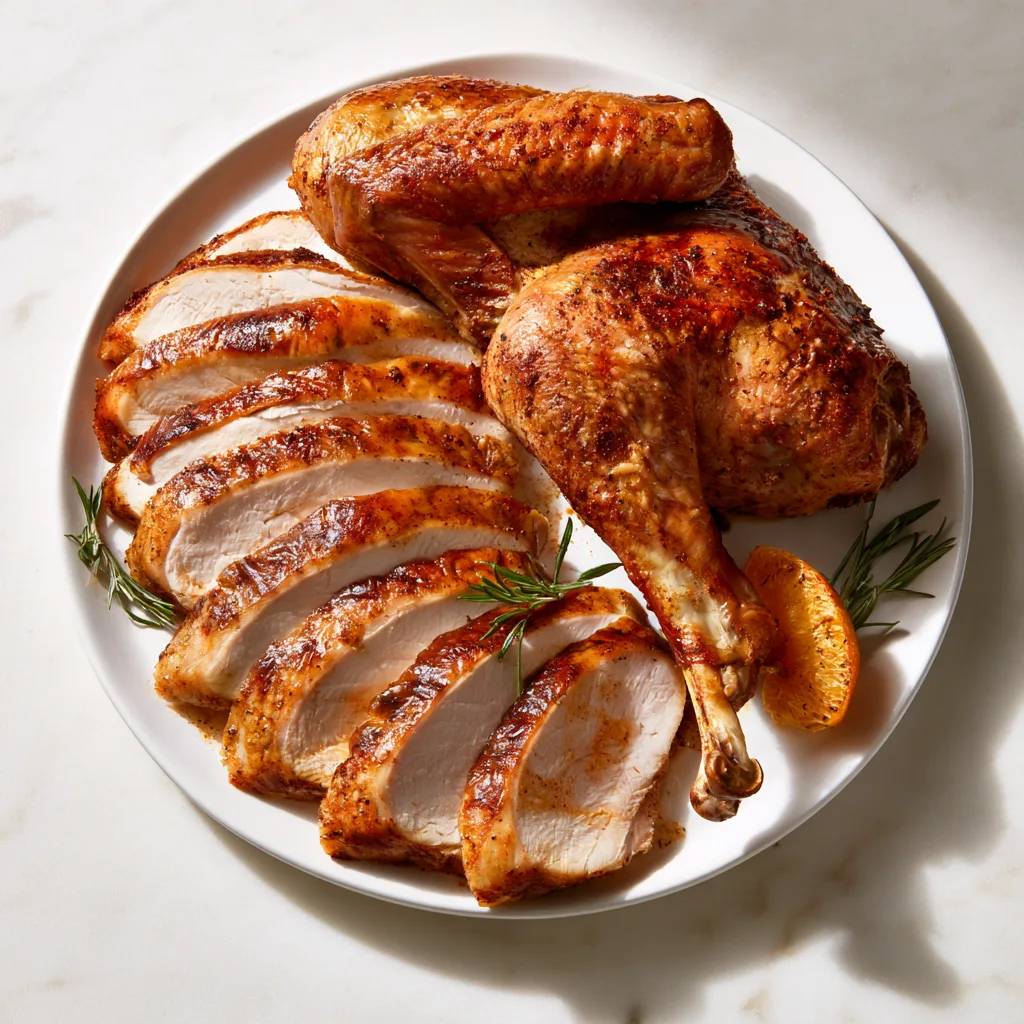
To present the turkey, use a large warm platter, arrange white and dark meat in distinct groups, and tuck a few clean rosemary sprigs and roasted orange slices around the edges. Avoid covering the crisp skin in gravy before serving; let guests add their preferred amount at the table.
Make-Ahead Planning for a Stress-Free Holiday
Because brining occupies an entire day, work backward from your serving time. If dinner is at 5 p.m. on Thursday, place the thawed turkey in buttermilk on Wednesday morning or early afternoon. On Thursday, allow roughly 30 minutes for final preparation, approximately three hours and 15 minutes for roasting, and 30 minutes for resting. Build in extra oven time because a thermometer—not the clock—determines when the turkey is ready.
The spice mixture can be measured in advance and stored covered in a dry place, while the onion, orange, and rosemary can be prepared shortly before roasting. Never mix the raw turkey into the brine until the bird is fully thawed and refrigerator space is ready. If your schedule is tight, prepare sides the day before rather than trying to rush the roast.
Storing and Reheating Leftovers
Refrigerate carved turkey in shallow, airtight containers within two hours of cooking, and use refrigerated leftovers within three to four days. For longer storage, freeze portions promptly in freezer-safe packaging. Keeping a little gravy or broth with the meat can help preserve a pleasant texture when reheating.
To reheat, place slices in a covered baking dish with a small splash of broth and warm gently until the center reaches 165°F (74°C). Covering the dish prevents excessive drying. Turkey sandwiches, vegetable soup, and turkey-and-rice bowls are easy uses for leftovers, but they should still follow the same safe storage guidance. CDC
Frequently Asked Questions
Can I brine a frozen turkey in buttermilk?
No. Thaw the turkey completely using a safe method before starting this recipe. A still-frozen center prevents even contact with the brine and makes the timing unreliable. Refrigerator thawing is the easiest approach to plan around for a whole holiday bird.
Will buttermilk make the turkey taste sour?
Not when balanced with salt, savory spices, and roasting. Buttermilk contributes mild tang and a rounded flavor, but the finished turkey should taste primarily of roasted meat, herbs, garlic, and gentle smoky seasoning. The maple syrup helps soften the acidity without turning the dish sweet.
Can I prepare this recipe without maple syrup?
Yes. Omit it for a fully savory version, or use a tablespoon of honey if that is what you have. The salt, buttermilk, and accurate roasting method matter much more to the final texture than the small amount of sweetener.
Should I rinse the turkey after brining?
No. Let the excess brine drain away and pat the bird thoroughly dry with paper towels. Washing raw poultry can spread contamination to surrounding surfaces. Discard the used brine and wash your hands, sink-adjacent surfaces, utensils, and any equipment that touched raw turkey.
How do I know when buttermilk brined turkey is done?
Use a reliable food thermometer in the thickest breast, innermost thigh, and innermost wing. All three must register at least 165°F (74°C). Brown skin and clear-looking juices are not dependable substitutes for a temperature reading.
Is this a good recipe for first-time Thanksgiving cooks?
Yes, provided there is enough refrigerator space and a food thermometer is available. The brine itself is simply whisked together, and the oven does the cooking. The main skills are planning the thaw, keeping the turkey cold while brining, monitoring the temperature, and allowing it to rest before carving.
A Holiday Centerpiece Worth Planning Ahead For
Buttermilk Brined Turkey combines simple preparation with the comforting flavor of a traditional holiday roast. The buttermilk and salt build the foundation, the smoky herbs make the kitchen smell inviting, and the thermometer provides the confidence to serve turkey that is both juicy and safely cooked. With a little planning the day before, the finished bird can take center stage while the rest of the meal comes together.
Food safety references: FoodSafety.gov turkey roasting and thawing guide and CDC holiday turkey safety guidance.
Buttermilk-Brined Turkey
Ingredients
Equipment
Method
- Thaw turkey completely in the refrigerator, allowing approximately 24 hours per 4–5 pounds. Remove giblets and neck; do not rinse the raw turkey.
- Whisk buttermilk, 50 g kosher salt, maple syrup, crushed garlic, smoked paprika, onion powder, black pepper, coriander, thyme, and optional cayenne in a large bowl.
- Place turkey in a food-safe brining bag inside a leakproof tray. Pour in brine, distribute it around the bird, seal, and refrigerate at 40°F (4°C) or below for 18–24 hours; turn bag once if practical.
- Preheat oven to 325°F (163°C). Remove turkey from brine, discard used brine, scrape off heavy excess coating, and pat the turkey thoroughly dry without rinsing.
- Put turkey breast-side up on a rack in a roasting pan. Tuck wings under, loosely add orange, onion, and rosemary to cavity, and brush skin with melted butter. Do not add more salt.
- Pour broth into bottom of roasting pan below the rack. Roast for roughly 165–225 minutes; begin checking at 150 minutes. Tent with foil if skin becomes too dark.
- Check thickest breast, innermost thigh, and innermost wing with thermometer, avoiding bone. Continue roasting until every location reaches at least 165°F (74°C).
- Transfer turkey to clean platter, rest for 30 minutes, discard cavity aromatics, carve, and serve warm with gravy or pan juices.