
Thanksgiving Babka – Pumpkin, Cranberry & Pecan Babka with Maple Glaze
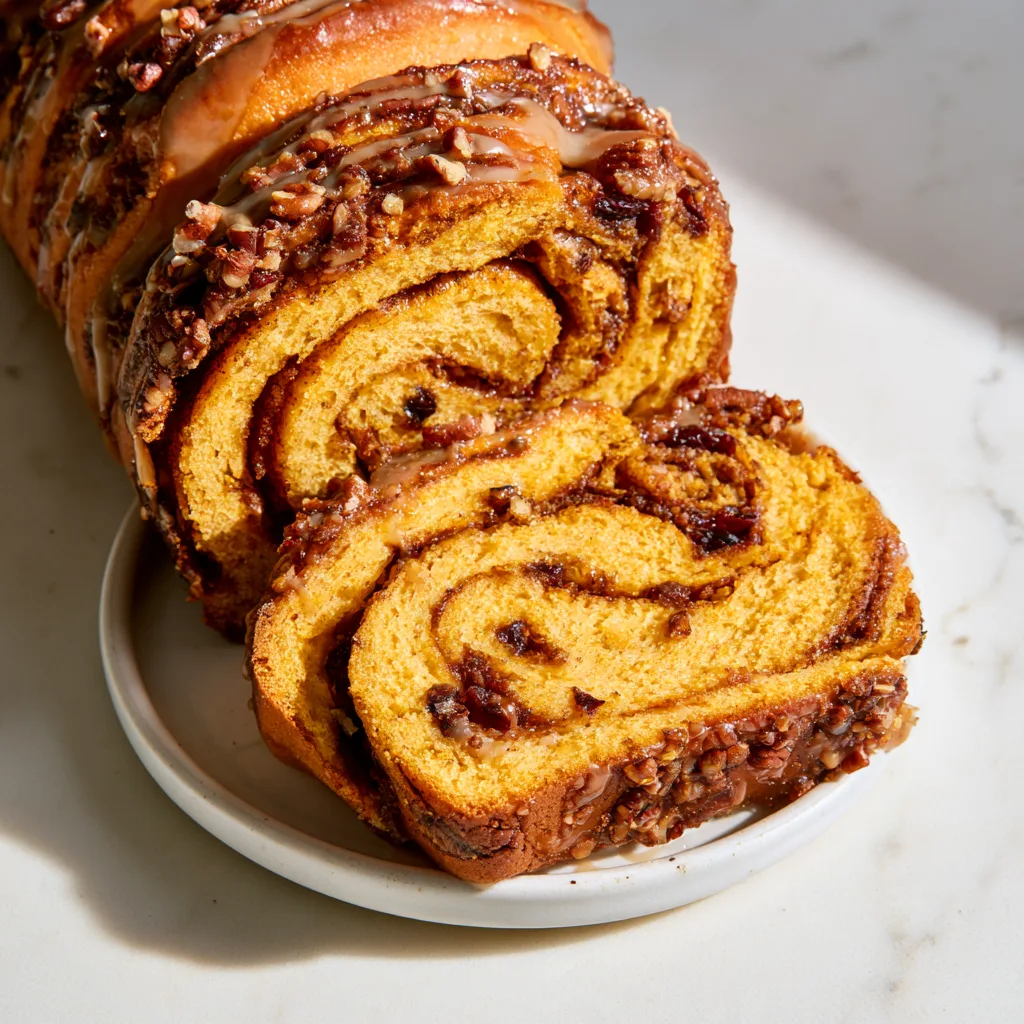
Thanksgiving Babka is a beautiful holiday sweet bread that combines soft pumpkin-enriched dough, cinnamon sugar swirls, toasted pecans, tart dried cranberries, and a delicate maple glaze. Every slice reveals layers of warm autumn flavors wrapped inside a golden, buttery loaf that looks just as impressive as it tastes.
Traditional babka is known for its distinctive twisted shape and rich, tender texture. This Thanksgiving-inspired version brings seasonal ingredients into that classic preparation, creating something that feels equally appropriate for a holiday breakfast, an afternoon coffee break, or a dessert table filled with autumn favorites.
The pumpkin puree gives the dough a naturally warm color and helps create a soft, moist crumb. Brown sugar and cinnamon provide a comforting sweetness, while pecans contribute a pleasant crunch. Dried cranberries introduce small bursts of tartness that balance the richness of the bread.
A final drizzle of maple glaze ties everything together without overwhelming the carefully layered flavors.
Although homemade babka requires patience while the dough rises, the individual steps are straightforward. With a little planning, this Thanksgiving babka can become a memorable addition to your holiday baking traditions.
What Makes Thanksgiving Babka Special?
Thanksgiving desserts frequently feature pumpkin, apples, pecans, cinnamon, and maple syrup. These ingredients appear in everything from traditional pies to cookies and coffee cakes.
Babka offers a different way to bring those familiar flavors to the table.
Instead of baking everything into a single uniform batter, the filling is rolled inside an enriched yeast dough. The dough is then sliced lengthwise and twisted, exposing the filling and creating the beautiful layered appearance that makes babka recognizable.
This technique produces a bread with contrasting textures. The exterior develops a lightly golden crust, while the interior stays soft, rich, and tender.
The cinnamon sugar filling creates concentrated ribbons of sweetness, and the pecans add texture throughout the loaf.
Unlike a typical pumpkin cake, this pumpkin babka recipe has the satisfying structure of homemade bread while still delivering the flavors of an indulgent seasonal dessert.
Another advantage is its versatility. Thanksgiving Babka can be served slightly warm, at room temperature, or toasted the following morning.
It also makes an attractive homemade gift when wrapped carefully in parchment paper and presented in a decorative box.
Why You’ll Love This Thanksgiving Babka Recipe
There are several reasons to include this festive bread in your holiday baking plans.
- Beautiful presentation: The distinctive twisted layers make the finished loaf an impressive centerpiece.
- Seasonal ingredients: Pumpkin, cinnamon, cranberries, pecans, and maple syrup create a balanced combination of autumn flavors.
- Soft, buttery texture: The enriched yeast dough produces a tender crumb that stays pleasant even after cooling.
- Balanced sweetness: Tart cranberries and toasted nuts contrast with the sweet cinnamon filling.
- Make-ahead convenience: The dough can be refrigerated overnight, making Thanksgiving morning easier.
- Versatile serving options: Serve it for breakfast, brunch, dessert, or alongside afternoon coffee.
- Excellent leftovers: Individual slices can be toasted or transformed into French toast.
Despite its elaborate appearance, the shaping method becomes surprisingly approachable once the dough has been rolled and filled.
Ingredients for Thanksgiving Babka
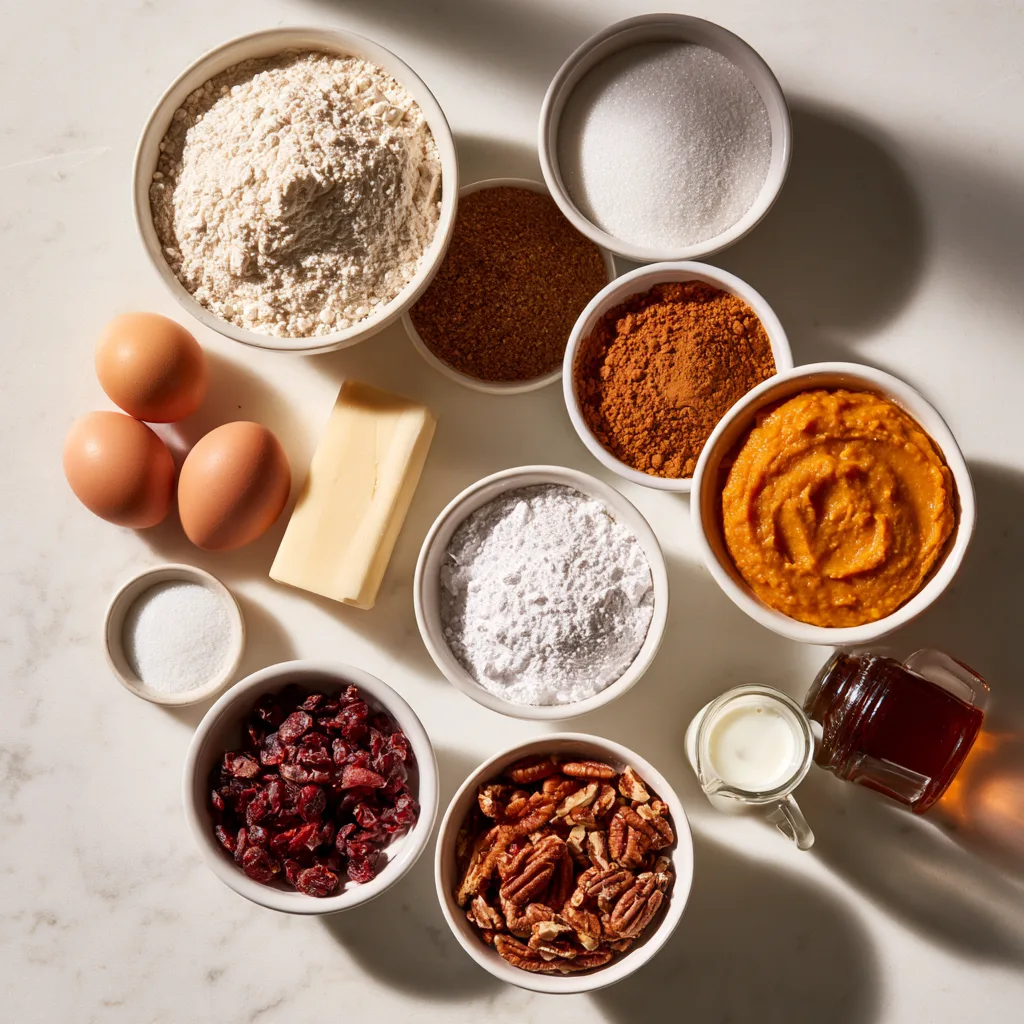
This cranberry pecan babka uses familiar baking ingredients, with pumpkin and maple syrup providing its distinctive Thanksgiving character.
For the Pumpkin Babka Dough
- 3 1/4 cups (390 g) all-purpose flour
- 2 1/4 teaspoons instant yeast
- 1/3 cup granulated sugar
- 3/4 teaspoon fine salt
- 1/2 teaspoon ground cinnamon
- 1/2 cup (120 ml) whole milk, lukewarm
- 1/2 cup (120 g) pure pumpkin puree, room temperature
- 2 large eggs, room temperature
- 5 tablespoons unsalted butter, softened
For the Cinnamon Pecan Filling
- 4 tablespoons unsalted butter, very soft
- 1/2 cup packed light brown sugar
- 1 1/2 teaspoons ground cinnamon
- 1 teaspoon pumpkin pie spice
- 1/2 cup finely chopped toasted pecans
- 1/3 cup dried cranberries, roughly chopped
For the Maple Glaze
- 1/2 cup powdered sugar
- 1 1/2 tablespoons pure maple syrup
- 1–2 teaspoons whole milk
- 1 small pinch of salt
Ingredient Notes
Pumpkin puree: Use plain pumpkin puree rather than pumpkin pie filling. Pie filling contains additional sweeteners and spices that can change the flavor and consistency of the dough.
Instant yeast: Instant yeast can be mixed directly with the flour, making preparation simple. If using active dry yeast instead, activate it in the lukewarm milk according to the package instructions before incorporating it into the dough.
Butter: Softened butter blends more easily into enriched dough. Avoid melting it, as melted butter changes how the dough comes together.
Brown sugar: Light brown sugar creates a caramel-like sweetness that complements the warm spices.
Pecans: Toasting the pecans before adding them to the filling improves their aroma and brings out their natural nutty flavor.
Dried cranberries: Chopping the cranberries helps distribute them evenly and prevents large pieces from interfering with the delicate layers.
Maple syrup: Pure maple syrup provides the most recognizable maple flavor. Pancake syrup may produce a different result.
How to Make Thanksgiving Babka
The process involves preparing a soft pumpkin dough, allowing it to rise, adding the filling, shaping the loaf, and baking until golden.
Step 1: Prepare the Dry Ingredients
In a large mixing bowl, combine the all-purpose flour, instant yeast, granulated sugar, salt, and ground cinnamon.
Whisk everything together until evenly distributed.
Combining the dry ingredients first helps ensure the yeast, salt, and cinnamon are incorporated consistently throughout the dough.
Step 2: Add the Wet Ingredients
Add the lukewarm milk, pumpkin puree, and eggs to the flour mixture.
Mix using a wooden spoon or the dough hook attachment of a stand mixer until a rough, slightly sticky dough begins to form.
The dough may initially look uneven or shaggy. This is normal.
Continue mixing until there are no large pockets of dry flour.
Step 3: Knead the Dough
Begin kneading the dough on low speed.
Gradually add the softened butter, a small piece at a time, allowing each addition to become incorporated before adding more.
Continue kneading until the dough becomes smooth, elastic, and slightly tacky, approximately 10–12 minutes in a stand mixer.
If kneading by hand, allow approximately 12–15 minutes.
The finished dough should feel soft and supple rather than stiff.
Avoid adding large amounts of extra flour. A slightly sticky dough generally produces a more tender babka.
Step 4: Allow the First Rise
Transfer the dough to a lightly greased bowl.
Cover with plastic wrap or a clean kitchen towel and leave in a warm, draft-free location for approximately 75–90 minutes.
The dough should become noticeably puffy and increase substantially in volume.
Because this dough contains butter, eggs, and pumpkin puree, it may rise more slowly than a basic bread dough.
Allow the dough to develop naturally rather than rushing the process.
Step 5: Prepare the Filling
While the dough rises, combine the brown sugar, cinnamon, and pumpkin pie spice in a small bowl.
Stir until the spices are evenly distributed.
Have the softened butter, toasted pecans, and chopped dried cranberries ready.
Lightly grease a 9 × 5-inch loaf pan and line it with parchment paper, leaving a little overhang for easy removal.
Step 6: Roll and Fill the Dough
Once the first rise is complete, transfer the dough to a lightly floured work surface.
Roll it into a rectangle approximately 12 × 16 inches.
Spread the softened butter evenly over the surface, leaving a narrow border around the edges.
Sprinkle the brown sugar and spice mixture over the butter.
Distribute the toasted pecans and dried cranberries evenly across the filling.
Gently press the nuts and cranberries into the dough to help them remain in place during rolling.
Step 7: Shape the Babka
Starting from one of the longer sides, roll the dough tightly into a log.
Pinch the seam closed.
Position the log seam-side down, then use a sharp knife to slice it lengthwise into two long halves.
The filling layers should now be visible.
Arrange the two halves beside each other with their cut sides facing upward.
Carefully twist them together, keeping the exposed filling visible as much as possible.
Transfer the twisted dough into the prepared loaf pan, gently tucking the ends underneath.
Don’t worry if the shape looks slightly irregular. The rising and baking process naturally softens the appearance of the twists.
Step 8: Allow the Second Rise
Loosely cover the shaped babka and leave it in a warm location for approximately 40–55 minutes.
The dough should become visibly puffy and expand within the loaf pan.
Near the end of the rising period, preheat the oven to 350°F (175°C).
Avoid overproofing, which can weaken the structure and cause the loaf to collapse during baking.
Step 9: Bake Until Golden
Place the loaf pan on the center oven rack.
Bake for approximately 40–45 minutes, or until the top is deeply golden brown and the bread is cooked through.
If the surface begins browning too quickly, loosely cover it with aluminum foil during the final portion of baking.
For the most reliable result, check the internal temperature in a section of dough rather than directly inside the sugary filling.
A temperature around 190–195°F (88–91°C) generally indicates that the enriched bread is baked.
Remove the babka from the oven and allow it to cool in the pan for approximately 20 minutes.
Carefully lift it out using the parchment paper and transfer it to a wire rack.
Step 10: Prepare the Maple Glaze
In a small bowl, whisk together the powdered sugar, maple syrup, and salt.
Add the milk gradually until the glaze becomes smooth and pourable.
The consistency should be thick enough to create visible ribbons across the bread without immediately running off.
Once the babka has cooled to room temperature, drizzle the maple glaze over the surface.
Allow the glaze to set briefly before slicing.
For the neatest presentation, use a serrated bread knife and gentle sawing motions.
Tips for Making Perfect Thanksgiving Babka
Use Room-Temperature Ingredients
Cold eggs or pumpkin puree can slow down dough development and make the butter more difficult to incorporate.
Allow refrigerated ingredients to sit at room temperature before beginning.
The milk should be pleasantly warm, not hot, since excessive heat can damage the yeast.
Pay Attention to Dough Texture
Enriched dough should feel soft and slightly tacky after kneading.
It doesn’t need to be completely dry or rigid.
Adding too much flour makes the dough harder to stretch and can produce a dense finished loaf.
Don’t Rush the Rising Time
Temperature, yeast activity, and dough richness all influence fermentation.
Instead of relying exclusively on the clock, watch for visible expansion and a noticeably lighter texture.
A cooler kitchen may require additional rising time.
Keep the Filling Even
Distribute the cinnamon sugar mixture, pecans, and cranberries evenly.
Large piles of filling can create gaps inside the loaf or make the dough difficult to twist.
An even layer produces more consistent swirls.
Use a Sharp Knife
A sharp knife makes it easier to cut the filled dough lengthwise without crushing the layers.
If the dough feels especially soft, chilling the rolled log for about 10 minutes can make shaping easier.
Cool Before Glazing
Applying glaze to very hot bread causes it to melt and disappear into the surface.
Waiting until the loaf is cool gives the finished maple glazed babka a more attractive appearance.
Delicious Thanksgiving Babka Variations
One of the best things about babka is how easily the filling can be adapted to different preferences.
Apple Cinnamon Babka
Replace the dried cranberries with a small amount of finely diced apple that has been briefly cooked and cooled.
Cooking the apple first removes some excess moisture and helps prevent soggy layers.
The combination of apples, cinnamon, and pecans creates a flavor reminiscent of classic apple pie.
Chocolate Pecan Babka
For a richer dessert, replace the cranberries with mini chocolate chips.
Keep the toasted pecans and cinnamon filling for a combination of chocolate, nuts, and warm spices.
Dark chocolate works particularly well because its slight bitterness balances the sweet dough.
Orange Cranberry Babka
Add a little finely grated orange zest to the filling.
Orange brings freshness and enhances the natural tartness of the cranberries.
This variation is especially attractive for holiday brunches.
Walnut Pumpkin Babka
Substitute chopped toasted walnuts for the pecans.
Walnuts introduce a slightly earthier flavor while providing a similar crunchy texture.
Babka Without Nuts
For a nut-free variation, omit the pecans and increase the dried cranberries slightly.
If avoiding nuts because of an allergy, check the packaging of all remaining ingredients for potential cross-contact.
How to Serve Thanksgiving Babka
Thanksgiving Babka is versatile enough to appear at several different holiday meals.
For Thanksgiving breakfast: Serve thick slices alongside coffee, tea, or warm milk. The lightly sweetened bread pairs beautifully with a simple breakfast spread.
For holiday brunch: Arrange slices on a serving platter with fresh fruit, yogurt, and other breakfast favorites.
As Thanksgiving dessert: Serve smaller portions after the main meal. The warm spices and maple glaze complement traditional holiday desserts without requiring another pie.
With afternoon coffee: A slice of babka makes a satisfying treat during the quieter moments of holiday preparations.
Lightly toasted: Gently toast leftover slices and serve them warm. The cinnamon filling becomes fragrant, while the edges develop a pleasant crispness.
For a particularly indulgent breakfast, use slightly stale slices to prepare French toast.
The enriched dough absorbs the egg mixture beautifully, creating a soft center and golden exterior.
Can You Make Thanksgiving Babka Ahead of Time?
Absolutely. In fact, preparing some components ahead can make holiday baking much more manageable.
One option is to prepare the dough the evening before serving.
After kneading, cover the dough tightly and refrigerate it overnight rather than allowing it to complete the normal room-temperature first rise.
The slower fermentation helps develop flavor and makes the dough firmer and easier to handle.
The following day, remove the dough from the refrigerator and allow it to become workable if necessary.
Roll, fill, and shape the babka as directed.
Allow the shaped loaf to rise until visibly puffy before baking. Cold dough may need longer than the standard second rising time.
Another option is to bake the loaf one day ahead.
Once completely cooled, store it tightly wrapped at room temperature.
For the freshest appearance, prepare the maple glaze shortly before serving.
How to Store and Freeze Thanksgiving Babka
Proper storage helps preserve the tender texture of this homemade Thanksgiving sweet bread.
Room-Temperature Storage
Allow the babka to cool completely before wrapping.
Store it in an airtight container or wrap tightly in plastic wrap.
Keep it at room temperature for up to 2–3 days.
Avoid leaving exposed slices uncovered, as enriched bread can dry out relatively quickly.
Freezing Instructions
Thanksgiving Babka freezes well, especially before glazing.
Wrap the cooled loaf tightly in plastic wrap, followed by a layer of aluminum foil or a freezer-safe bag.
Freeze for up to 2 months for the best quality.
Individual slices can also be wrapped separately, making it easy to defrost only what is needed.
Thaw at room temperature while still wrapped to minimize moisture loss.
Reheating
For a freshly baked texture, warm individual slices briefly in a low oven or toaster oven.
If the loaf has already been glazed, heat gently to avoid completely melting the icing.
A few minutes of gentle warming is usually sufficient.
Common Mistakes to Avoid
Even experienced home bakers can encounter challenges when making enriched yeast bread.
The dough is too sticky. Pumpkin puree contributes moisture, so the dough may initially feel softer than expected. Knead thoroughly before deciding whether additional flour is necessary.
The babka doesn’t rise. Check that the yeast is fresh and that the milk wasn’t excessively hot. A cold kitchen can also slow fermentation.
The filling leaks out. A small amount of caramelized sugar around the loaf is normal. Excessive leakage may indicate too much filling or an unevenly rolled dough.
The top browns too quickly. Cover the loaf loosely with foil and continue baking until the interior reaches the proper temperature.
The center remains doughy. Babka’s twisted layers make visual doneness difficult to judge. An instant-read thermometer is particularly helpful.
The layers separate while slicing. This can happen when the loaf is cut before it has cooled sufficiently or when the filling is concentrated in large pockets.
Allowing the bread to cool and using a serrated knife helps maintain attractive slices.
Thanksgiving Babka FAQs
What is babka?
Babka is a sweet, enriched yeast bread traditionally associated with Jewish baking traditions, particularly those of Eastern Europe. It is often filled with chocolate or cinnamon and shaped into a twisted loaf.
Modern versions feature many different fillings, including fruit, nuts, spices, and seasonal ingredients.
Does Thanksgiving Babka taste strongly of pumpkin?
No. The pumpkin adds gentle earthy sweetness, moisture, and color rather than an overpowering pumpkin flavor.
The cinnamon, pecans, cranberries, and maple glaze are more prominent in the finished loaf.
Can canned pumpkin puree be used?
Yes. Plain canned pumpkin puree works very well and provides a convenient, consistent ingredient.
Do not substitute sweetened pumpkin pie filling.
Can Thanksgiving Babka be made without a stand mixer?
Yes. The dough can be mixed and kneaded by hand.
Hand kneading requires a little more patience because enriched dough is initially sticky, but the finished result can be equally delicious.
Why does babka need two rises?
The first rise allows the yeast to develop gas and gives the dough time to become lighter and more extensible.
The second rise occurs after shaping and helps the finished loaf develop a tender texture during baking.
Can the maple glaze be omitted?
Yes. The babka is flavorful enough to serve without icing.
For a less sweet finish, omit the glaze or apply only a small amount.
Is Thanksgiving Babka better warm or cold?
Both are excellent options.
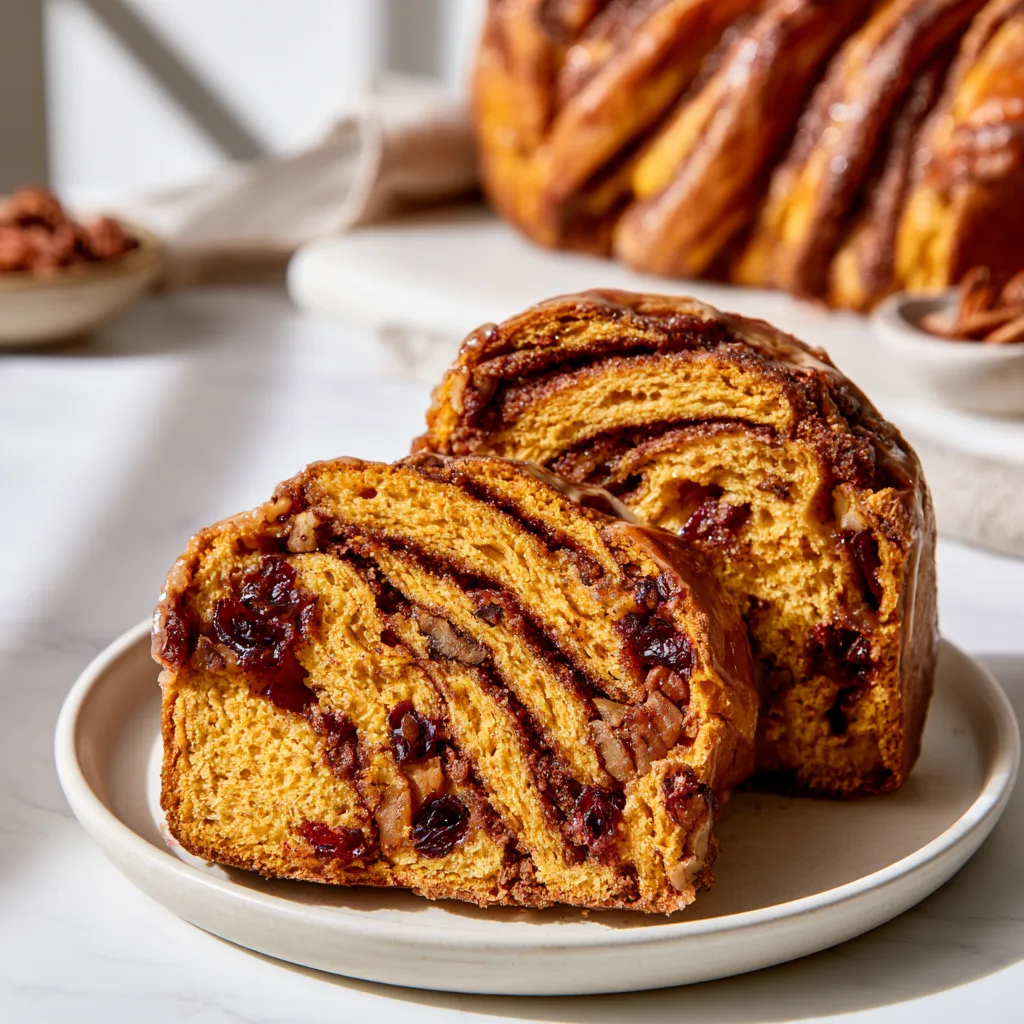
Room-temperature slices are easier to cut neatly and showcase the twisted layers clearly.
Slightly warmed slices have a softer texture and more pronounced cinnamon aroma.
A Little History Behind Babka
Babka has a long connection with Eastern European Jewish baking, where sweet yeast doughs became an important part of home baking traditions.
Historically, bakers used ingredients such as cinnamon, sugar, and sometimes leftover dough to create rich, swirled breads.
Chocolate-filled babka eventually became especially popular, but cinnamon remains one of its most recognizable traditional flavors.
Today, babka appears in bakeries and home kitchens with countless creative fillings.
Thanksgiving Babka is a modern seasonal interpretation rather than a traditional historical Thanksgiving dish.
Combining pumpkin, cranberries, pecans, and maple syrup with babka’s characteristic shape brings familiar American autumn ingredients into a classic baking technique.
The result is a loaf that celebrates both the beauty of traditional bread-making and the creativity of contemporary holiday baking.
Final Thoughts
Thanksgiving Babka combines everything appealing about autumn baking: warm spices, soft homemade bread, toasted nuts, sweet maple glaze, and colorful cranberries.
Its beautiful twisted appearance makes it a natural centerpiece for a Thanksgiving breakfast or dessert table, while its tender pumpkin dough keeps every slice rich and satisfying.
Although the process takes several hours when rising time is included, most of that time is hands-off. The actual preparation involves familiar techniques such as mixing, kneading, rolling, and shaping.
Whether prepared for a family gathering, shared with friends, or enjoyed over a quiet holiday morning, this cranberry pecan babka is a wonderful way to introduce something different to the Thanksgiving table.
Thanksgiving Babka
Ingredients
Equipment
Method
- In a large mixing bowl, whisk together the flour, instant yeast, granulated sugar, salt, and cinnamon until evenly combined.
- Add the lukewarm milk, pumpkin puree, and eggs. Mix until a rough, slightly sticky dough forms and no large pockets of dry flour remain.
- Knead the dough, gradually incorporating the softened butter a little at a time. Continue kneading for approximately 10–12 minutes using a stand mixer, or 12–15 minutes by hand, until smooth, elastic, and slightly tacky.
- Transfer the dough to a lightly greased bowl. Cover and let rise in a warm, draft-free location for approximately 75–90 minutes, until noticeably puffy and substantially increased in volume.
- Combine the brown sugar, cinnamon, and pumpkin pie spice in a small bowl. Grease a 9 x 5-inch loaf pan and line it with parchment paper, leaving an overhang for easy removal.
- Transfer the risen dough to a lightly floured surface. Roll into an approximately 12 x 16-inch rectangle. Spread the softened butter over the surface, leaving a narrow border. Sprinkle evenly with the spiced brown sugar mixture, toasted pecans, and chopped dried cranberries.
- Roll the dough tightly from one of the longer sides into a log. Pinch the seam closed, place seam-side down, and cut the log lengthwise into two halves. Twist the halves together with their cut sides facing upward, then transfer to the prepared loaf pan.
- Loosely cover the shaped babka and let rise for approximately 40–55 minutes, until visibly puffy. Preheat the oven to 350°F (175°C) toward the end of the rising period.
- Bake on the center oven rack for 40–45 minutes, until deeply golden brown and cooked through. If the top browns too quickly, loosely cover with aluminum foil. The internal temperature of the bread should reach approximately 190–195°F (88–91°C).
- Cool in the pan for approximately 20 minutes, then transfer to a wire rack and allow to cool completely.
- Whisk together the powdered sugar, pure maple syrup, and salt. Gradually add 1–2 teaspoons of milk until smooth and pourable. Drizzle over the cooled babka and allow the glaze to set briefly before slicing.


