Pomegranate Chicken With Walnuts – A Beautiful Thanksgiving Main Dish
Thanksgiving dinner is traditionally associated with roasted turkey, but a memorable holiday meal doesn’t have to revolve around the same centerpiece every year. For families looking for something different, Pomegranate Chicken With Walnuts offers an elegant combination of tender chicken, rich walnuts, and a beautifully balanced sweet-tart pomegranate sauce.
Inspired by the famous Persian dish fesenjan, this recipe transforms simple ingredients into a flavorful main course that feels especially appropriate for autumn celebrations.
The chicken slowly simmers in a sauce made with finely ground walnuts, pomegranate molasses, aromatic onions, and warming spices. As the ingredients cook together, the walnuts naturally thicken the sauce, creating a silky texture without requiring flour or cream.
Pomegranate molasses adds a distinctive tanginess that cuts through the richness of the nuts, while a small amount of maple syrup can soften the acidity when needed.
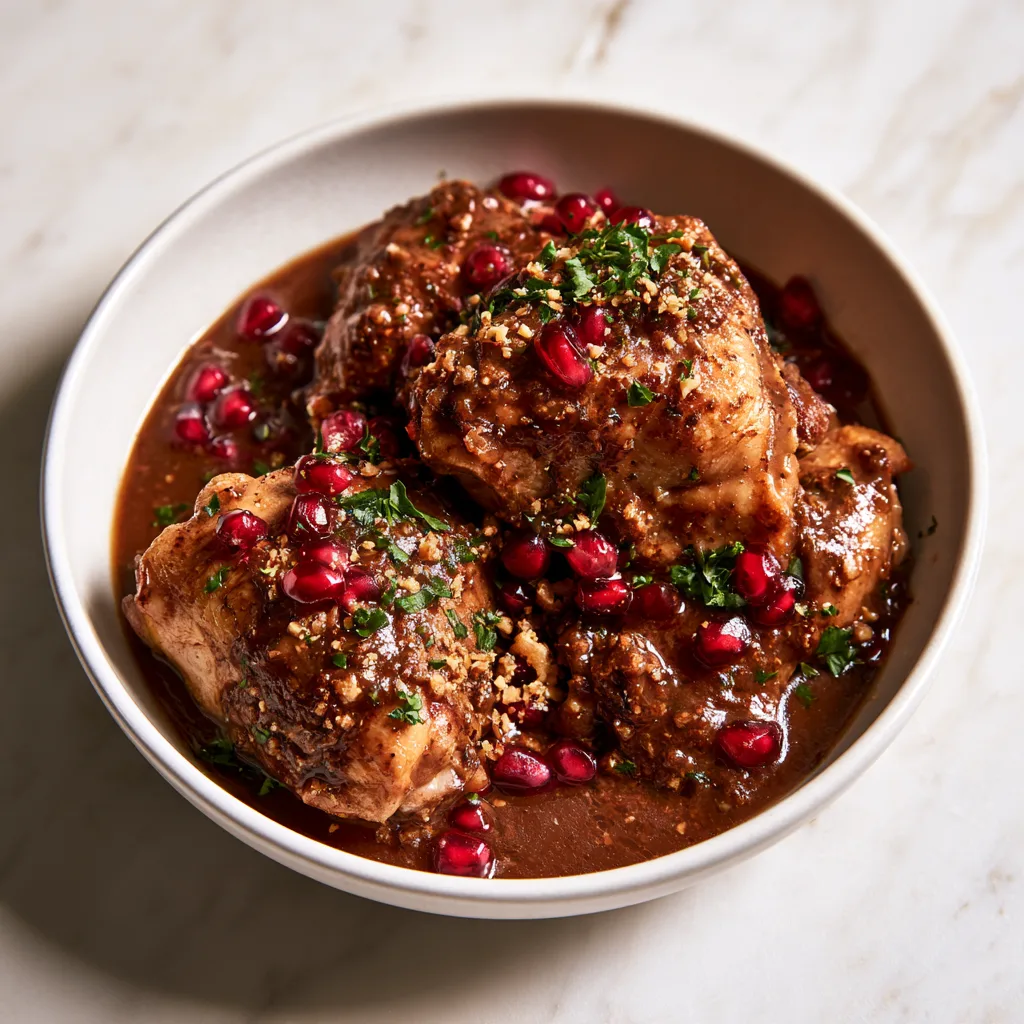
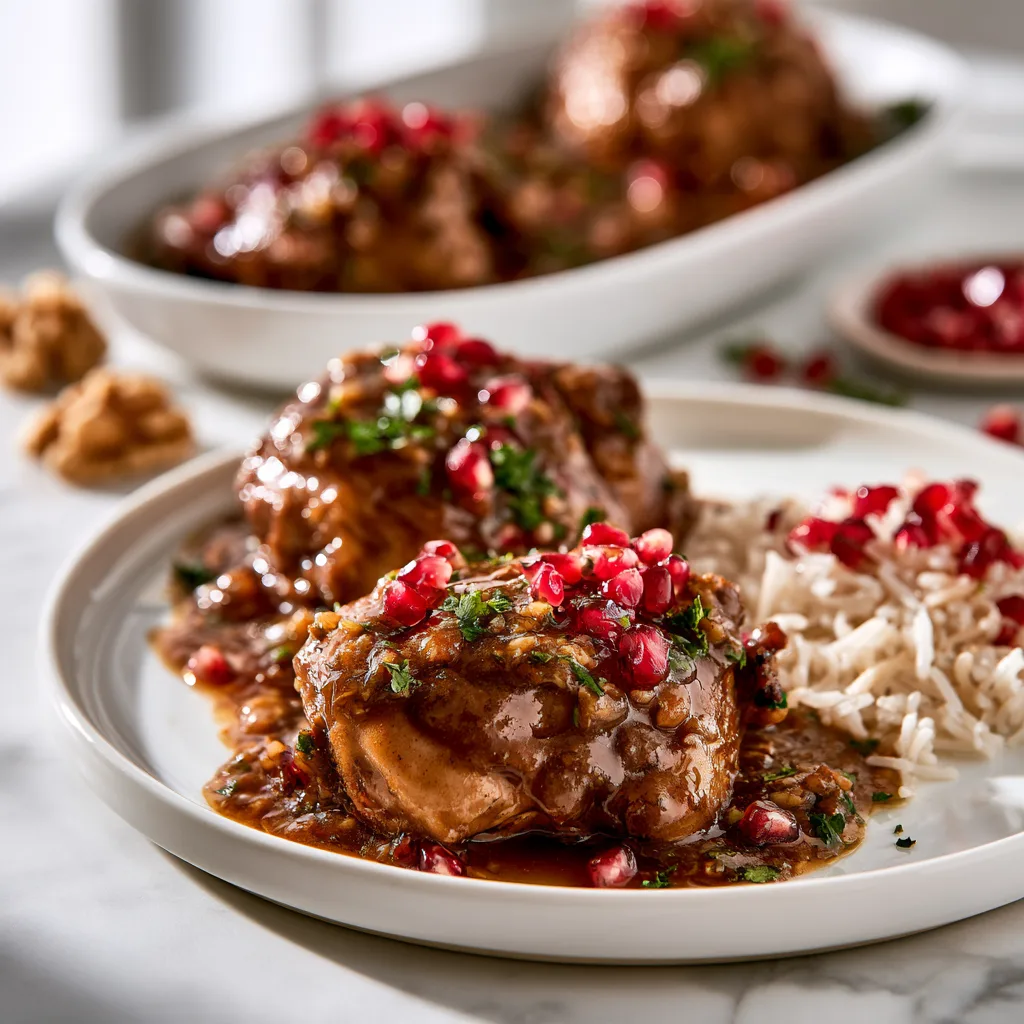
The result is a sophisticated yet comforting dish with a gorgeous deep reddish-brown color. Fresh pomegranate seeds scattered over the finished chicken provide a bright contrast that makes the presentation particularly attractive.
Whether you’re organizing a smaller Thanksgiving gathering, preparing an alternative to turkey, or simply introducing new flavors to your holiday table, this Thanksgiving chicken recipe is a wonderful choice.
Even better, much of the cooking happens in a single pot, and the dish can be prepared ahead of time.
Why Pomegranate Chicken With Walnuts Is Perfect for Thanksgiving
Thanksgiving cooking often involves balancing multiple dishes, oven space, and preparation schedules. Choosing a main course that delivers impressive flavor without demanding constant attention can make the entire holiday meal easier to manage.
Pomegranate Chicken With Walnuts has several qualities that make it especially suitable for Thanksgiving.
A beautiful holiday presentation
The rich burgundy-brown sauce creates an inviting appearance, particularly when finished with ruby-red pomegranate seeds and fresh green parsley. Served on a white platter, the contrasting colors look festive without requiring elaborate decorations.
Deep, comforting autumn flavors
Walnuts provide an earthy richness, while cinnamon and turmeric add gentle warmth. The sweet-tart pomegranate sauce brings brightness to the dish, creating a flavor combination that complements traditional fall vegetables.
A practical alternative to turkey
Unlike a whole turkey, chicken thighs don’t require carving at the table. Individual portions are easy to arrange, serve, and reheat.
Ideal for preparing ahead
The flavors of this pomegranate walnut chicken continue to develop as it rests. Preparing it the day before Thanksgiving allows the sauce to become even more cohesive, leaving fewer tasks for the holiday itself.
Naturally rich without heavy cream
Finely ground walnuts give the sauce its distinctive body. There is no need for cream, butter, or a flour-based thickener.
The Persian Inspiration Behind This Recipe
The flavor combination of chicken, walnuts, and pomegranate comes from Persian cuisine, particularly a traditional stew known as Fesenjan or fesenjoon.
Fesenjan is celebrated for its distinctive balance of richness, sweetness, and acidity. Ground walnuts form the foundation of the sauce, while pomegranate concentrate contributes its characteristic fruity tartness.
Different versions can lean sweeter or more sour, depending on the pomegranate product used and individual preferences.
Traditional preparations may include chicken or other poultry and are commonly served with rice.
This Thanksgiving adaptation takes inspiration from those flavors while using boneless chicken thighs for convenient holiday serving and an optional touch of maple syrup to complement the autumn menu.
Although it isn’t intended to replace a traditional Persian preparation, it introduces the beautiful walnut-and-pomegranate combination to a festive American Thanksgiving table.
Recipe Overview
- Preparation Time: 20 minutes
- Cooking Time: 90 minutes
- Total Time: 110 minutes
- Servings: 8
- Course: Main Course
- Difficulty: Medium
- Cooking Method: Stovetop braising
- Best Occasion: Thanksgiving dinner, Christmas gatherings, and autumn family meals
Ingredients
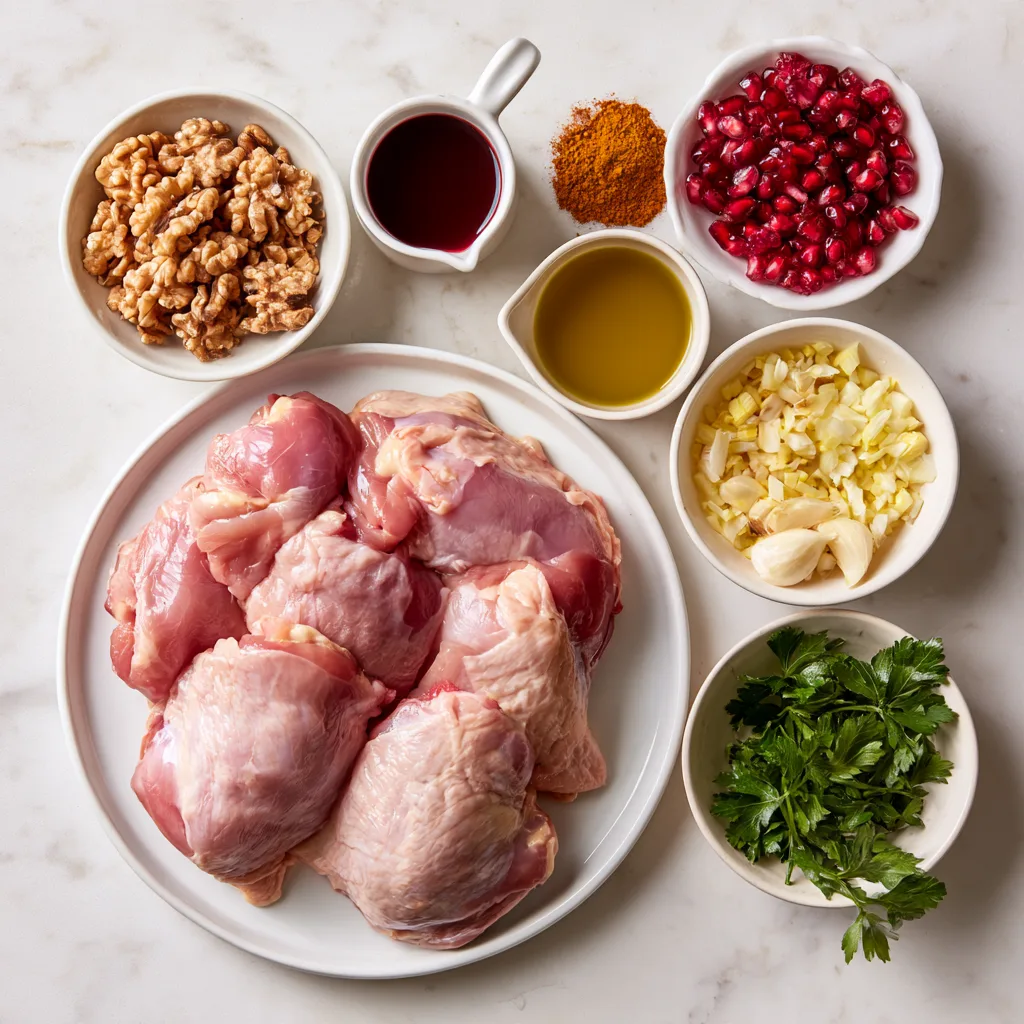
The ingredients are straightforward, but their combination creates an exceptionally flavorful sauce.
For the Chicken and Walnut Sauce
- 2½ cups walnut halves (approximately 250 g)
- 3 pounds boneless, skinless chicken thighs
- 2 tablespoons olive oil
- 1 large yellow onion, finely diced
- 3 garlic cloves, minced
- 1 teaspoon ground turmeric
- ¼ teaspoon ground cinnamon
- 1 teaspoon kosher salt, plus more to taste
- ½ teaspoon freshly ground black pepper
- 2 cups low-sodium chicken broth, plus extra if needed
- ¼ cup pomegranate molasses
- 1–2 tablespoons maple syrup, optional
For Garnishing
- ½ cup fresh pomegranate seeds
- 2 tablespoons chopped fresh flat-leaf parsley, optional
Understanding the Key Ingredients
Chicken Thighs
Boneless, skinless chicken thighs are particularly well suited to this recipe because they remain moist during gentle simmering.
Their slightly richer flavor also works beautifully with the walnut sauce.
Chicken breasts can be substituted, but they require a shorter cooking time to prevent them from becoming dry.
Walnuts
Walnuts are responsible for the sauce’s rich texture and distinctive nutty flavor.
When finely ground and simmered in liquid, they soften and gradually create a thick, velvety sauce.
Use fresh walnuts whenever possible. Older walnuts can develop bitterness or rancid flavors that become more noticeable during cooking.
Lightly toasting them before grinding enhances their aroma.
Pomegranate Molasses
Pomegranate molasses is a concentrated syrup made from pomegranate juice.
It delivers a powerful combination of fruity acidity, natural sweetness, and subtle bitterness.
Unlike ordinary sweet syrup, pomegranate molasses adds both flavor and complexity.
Different brands vary considerably in sweetness and acidity, so tasting the sauce before adding extra sweetener is essential.
Maple Syrup
Maple syrup is optional, but it can be useful when the pomegranate molasses is especially tart.
Its mild caramel notes also fit naturally into a Thanksgiving menu.
The goal is balance, not a sugary sauce. Start with a small amount and adjust gradually.
Turmeric and Cinnamon
Turmeric gives the sauce an earthy background flavor, while cinnamon contributes gentle warmth.
Neither spice should dominate. The walnuts and pomegranate must remain the central flavors.
Instructions
Step 1: Toast and Grind the Walnuts
Preheat your oven to 350°F (175°C).
Spread the walnut halves evenly on a rimmed baking sheet and toast for approximately 7–9 minutes, until fragrant.
Keep an eye on them because walnuts can burn quickly.
Remove the baking sheet from the oven and allow the nuts to cool briefly.
Transfer the walnuts to a food processor and pulse until they resemble fine, sandy crumbs.
Avoid processing them into walnut butter. Finely ground walnuts should still have a loose texture that incorporates easily into the sauce.
This preparation is important because large walnut pieces won’t create the same smooth consistency.
Step 2: Season and Brown the Chicken
Pat the chicken thighs dry using paper towels.
Season them evenly with kosher salt and freshly ground black pepper.
Heat the olive oil in a large Dutch oven or heavy-bottomed pot over medium-high heat.
Add the chicken thighs in batches, leaving enough space between the pieces to encourage browning.
Cook for approximately 2–3 minutes on each side, until lightly golden.
The chicken does not need to cook completely at this stage.
Transfer the browned chicken to a plate and set aside.
Browning develops savory flavors that will contribute to the finished sauce.
Step 3: Cook the Onion and Aromatics
Reduce the heat to medium.
Add the diced yellow onion to the same pot, using the remaining oil and flavorful browned bits.
Cook for approximately 6–8 minutes, stirring occasionally, until the onion becomes soft and lightly golden.
Add the minced garlic, turmeric, and cinnamon.
Stir continuously for another 30–60 seconds, allowing the spices to release their aromas.
Avoid letting the garlic burn because it can introduce an unpleasant bitterness.
Step 4: Create the Walnut Sauce
Add the finely ground walnuts to the pot.
Pour in the chicken broth and stir thoroughly to combine the ingredients.
Bring the mixture to a gentle simmer, then reduce the heat to low.
Allow the walnut mixture to cook uncovered for approximately 20 minutes, stirring frequently.
During this stage, the sauce will begin to thicken as the walnuts absorb liquid and release their natural oils.
The color may gradually deepen, and the texture should become smoother.
If the sauce starts sticking to the bottom, reduce the heat further and add a small splash of broth.
Step 5: Add the Pomegranate Molasses
Pour the pomegranate molasses into the walnut mixture.
Stir until it is fully incorporated.
The sauce will develop a deeper color and a distinctive sweet-tart aroma.
Taste a small spoonful carefully.
If the mixture seems overly acidic, add 1 tablespoon of maple syrup.
Taste again before adding more.
The ideal sauce should be pleasantly tangy, moderately rich, and gently sweet without tasting like dessert.
Remember that the flavors will become more integrated as the chicken finishes cooking.
Step 6: Simmer the Chicken
Return the browned chicken thighs to the pot, along with any juices collected on the plate.
Arrange the chicken so the pieces are partially submerged in the sauce.
Spoon some sauce over the exposed surfaces.
Cover the pot partially and maintain a very gentle simmer for approximately 35–45 minutes.
Stir the sauce occasionally and turn the chicken carefully to prevent sticking.
The walnuts will continue thickening the sauce during cooking, so add a little additional broth whenever necessary.
The chicken should become tender and reach an internal temperature of 165°F (74°C).
Avoid vigorous boiling, which can toughen the chicken and cause the thick walnut sauce to scorch.
Step 7: Adjust the Sauce
Once the chicken is cooked, remove the lid and examine the consistency.
The sauce should be thick enough to coat the back of a spoon but fluid enough to spread over the chicken.
If it seems too thin, simmer uncovered for a few additional minutes.
If it becomes excessively thick, stir in a little warm chicken broth.
Taste and adjust the salt, pomegranate molasses, or maple syrup as needed.
A small adjustment can make a noticeable difference because the final dish depends on balancing nutty richness with fruity acidity.
Step 8: Garnish and Serve
Carefully transfer the chicken thighs to a shallow white serving platter.
Spoon the warm walnut-pomegranate sauce generously over the chicken.
Scatter fresh pomegranate seeds across the top.
Finish with chopped parsley, if desired.
Serve immediately with your favorite Thanksgiving side dishes.
For a particularly attractive presentation, arrange the chicken pieces slightly overlapping and allow some of the glossy sauce to remain visible around the edges of the platter.
Expert Tips for Perfect Pomegranate Walnut Chicken
1. Grind the Walnuts Finely
The texture of the walnuts directly affects the finished sauce.
Coarsely chopped walnuts will create a noticeably grainier result, while finely ground walnuts help the sauce become smoother.
Process them in short pulses to prevent their oils from forming a thick paste.
2. Keep the Heat Gentle
The walnut sauce becomes increasingly thick as it cooks, making it more susceptible to sticking.
A low simmer is essential.
Stir regularly, particularly around the edges and bottom of the pot.
A heavy-bottomed Dutch oven distributes heat more evenly and helps reduce the risk of scorching.
3. Balance Sweetness and Acidity
Pomegranate molasses is not identical across brands.
Some varieties are intensely sour, while others contain added sugar.
Taste before adjusting.
A little maple syrup can soften sharp acidity, while another small splash of pomegranate molasses can brighten an overly sweet sauce.
4. Allow the Flavors to Develop
Although this recipe can be served immediately, the sauce often tastes more harmonious after resting.
Preparing the dish in advance gives the ingredients additional time to blend.
This makes it especially convenient for holiday meal planning.
5. Add Fresh Pomegranate Seeds Just Before Serving
Fresh pomegranate seeds provide color, sweetness, and a pleasant burst of texture.
Adding them immediately before serving preserves their bright appearance and fresh character.
They also offer an attractive contrast to the dark sauce.
What to Serve With Pomegranate Chicken With Walnuts
A great Thanksgiving centerpiece deserves side dishes that complement its flavors without competing for attention.
Creamy Mashed Potatoes
Smooth mashed potatoes are excellent for absorbing the pomegranate-walnut sauce. Their mild buttery flavor balances the tangy richness of the chicken.
Fluffy Basmati Rice
Rice is a classic pairing for Persian-inspired stews. Its neutral flavor allows the walnuts and pomegranate to remain the focus.
Roasted Carrots and Butternut Squash
Roasted autumn vegetables contribute natural sweetness and earthy flavors that pair beautifully with the sauce.
Green Beans
Lightly sautéed or steamed green beans add freshness and color. A simple preparation with olive oil and lemon is particularly effective.
For a complete holiday menu, consider serving the chicken alongside mashed potatoes, roasted carrots, green beans, and a crisp seasonal salad.
The combination provides a variety of textures while allowing the pomegranate chicken to remain the centerpiece.
Make-Ahead Tips for Thanksgiving
One of the biggest advantages of this holiday chicken main dish is that it can be prepared before guests arrive.
Preparing One or Two Days Ahead
Cook the chicken completely according to the instructions.
Allow it to cool promptly, then transfer it into shallow airtight containers and refrigerate within two hours of cooking.
The chicken can remain submerged in its walnut-pomegranate sauce to help preserve moisture.
When ready to serve, transfer everything back to a heavy-bottomed pot.
Warm gently over low heat, stirring frequently and adding small amounts of broth if the sauce has become too thick.
Heat the chicken thoroughly to 165°F (74°C).
Add the fresh garnishes only after reheating.
Freezing Leftovers
Pomegranate chicken freezes well because the walnut sauce helps protect the meat from drying out.
Allow the dish to cool safely, portion it into freezer-safe containers, and freeze for up to three months for best quality.
Thaw overnight in the refrigerator before reheating.
The sauce may appear slightly thicker or less uniform after freezing, but gentle warming and stirring usually restore a pleasant consistency.
Delicious Variations
Pomegranate Chicken With Bone-In Thighs
Bone-in chicken thighs offer additional richness and a slightly more traditional presentation.
They may require longer cooking, so use an instant-read thermometer to confirm doneness.
Pomegranate Walnut Chicken With Breasts
Chicken breasts can be used for a leaner variation.
Prepare the walnut sauce first, then add the chicken breasts for a shorter simmer, cooking only until they reach 165°F (74°C).
Avoid keeping breast meat in the sauce for the full thigh-braising time.
A More Tart Pomegranate Sauce
For guests who enjoy pronounced fruity acidity, increase the pomegranate molasses slightly.
Add it gradually, tasting between additions.
A Sweeter Autumn Version
A small amount of additional maple syrup can produce a sweeter sauce.
This works particularly well when serving the chicken with savory vegetables or unsweetened rice.
A Festive Garnish
For special occasions, combine fresh pomegranate seeds with parsley and a light sprinkle of finely chopped toasted walnuts.
The extra garnish adds texture and makes the finished dish especially attractive.
Frequently Asked Questions
Can I use regular pomegranate juice instead of pomegranate molasses?
Regular pomegranate juice is much thinner and less concentrated than pomegranate molasses, so a direct substitution will produce a different sauce.
If molasses is unavailable, gently reduce approximately 1 cup of unsweetened pomegranate juice with 1 tablespoon of lemon juice until about ¼ cup remains.
Let it cool slightly and taste before adding it to the dish.
The flavor will not be identical, but it can provide a useful alternative.
Why is my walnut sauce too thick?
Ground walnuts absorb liquid as they simmer.
If the sauce becomes too thick, gradually add warm chicken broth until the desired consistency is reached.
Keep the heat low and stir frequently.
Can this dish be made without maple syrup?
Absolutely.
Maple syrup is included only as an optional way to balance particularly tart pomegranate molasses.
If the sauce already tastes balanced, no additional sweetener is necessary.
Is Pomegranate Chicken With Walnuts gluten-free?
The core ingredients are naturally free from gluten-containing grains.
However, always check the labels on chicken broth, pomegranate molasses, and other packaged ingredients if preparing the dish for someone who must avoid gluten.
How long do leftovers last?
Properly refrigerated leftovers generally keep for 3–4 days.
Store the chicken and sauce together in an airtight container.
Reheat thoroughly before serving and avoid repeatedly warming the entire batch.
Can I prepare this for a large Thanksgiving gathering?
Yes.
The recipe serves approximately eight people and can be scaled for larger groups.
Use a pot large enough to accommodate the chicken without overcrowding, or divide the recipe between two pots.
Make sure the sauce can circulate around the chicken and stir regularly for even cooking.
What makes this dish different from ordinary braised chicken?
The primary difference is the sauce.
Instead of relying on cream, tomatoes, or a traditional pan gravy, this preparation uses ground walnuts for body and pomegranate molasses for its distinctive sweet-tart character.
The combination creates a sauce with more depth and complexity than a typical chicken braise.
Final Thoughts
Pomegranate Chicken With Walnuts brings something distinctive to the Thanksgiving table while remaining comforting, practical, and approachable.
Its tender chicken, velvety walnut sauce, and vibrant pomegranate garnish create a dish that looks beautiful and delivers a satisfying balance of savory, nutty, and fruity flavors.
The recipe is particularly useful for hosts who want to prepare their main course ahead of time or serve an alternative to traditional roasted turkey.
Paired with mashed potatoes, basmati rice, or seasonal vegetables, this Persian-inspired chicken makes an impressive centerpiece for Thanksgiving, Christmas, or any special autumn gathering.
Pomegranate Chicken With Walnuts
Ingredients
Equipment
Method
- Preheat the oven to 350°F (175°C). Spread the walnuts on a rimmed baking sheet and toast for 7–9 minutes, until fragrant. Cool briefly, then pulse in a food processor into fine, sandy crumbs; stop before they turn into walnut butter.
- Pat the chicken thighs dry. Season with the salt and pepper. Heat the olive oil in a large Dutch oven over medium-high heat and brown the chicken in batches for about 2–3 minutes per side. Transfer to a plate; the chicken will finish cooking in the sauce.
- Reduce the heat to medium. Add the diced onion to the pot and cook for 6–8 minutes until softened. Add the garlic, turmeric, and cinnamon and stir for 30–60 seconds until fragrant.
- Stir in the finely ground walnuts and chicken broth. Bring to a gentle simmer, reduce the heat to low, and cook uncovered for 20 minutes, stirring frequently so the walnuts do not stick.
- Stir in the pomegranate molasses and 1 tablespoon of maple syrup, if using. Taste the sauce carefully and adjust the sweet-tart balance only as needed.
- Return the chicken and any collected juices to the pot. Spoon sauce over the pieces, cover partially, and cook at a very gentle simmer for 35–45 minutes. Stir the sauce and turn the chicken occasionally. Add a splash of broth if the sauce gets too thick. Chicken must reach 165°F (74°C) in its thickest part.
- Uncover and simmer for a few more minutes if a thicker sauce is desired. Taste and adjust salt, molasses, or maple syrup. The sauce should be glossy, spoonable, and pleasantly tangy with a mellow walnut richness.
- Transfer chicken to a shallow serving platter, spoon the walnut-pomegranate sauce over it, and sprinkle with fresh pomegranate seeds and optional parsley. Serve hot with mashed potatoes, rice, or roasted vegetables.