Thanksgiving Chicken Liver Pâté – An Elegant Appetizer to Impress Your Guests
Thanksgiving is all about bringing people together around a table filled with delicious food, comforting flavors, and memorable homemade dishes. While roasted turkey, creamy mashed potatoes, and pumpkin pie usually take center stage, a thoughtfully prepared appetizer can make the holiday meal feel special before dinner even begins.
That’s where Thanksgiving Chicken Liver Pâté comes in.
Rich, smooth, and wonderfully savory, this homemade chicken liver pâté transforms a handful of simple ingredients into an elegant appetizer worthy of a holiday celebration. Fresh chicken livers are combined with buttery shallots, fragrant herbs, apple cider, and cream to create a silky spread that tastes wonderfully sophisticated.
Despite its impressive appearance, this easy chicken liver pâté doesn’t require advanced culinary skills or complicated equipment. A skillet, a food processor, and a few small serving dishes are all you need.
Better yet, this is an excellent make ahead Thanksgiving appetizer. Preparing the pâté the day before your celebration gives its flavors time to develop and eliminates one more task from your Thanksgiving cooking schedule.
Serve it with toasted baguette slices, crisp crackers, or a beautiful assortment of seasonal accompaniments, and you have a stunning starter that encourages everyone to gather around the appetizer table.
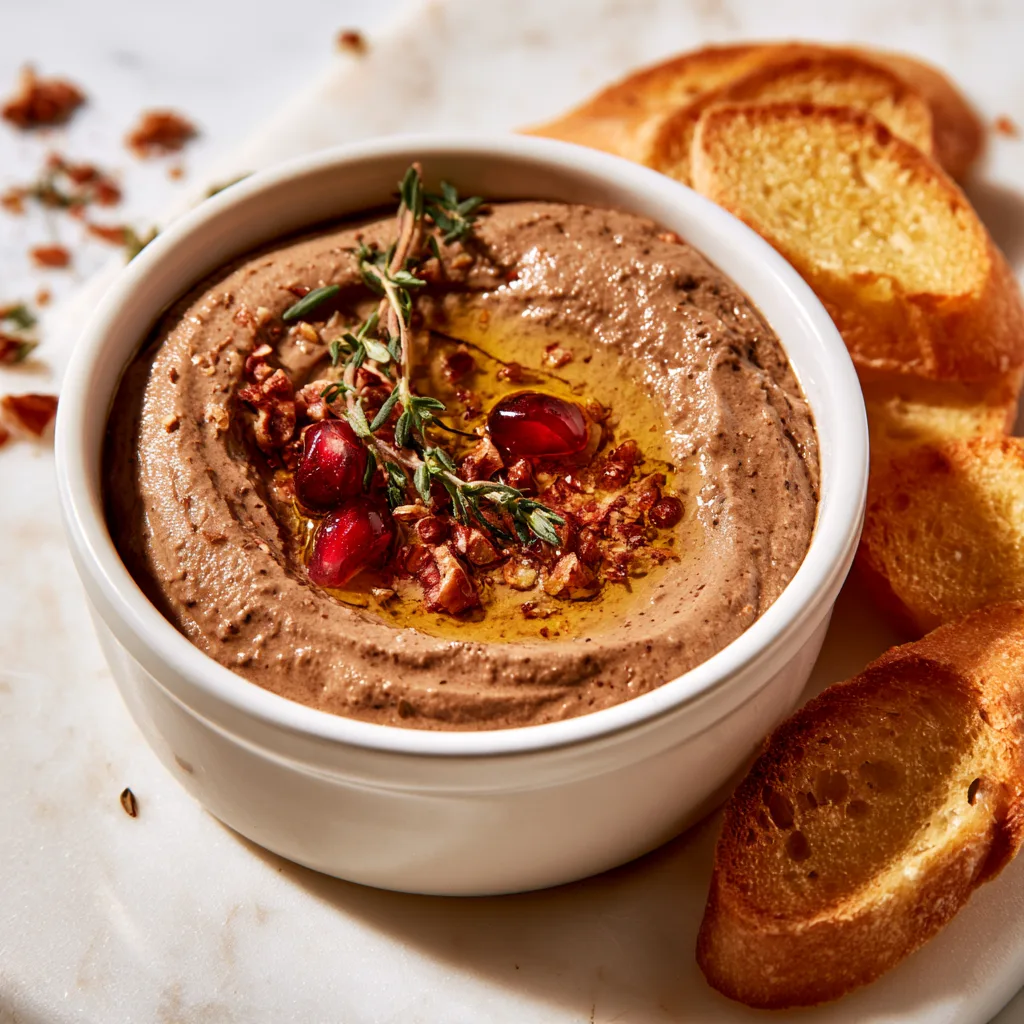
Why Chicken Liver Pâté Is Perfect for Thanksgiving
When planning Thanksgiving dinner, appetizers should ideally accomplish three things: taste delicious, look beautiful, and leave enough room for the main meal.
Homemade chicken liver pâté checks every box.
Unlike heavy baked dips or large appetizers that can overwhelm guests before dinner, pâté is naturally served in smaller portions. A little goes a long way because its flavor is rich and satisfying.
It also offers something different from traditional Thanksgiving appetizers.
Cheese boards, stuffed mushrooms, and deviled eggs are popular holiday favorites, but chicken liver pâté introduces an elegant French-inspired element to the menu. Its savory depth pairs beautifully with the familiar autumn flavors found throughout Thanksgiving dinner.
The addition of apple cider, thyme, and sage makes this version particularly well suited to the season.
Another major advantage is convenience.
Because pâté needs time to chill and develop its texture, preparing it ahead of time is actually beneficial. Instead of spending precious time cooking appetizers while your turkey is roasting, you can simply remove the finished pâté from the refrigerator shortly before serving.
It’s a thoughtful combination of presentation, flavor, and practicality.
What Does Chicken Liver Pâté Taste Like?
If you’ve never tasted homemade chicken liver pâté, you might wonder whether the flavor is particularly strong.
Chicken liver has an earthy, savory richness, but it is generally milder than many other types of liver. When prepared with butter, aromatics, and cream, its flavor becomes rounded and balanced.
The finished pâté should have a smooth, spreadable consistency, somewhere between whipped butter and a dense savory mousse.
Each ingredient contributes something important:
- Chicken livers provide the distinctive savory foundation.
- Butter creates richness and a luxurious texture.
- Shallots add delicate sweetness without overpowering the liver.
- Garlic brings gentle aromatic depth.
- Apple cider introduces subtle fruity acidity that complements autumn flavors.
- Sage and thyme contribute familiar Thanksgiving herb notes.
- Heavy cream helps create a softer, more velvety finish.
- Lemon juice balances the richness and brightens the overall flavor.
The result is a homemade chicken liver pâté that feels refined without being overly complicated.
Ingredients for Thanksgiving Chicken Liver Pâté
This recipe makes approximately 16 small appetizer portions, depending on how generously the pâté is served.
For the Chicken Liver Pâté
- 1 lb (450 g) fresh chicken livers, trimmed
- ¾ cup whole milk, optional, for soaking
- 10 tablespoons unsalted butter, divided
- 2 medium shallots, finely chopped
- 2 garlic cloves, minced
- 1 teaspoon fresh thyme leaves
- ½ teaspoon fresh sage, finely chopped
- 3 tablespoons unsweetened apple cider
- 1 tablespoon brandy or additional apple cider
- ¼ cup heavy cream
- 1 teaspoon fresh lemon juice
- ¾ teaspoon kosher salt, plus more to taste
- ¼ teaspoon freshly ground black pepper
Optional Garnishes and Serving
- 2 tablespoons finely chopped toasted pecans
- 2 tablespoons pomegranate seeds
- Extra fresh thyme leaves
- Toasted baguette slices
- Crackers or crostini
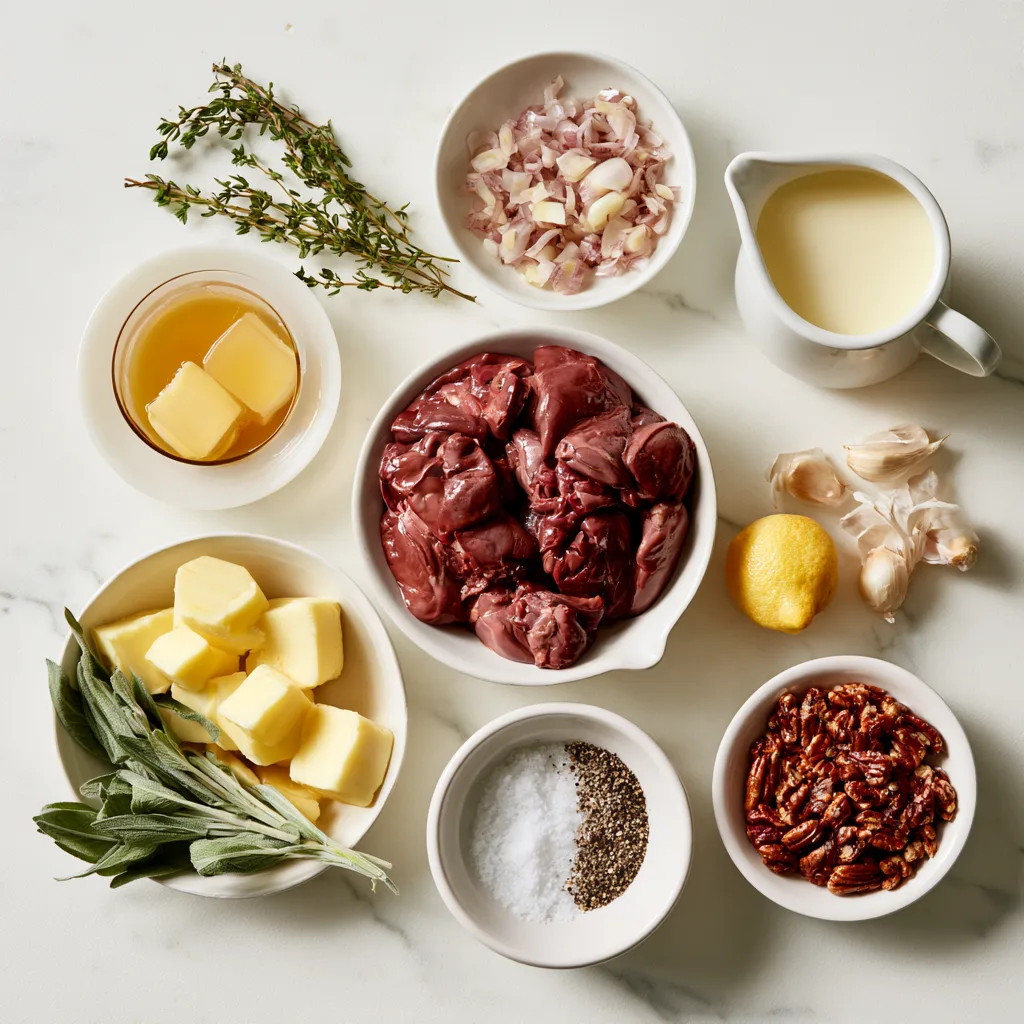
Choosing the Best Chicken Livers
Fresh ingredients make a noticeable difference in a simple recipe like this one.
Look for chicken livers with a smooth appearance, consistent color, and no unpleasant odor. Buy from a reputable retailer, keep them refrigerated, and prepare them within the recommended storage period.
Before cooking, remove any obvious connective tissue and discard any greenish portions, which may indicate bile contamination and contribute bitterness.
Some cooks prefer soaking chicken livers briefly in milk before cooking. This optional step may help mellow the flavor, although it isn’t necessary for a delicious result.
If soaking, keep the livers refrigerated throughout the process and discard the used milk afterward.
One particularly important detail is temperature. Chicken livers must be cooked thoroughly because harmful bacteria can be present inside the liver, not just on its surface.
A digital food thermometer is essential for checking doneness accurately.
How to Make Thanksgiving Chicken Liver Pâté
Making this Thanksgiving appetizer involves cooking the chicken livers with aromatics, blending everything until smooth, and allowing the mixture to chill.
Follow these steps for the best results.
Step 1: Prepare the Chicken Livers
Place the chicken livers on a clean cutting board and carefully remove any visible connective tissue or greenish areas.
If using the optional milk soak, place the prepared livers in a bowl with ¾ cup of milk.
Cover and refrigerate for approximately 15–20 minutes.
Drain thoroughly and discard the milk.
Pat the livers dry with paper towels. Removing excess surface moisture helps them cook more evenly and develop better flavor.
Step 2: Cook the Shallots and Aromatics
Heat 2 tablespoons of unsalted butter in a large skillet over medium heat.
Add the finely chopped shallots and cook for approximately 4–5 minutes, stirring occasionally.
The shallots should become soft and translucent without developing a dark brown color.
Add the minced garlic, fresh thyme, and chopped sage.
Stir for another 30 seconds until fragrant.
This gentle cooking process creates an aromatic foundation that balances the richness of the chicken livers.
Step 3: Cook the Chicken Livers
Add the prepared chicken livers to the skillet in a single layer.
Avoid overcrowding the pan. If your skillet is small, cook the livers in batches.
Cook for approximately 3–4 minutes per side, adjusting the heat as needed to prevent scorching.
The exact cooking time depends on their size and thickness.
Continue cooking until the thickest pieces reach an internal temperature of 165°F (74°C), checking with a clean digital thermometer.
This is the safe minimum temperature recommended by the CDC for chicken liver. Color alone is not a reliable way to determine whether the liver is fully cooked. CDC
Step 4: Add the Apple Cider
Pour 3 tablespoons of apple cider into the skillet.
If desired, add 1 tablespoon of brandy for additional aromatic depth. Alternatively, replace it with another tablespoon of apple cider for an alcohol-free version.
Allow the liquid to simmer for approximately 2 minutes, stirring gently to loosen the flavorful browned bits from the bottom of the pan.
The liquid should reduce substantially, leaving a concentrated mixture of savory pan juices and subtle apple flavor.
Check the internal temperature of the livers again if necessary.
Remove the skillet from the heat.
Step 5: Blend Until Smooth
Transfer the cooked chicken livers, shallots, and any remaining pan juices to a food processor.
Add:
- 6 tablespoons softened unsalted butter
- ¼ cup heavy cream
- 1 teaspoon fresh lemon juice
- ¾ teaspoon kosher salt
- ¼ teaspoon black pepper
Blend for approximately 1–2 minutes, stopping occasionally to scrape down the sides.
Continue until the mixture becomes smooth, creamy, and evenly combined.
Taste and adjust the seasoning if necessary.
The pâté should be rich and flavorful, with a gentle balance of herbs and acidity.
Step 6: Create an Extra-Silky Texture
For an exceptionally refined texture, press the blended pâté through a fine-mesh sieve using the back of a spoon or a flexible spatula.
This optional step removes any small pieces that didn’t fully blend.
Although it requires a little extra effort, it can make the finished pâté noticeably smoother.
If your food processor produces a sufficiently silky consistency, you can skip this step.
Step 7: Transfer to Serving Dishes
Spoon the pâté into two small white ceramic ramekins or one attractive serving dish.
Smooth the surface using a spatula.
For a traditional finishing touch, melt the remaining 2 tablespoons of butter and carefully pour a thin layer over the surface.
This butter topping creates a beautiful golden finish and helps limit exposure to air.
It is optional and does not make the pâté shelf-stable.
Step 8: Chill Until Firm
Cover the ramekins and place them in the refrigerator promptly.
Refrigerate for at least 120 minutes.
During this time, the butter firms up, helping the pâté develop its characteristic spreadable texture.
The flavors also become more integrated as the mixture rests.
For the most convenient Thanksgiving preparation, make the pâté the evening before your holiday gathering.
Step 9: Garnish and Serve
Remove the pâté from the refrigerator approximately 10 minutes before serving.
Just before presenting it, add a few fresh thyme leaves, finely chopped toasted pecans, or pomegranate seeds.
Arrange toasted baguette slices, crackers, or crostini around the ramekins.
Serve while the pâté is still chilled but slightly softened and easy to spread.
Tips for Making Perfect Homemade Chicken Liver Pâté
A few small details can make the difference between a good pâté and an exceptional one.
Use Fresh Chicken Livers
Chicken livers are the central ingredient, so freshness matters.
Avoid products with damaged packaging, questionable odors, or signs of improper storage.
Never Guess When the Livers Are Cooked
Chicken liver should reach 165°F (74°C) internally. Traditional recipes sometimes recommend leaving the centers pink, but that approach does not meet current CDC food-safety recommendations.
Check the thickest pieces with a thermometer before blending.
Don’t Burn the Aromatics
Garlic and fresh herbs cook quickly.
Adding them only after the shallots have softened prevents bitter, scorched flavors.
Use Softened Butter for Blending
Softened butter incorporates smoothly into the warm liver mixture.
Cold, hard butter may take longer to blend evenly, while adding everything at an unnecessarily high temperature can affect the texture.
Don’t Skip the Acidity
Apple cider and lemon juice have different but complementary roles.
The cider adds gentle fruitiness, while lemon juice brings a fresh finishing note that balances the butter.
Taste Before Chilling
Cold foods can taste less intensely seasoned than warm foods.
Taste the blended mixture before refrigerating and adjust the salt carefully.
Allow Enough Chilling Time
Freshly blended pâté will usually appear softer than the finished product.
The texture changes considerably after refrigeration, so avoid judging its consistency immediately after blending.
Delicious Variations to Try
Although this Thanksgiving chicken liver pâté is designed around autumn flavors, the recipe can be adapted for different occasions.
1. Classic French-Inspired Chicken Liver Pâté
Replace the apple cider with a little additional brandy and keep the herb seasoning simple.
Use thyme as the main herb and omit the sage.
The result is a more traditional flavor profile that works beautifully with crusty bread and cornichons.
2. Apple and Caramelized Shallot Pâté
For a sweeter autumn variation, cook the shallots over lower heat for a little longer until lightly caramelized.
Add a tablespoon of finely grated apple while cooking.
The apple introduces another layer of natural sweetness that complements the liver’s savory character.
3. Herb-Rich Holiday Pâté
Increase the fresh thyme slightly and add a small pinch of finely chopped rosemary.
Use rosemary sparingly because its flavor can easily overpower the other ingredients.
This variation emphasizes the familiar herb aromas associated with Thanksgiving stuffing and roasted poultry.
4. Extra-Creamy Chicken Liver Pâté
For a softer, richer spread, add an additional tablespoon of heavy cream during blending.
The pâté may require slightly longer chilling to reach the desired consistency.
5. Alcohol-Free Thanksgiving Pâté
Simply replace the optional brandy with additional unsweetened apple cider.
This version retains the seasonal flavor without requiring any alcoholic ingredients.
How to Serve Chicken Liver Pâté for Thanksgiving
Presentation plays an important role when serving an elegant appetizer.
Fortunately, chicken liver pâté is easy to style beautifully without expensive equipment or elaborate decorations.
A classic Thanksgiving appetizer board
Place a small white ramekin of pâté in the center of a serving platter.
Surround it with an assortment of foods that provide contrast in flavor and texture.
Excellent accompaniments include:
- Thinly sliced toasted baguette
- Plain or lightly salted crackers
- Crisp crostini
- Cornichons or small pickles
- Thin apple slices
- Fresh pear slices
- Fig preserves
- Cranberry chutney
- Toasted pecans
- Fresh thyme sprigs
The most successful combinations balance the pâté’s richness with something crisp, tart, or slightly sweet.
For example, a toasted baguette slice topped with chicken liver pâté and a tiny spoonful of cranberry chutney makes an excellent Thanksgiving bite.
The savory, buttery pâté contrasts beautifully with the tart fruit.
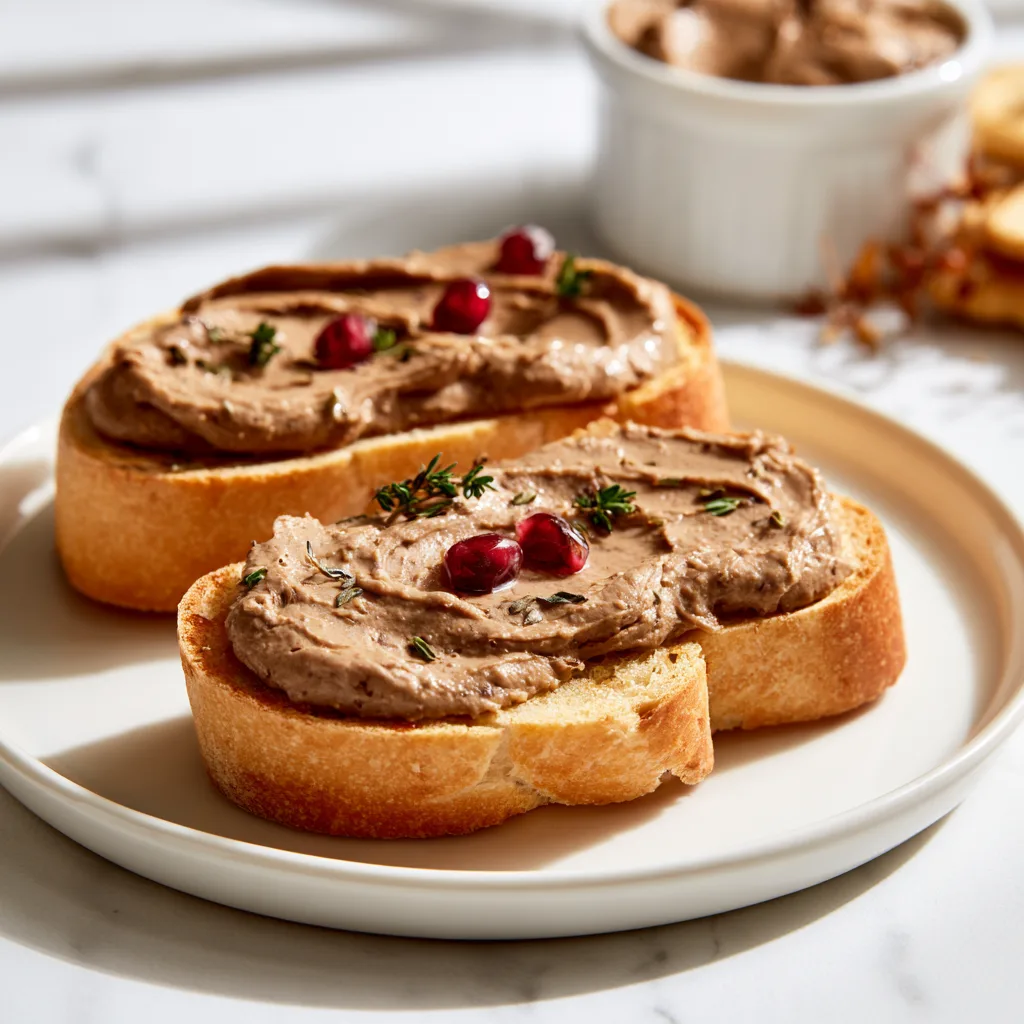
Individual Appetizer Portions
For a more formal holiday gathering, spread small amounts of pâté onto crostini shortly before serving.
Garnish each piece with a thyme leaf or a tiny amount of cranberry chutney.
Arrange the finished bites on a white serving platter.
This approach makes the appetizer easy for guests to enjoy while standing and socializing.
Prepare the components in advance, but assemble the crostini close to serving time to prevent the bread from becoming soft.
Can You Make Chicken Liver Pâté Ahead of Time?
Absolutely. One of the biggest advantages of homemade chicken liver pâté is that it fits naturally into a holiday meal-preparation schedule.
In fact, chilling is a necessary part of the recipe.
Making it a day ahead allows the spread to firm up properly while giving the flavors additional time to come together.
For a stress-free Thanksgiving, consider the following schedule:
The day before Thanksgiving:
Prepare the pâté completely, transfer it to serving dishes, cover, and refrigerate.
Thanksgiving morning:
Prepare any garnishes, slice the baguette, and arrange crackers or other accompaniments.
Store everything appropriately until needed.
Shortly before guests arrive:
Toast the bread, prepare the serving platter, and bring the chilled pâté out for a brief softening period.
Add fresh garnishes immediately before serving.
This simple plan helps keep the appetizer preparation separate from the busiest part of Thanksgiving cooking.
How to Store Chicken Liver Pâté Safely
Because homemade chicken liver pâté contains cooked poultry, butter, and cream, proper refrigeration is essential.
Store the pâté in a covered, airtight container or tightly covered ramekin in a refrigerator maintained at 40°F (4°C) or below.
Use refrigerated leftovers within 3–4 days, assuming the pâté was prepared and refrigerated safely.
Do not leave it at room temperature for more than 2 hours total. If serving for an extended gathering, present small portions and replenish them with refrigerated pâté rather than leaving the entire batch out.
These precautions follow general USDA recommendations for storing cooked poultry and leftovers. ask.fsis.usda.gov
Can You Freeze Chicken Liver Pâté?
Yes, freezing is an option if you need to prepare it further in advance.
Transfer the pâté to a freezer-safe, airtight container, leaving as little exposed surface as practical.
For the best texture and flavor, aim to use it within approximately one month.
Thaw completely in the refrigerator, never on the countertop.
Freezing may cause slight changes in consistency, particularly if the pâté contains a butter topping.
If separation occurs, gently stir the thawed pâté before serving.
For a special Thanksgiving presentation, freshly prepared and refrigerated pâté will generally offer the best texture.
A Note for Pregnant Guests
Chicken liver is particularly high in preformed vitamin A. The NHS advises avoiding liver and liver products during pregnancy, and also identifies pâté as a food to avoid because of food-safety concerns. Offer pregnant guests a different appetizer. NHS NHS
Frequently Asked Questions About Chicken Liver Pâté
Is Chicken Liver Pâté Difficult to Make?
Not at all.
Although pâté has an elegant reputation, this easy chicken liver pâté involves straightforward cooking techniques.
The main tasks are trimming and cooking the livers, sautéing the aromatics, and blending the ingredients.
A food processor handles most of the work required to create a smooth texture.
The most important technical detail is using a thermometer to ensure the chicken livers are cooked safely.
Why Is My Chicken Liver Pâté Grainy?
A grainy texture can result from insufficient blending, connective tissue remaining in the livers, or unevenly incorporated ingredients.
For the smoothest result, trim the livers carefully, blend thoroughly, and consider passing the mixture through a fine-mesh sieve.
Adding butter and cream while the cooked liver mixture is still warm also helps create a more uniform consistency.
Can I Make Chicken Liver Pâté Without Brandy?
Yes.
Brandy is entirely optional in this Thanksgiving appetizer.
Replace it with an equal amount of apple cider.
The finished pâté will still have excellent depth from the shallots, herbs, butter, and properly cooked chicken livers.
What Is the Best Bread for Serving Chicken Liver Pâté?
A lightly toasted baguette is an excellent choice because its crisp exterior provides contrast to the pâté’s smooth texture.
Sourdough crostini, thin rye crackers, and plain water crackers are also delicious.
Avoid breads with very strong seasonings if you want the delicate herb and apple notes to remain noticeable.
How Much Pâté Should I Prepare Per Person?
For a Thanksgiving gathering where several appetizers will be available, approximately 2 tablespoons of pâté per guest is a useful starting point.
This recipe makes roughly 16 small appetizer portions.
If chicken liver pâté will be the primary appetizer, consider preparing a larger batch or serving more substantial portions.
Does Chicken Liver Pâté Need to Be Served Cold?
Chicken liver pâté is generally served chilled or slightly softened.
Removing it from the refrigerator about 10 minutes before serving can make it easier to spread.
It should not be left out for extended periods because it contains perishable ingredients.
What Can I Serve Instead of Crackers?
Fresh apple slices, pear slices, and crisp vegetables can provide alternatives to crackers.
Cucumber rounds also work as small serving bases.
For a colorful Thanksgiving presentation, offer several options so guests can create their preferred combinations.
Can This Recipe Be Doubled for a Large Thanksgiving Party?
Yes.
Double the ingredients while keeping the same proportions.
However, cook the chicken livers in separate batches rather than overcrowding the skillet.
Overcrowding can lead to uneven cooking and make it more difficult to monitor the internal temperature.
The chilling time may also increase if the pâté is placed in one very large container.
Using several shallow serving dishes is generally more convenient.
Why This Thanksgiving Appetizer Will Impress Your Guests
The most memorable holiday appetizers aren’t necessarily the most complicated.
Often, they are dishes that offer an unexpected combination of familiar flavors, thoughtful presentation, and carefully prepared ingredients.
Thanksgiving Chicken Liver Pâté brings those qualities together.
Its combination of savory chicken liver, sweet shallots, apple cider, fragrant herbs, and butter creates a rich and balanced appetizer that feels perfectly suited to the autumn season.
The smooth texture gives it an elegant appearance, while simple garnishes like thyme, toasted pecans, and pomegranate seeds make it visually appealing on a Thanksgiving table.
Perhaps most importantly, it allows you to enjoy your guests instead of spending the entire gathering in the kitchen.
With a little preparation the day before, you can serve a beautiful homemade appetizer that looks sophisticated, tastes delicious, and adds something unexpected to your Thanksgiving celebration.
For anyone searching for a make ahead Thanksgiving appetizer that feels special without requiring hours of last-minute cooking, this homemade chicken liver pâté is a wonderful addition to the holiday menu.