Tuna Salad with Couscous – Fresh, Easy Mediterranean-Inspired Lunch
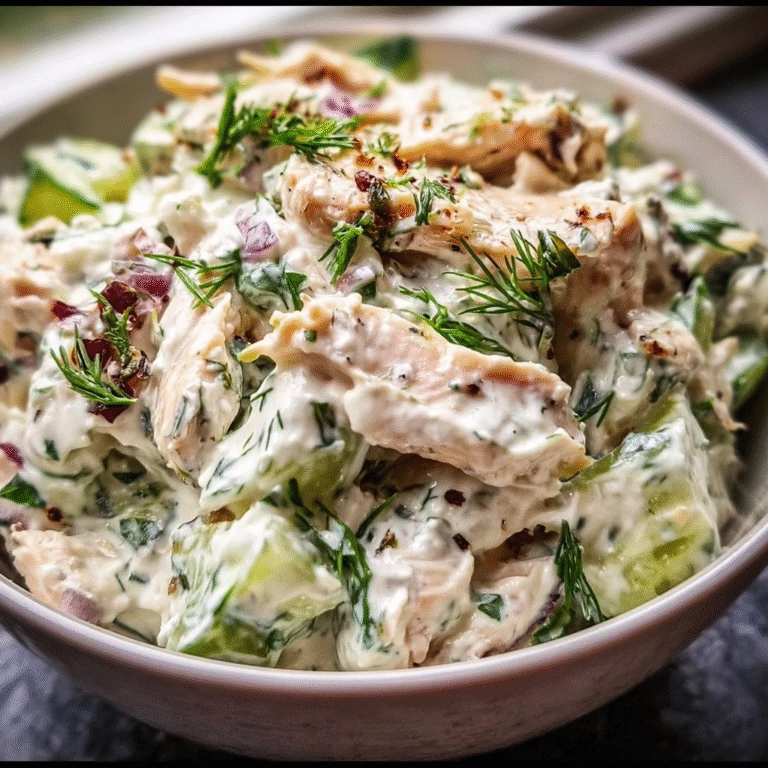
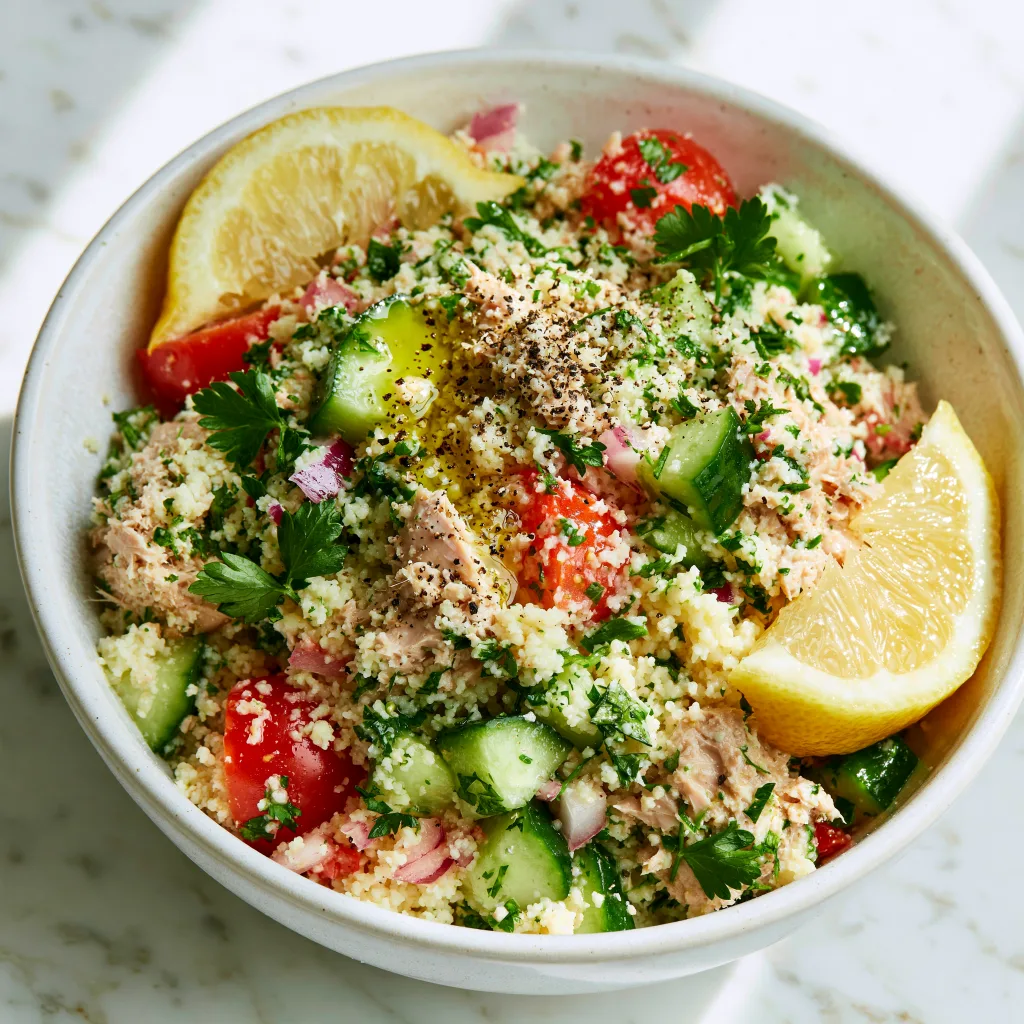
Tuna Salad with Couscous is a fresh, filling meal that combines fluffy couscous, flaky tuna, crisp vegetables, herbs, and a bright lemon and olive oil dressing. It has enough protein and carbohydrates to work as a complete lunch or light dinner, yet the cucumber, tomatoes, parsley, and citrus keep the entire dish light and refreshing.
It is also remarkably practical. Couscous takes only a few minutes to prepare, canned tuna requires no cooking, and most of the remaining work involves chopping vegetables and whisking together a simple dressing. The complete salad can be ready in about 20 minutes and can also be prepared ahead for convenient weekday lunches.
Unlike traditional mayonnaise-heavy tuna salad, this Mediterranean-inspired version relies on extra virgin olive oil, fresh lemon juice, Dijon mustard, garlic, and oregano for flavor. The result is a colorful Mediterranean tuna salad that works particularly well during warmer months but is easy enough to prepare throughout the year.
Why You’ll Love This Tuna Salad with Couscous
There are plenty of practical reasons to add this recipe to your lunch rotation. It uses familiar ingredients, requires very little cooking, and can easily be adjusted according to what you already have available.
Couscous creates a satisfying base without making the salad overly heavy. Tuna contributes savory flavor and protein, while cucumber and tomatoes provide freshness and contrasting texture. Lemon, herbs, garlic, and olive oil bring the ingredients together without needing a creamy dressing.
This easy couscous salad is also convenient for meal prep. It can be divided into individual containers for weekday lunches, served as a quick family meal, or presented on a larger platter with pita bread and other Mediterranean-inspired sides.
Best of all, the basic recipe is flexible. Feta, olives, chickpeas, peppers, fresh herbs, or seasonal vegetables can all be added without changing the basic preparation.
What Makes Couscous Perfect for Tuna Salad?
Couscous may look like a tiny grain, but traditional couscous is actually made from semolina wheat. Its small size is one reason it works so well in quick recipes: instead of requiring a lengthy cooking process, it can usually be prepared simply by adding hot liquid and allowing it to stand for several minutes.
For salad, couscous offers another advantage. Its mild flavor readily absorbs lemon dressing, herbs, and the juices released by fresh vegetables. At the same time, properly prepared couscous remains fluffy enough to prevent the finished salad from becoming dense.
Preparing it with vegetable or chicken broth instead of water gives the couscous additional flavor before the other ingredients are even added.
Once the liquid has been absorbed, fluff the couscous thoroughly with a fork and allow it to cool. Cooling is important because adding cucumber, tomatoes, and herbs to hot couscous can soften them and reduce the crisp, fresh texture that makes this salad so appealing.
Ingredients
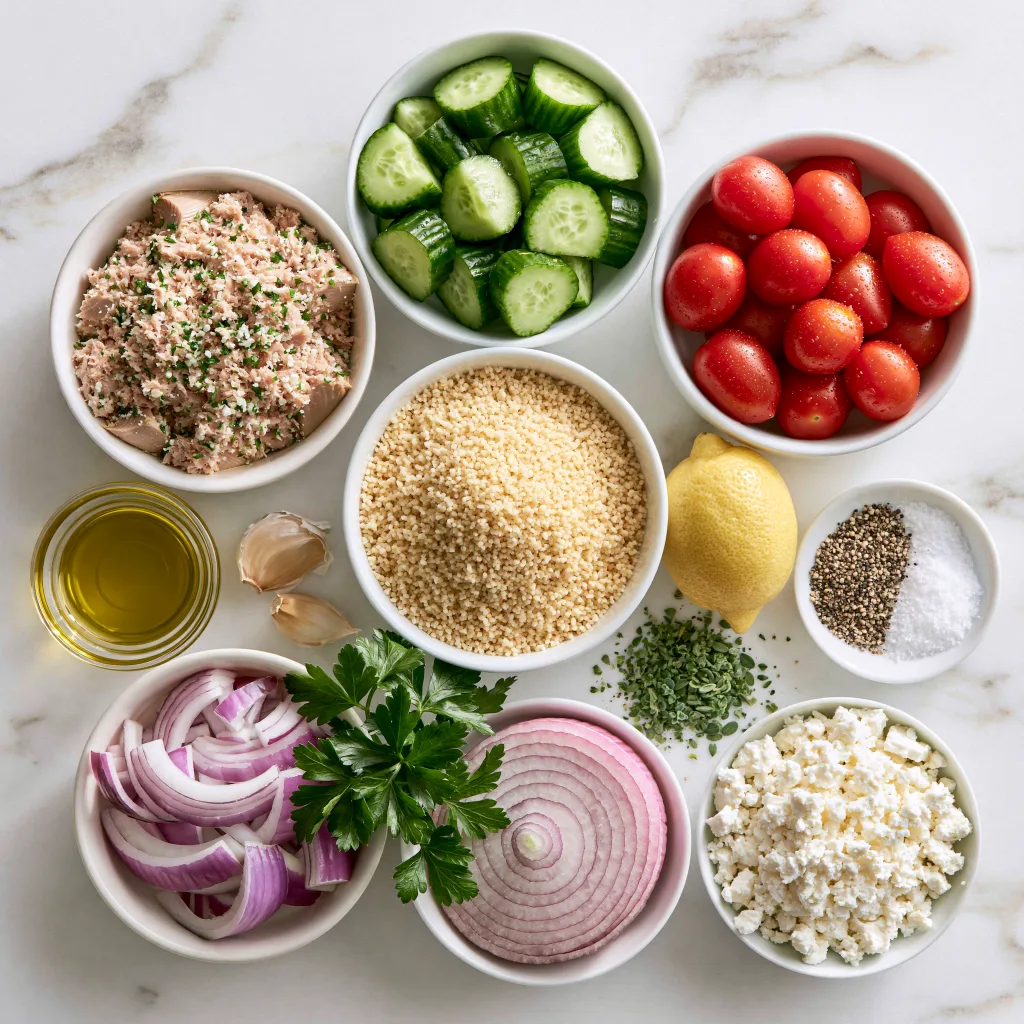
- 1 cup dry couscous
- 1 cup boiling chicken or vegetable broth
- 2 cans tuna, drained well
- 1 cup cherry tomatoes, halved
- 1 cucumber, diced
- ¼ cup red onion, finely diced
- ¼ cup fresh parsley, chopped
- 2 tablespoons fresh mint, chopped, optional
- ¼ cup feta cheese, crumbled, optional
- 2 tablespoons extra virgin olive oil
- Juice of 1 lemon
- 1 teaspoon Dijon mustard
- 1 garlic clove, minced
- ½ teaspoon dried oregano
- Salt, to taste
- Freshly ground black pepper, to taste
Instructions
- Place the dry couscous in a large heatproof bowl.
- Pour the boiling chicken or vegetable broth over the couscous. Cover the bowl and leave it undisturbed for approximately 5 minutes.
- Remove the cover and fluff the couscous thoroughly with a fork. Set it aside until it has cooled.
- While the couscous cools, prepare the dressing. Whisk together the olive oil, fresh lemon juice, Dijon mustard, minced garlic, dried oregano, salt, and black pepper.
- Drain the tuna thoroughly. Break it into large flakes rather than completely shredding it.
- Add the cooled couscous, tuna, cherry tomatoes, cucumber, red onion, parsley, and optional mint to a large serving bowl.
- Add the crumbled feta if using.
- Pour the lemon dressing over the salad.
- Gently toss until the dressing is distributed throughout the couscous and vegetables. Avoid excessive mixing so some larger pieces of tuna remain intact.
- Taste and adjust with additional lemon juice, salt, or black pepper if necessary.
- Serve immediately or refrigerate for approximately 15 minutes to allow the flavors to develop.
Tips for the Best Tuna Couscous Salad
Although this is a straightforward recipe, a few details can noticeably improve the finished salad.
First, allow the couscous to cool before assembly. Warm couscous can soften cucumber and tomatoes and wilt the fresh herbs.
Drain the tuna well, too. Excess packing liquid can dilute the lemon dressing and leave the couscous wetter than intended.
Fresh lemon juice is particularly important because citrus is one of the dominant flavors in the dressing. For stronger lemon flavor without adding too much acidity, grate a little lemon zest into the dressing.
Season carefully if you’re using broth, canned tuna, Dijon mustard, and feta because all four can contribute salt. Taste the assembled salad before adding the final seasoning.
Finally, fold rather than aggressively stir the ingredients. Keeping some larger flakes of tuna intact provides better texture and a more attractive finished dish.
What Kind of Tuna Is Best?
Tuna packed in water and tuna packed in olive oil can both be used for tuna salad with couscous, although they create slightly different results.
Tuna packed in water has a lighter flavor and allows you to control exactly how much olive oil goes into the salad. It’s a good everyday option when you want the vegetables, herbs, and lemon dressing to remain especially prominent.
Tuna packed in olive oil tends to be richer and can provide a softer, more luxurious texture. Drain it before adding it to the couscous. If the packing oil tastes good, a small amount can also replace some of the olive oil used in the dressing.
Chunk light tuna naturally breaks into smaller pieces throughout the salad. Solid tuna or albacore tends to remain in larger flakes. Either is suitable, so the choice largely comes down to the texture you prefer.
Easy Tuna Couscous Salad Variations
The basic combination of couscous and tuna is neutral enough to accommodate plenty of variations.
For stronger Mediterranean flavors, add Kalamata olives, roasted red peppers, artichoke hearts, and extra feta. Fresh dill can replace some or all of the parsley, while a little sumac adds pleasant citrus-like acidity.
For additional protein and fiber, add drained chickpeas or white beans. They blend naturally with the existing ingredients and make the salad even more substantial.
If you prefer some heat, add crushed red pepper flakes, finely chopped fresh chili, or a small amount of harissa to the dressing.
Seasonal vegetables work well, too. Diced bell pepper, radishes, celery, shredded carrots, or chopped zucchini can replace or supplement the cucumber and tomatoes.
For a dairy-free tuna couscous salad, simply omit the feta. There are already enough flavorful ingredients that the salad does not depend on cheese.
Tuna Salad with Couscous for Meal Prep
This recipe is particularly convenient as a meal prep tuna salad because couscous holds up better in the refrigerator than delicate leafy greens.
Once prepared, divide the salad into individual airtight containers and refrigerate. If you want the vegetables to retain maximum texture, tomatoes can be stored separately and mixed in shortly before eating.
Packing a lemon wedge with each portion is another easy way to refresh the salad. A squeeze of fresh lemon just before eating restores some of the brightness that can become less pronounced after refrigeration.
The salad can be stored in the refrigerator for up to three days. Because it contains tuna, it should remain properly chilled rather than sitting for extended periods at room temperature.
What to Serve with Tuna Salad with Couscous
This healthy tuna couscous recipe is substantial enough to serve by itself, but simple sides can easily turn it into a larger meal.
Warm pita bread or flatbread is an especially natural pairing. Hummus, roasted red peppers, olives, or grilled vegetables can turn the salad into part of a Mediterranean-inspired lunch spread.
For something lighter, spoon the couscous salad over arugula or mixed greens. The lemon and olive oil dressing from the couscous will also lightly dress the greens underneath.
Roasted zucchini, asparagus, peppers, or eggplant are excellent options for dinner. A bowl of lentil, tomato, or vegetable soup also pairs nicely when serving the salad during cooler weather.
For a casual gathering, arrange the salad on a large platter and finish it with parsley, feta, lemon wedges, and freshly ground black pepper just before serving.
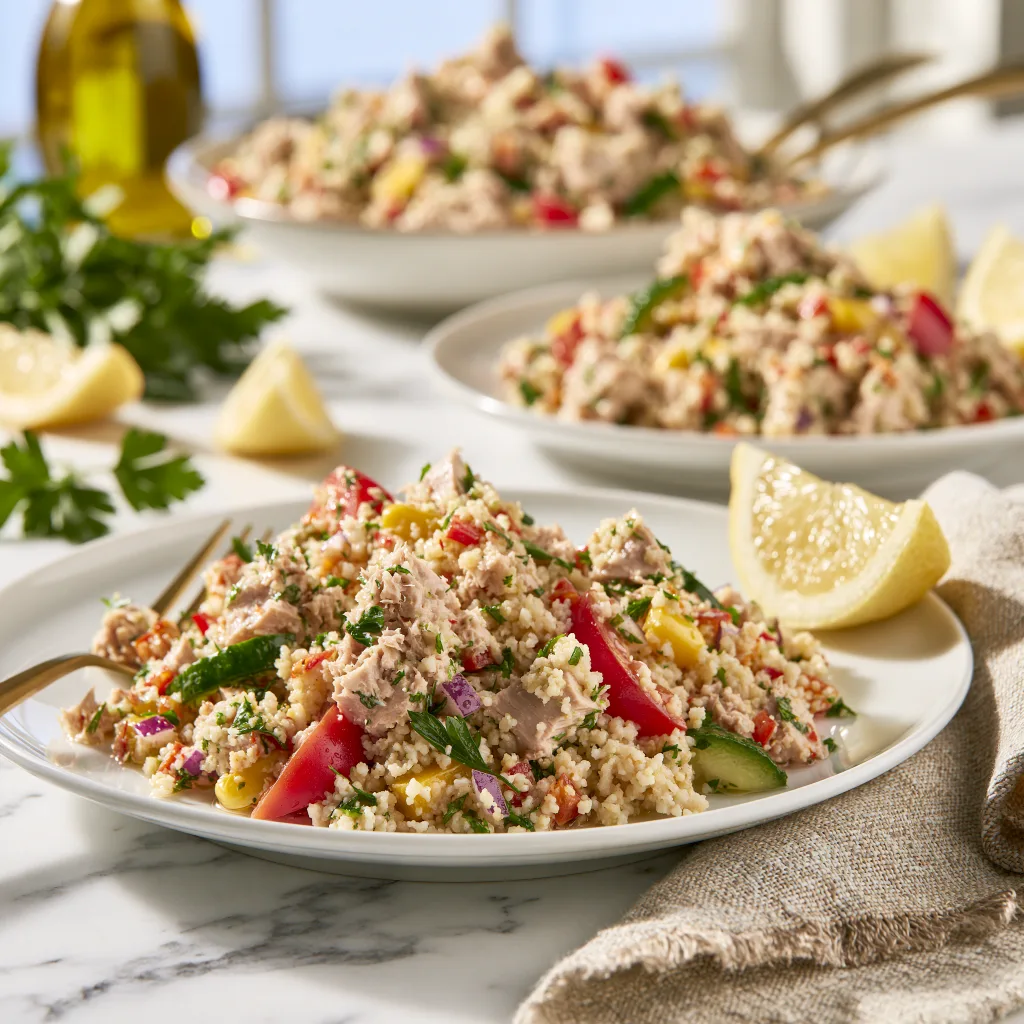
Easy Ingredient Substitutions
One of the advantages of this recipe is that individual ingredients can be replaced without compromising the entire dish.
If cucumber isn’t available, diced celery or bell pepper provides a similar crisp element. Regular tomatoes can replace cherry tomatoes; remove some of their seeds before chopping if they’re especially juicy.
Green onions or shallots can replace red onion. If you like red onion but find its raw flavor too sharp, soak the chopped onion in cold water for about 10 minutes, drain it thoroughly, and then add it to the salad.
Parsley can be supplemented or replaced with dill, mint, basil, or cilantro depending on the flavor you prefer.
Traditional couscous contains wheat, so it is not gluten-free. Cooked quinoa is an easy alternative for anyone avoiding gluten and works with the same tuna, vegetables, and lemon dressing.
Is Tuna Salad with Couscous Healthy?
Tuna Salad with Couscous combines several food groups in a single dish.
Tuna contributes protein along with nutrients including vitamin B12 and selenium. Couscous supplies carbohydrates, while cucumber, tomatoes, onion, herbs, and lemon add a variety of plant-based ingredients.
Extra virgin olive oil provides fat and also carries the flavors of the garlic, lemon, mustard, and oregano throughout the salad.
The nutritional profile can also be adjusted according to your needs. Whole wheat couscous can increase fiber, additional vegetables can increase the proportion of produce, and feta can be reduced or omitted if preferred.
For a more substantial meal, chickpeas or white beans can be added without requiring additional cooking if canned varieties are used.
Common Mistakes to Avoid
The most common problem with couscous salad is incorrect texture. Too much liquid can make couscous heavy, while insufficient fluffing can leave it clumped together. Measure the broth carefully and separate the cooked couscous with a fork.
Another mistake is assembling the salad while the couscous is still hot. Give it enough time to cool so the vegetables remain crisp.
Don’t skip draining the tuna thoroughly. Excess liquid changes the balance of the dressing and can make the salad watery after refrigeration.
It’s also easy to overseason the dish before all the ingredients are combined. Broth, tuna, Dijon mustard, and feta may already contain salt, so wait until the salad is assembled before deciding whether it needs more.
Finally, avoid using so much dressing that the couscous becomes saturated. The dressing should provide flavor and moisture without hiding the individual textures of the tuna and vegetables.
How to Store Leftover Tuna Couscous Salad
Transfer leftovers to a sealed container and refrigerate them promptly. The salad is best consumed within three days.
After refrigeration, fluff the couscous gently before serving. If it seems slightly dry, add a small squeeze of lemon juice or a light drizzle of olive oil rather than preparing an entirely new batch of dressing.
Freezing is not recommended. Although cooked couscous itself can be frozen, fresh cucumber and tomatoes lose much of their appealing texture after thawing.
For the freshest meal-prep results, you can prepare the couscous and dressing ahead and add particularly juicy vegetables closer to serving time.
Frequently Asked Questions
Can I make tuna salad with couscous ahead of time?
Yes. Prepare the salad in advance and keep it refrigerated in an airtight container. For the crispest vegetables, add the tomatoes shortly before serving.
Can I use whole wheat couscous?
Yes. Whole wheat couscous works with the same preparation method and gives the salad a slightly nuttier flavor.
Is couscous gluten-free?
No. Traditional couscous is made from wheat. For a gluten-free alternative, replace it with cooked quinoa or another suitable gluten-free grain or pasta.
Can I leave out the feta?
Absolutely. Feta is optional and the lemon, garlic, herbs, tuna, and vegetables provide plenty of flavor without it.
Can I use fresh tuna instead of canned tuna?
Yes. Cooked, grilled, or seared tuna can be sliced or flaked and added to the couscous. Be sure the tuna is handled and stored appropriately.
Can I add more vegetables?
Yes. Bell peppers, celery, radishes, carrots, zucchini, or roasted vegetables are all good additions. This is also an easy way to adapt the salad according to seasonal produce.
Why This Mediterranean Tuna Salad Works
What makes this Mediterranean tuna salad particularly satisfying is the balance between flavor and texture.
Couscous provides a soft, fluffy foundation, while cucumber and red onion contribute crunch. Tomatoes add juiciness and mild sweetness, and tuna supplies savory flavor and substance. Fresh parsley lifts the entire salad, while optional feta introduces a salty, creamy contrast.
The dressing provides another layer of balance. Olive oil adds richness, lemon brings acidity, Dijon mustard contributes sharpness, and garlic and oregano supply savory Mediterranean-inspired flavor.
Nothing needs complicated preparation, yet the finished dish contains enough contrasting ingredients to keep every bite interesting.
That combination of convenience and versatility makes Tuna Salad with Couscous useful for far more than one occasion. It can be a quick lunch at home, a prepared work lunch, a light summer dinner, or part of a larger spread for family and friends.
Final Thoughts
Tuna Salad with Couscous is proof that a quick meal doesn’t have to rely on heavy sauces or complicated preparation. Fluffy couscous, flaky tuna, crisp vegetables, fresh herbs, and lemon dressing create a meal that is colorful, satisfying, and easy to prepare with everyday ingredients.
The recipe can be on the table in about 20 minutes, yet it also works particularly well when prepared ahead. That makes it useful for busy weekday lunches, summer meals, meal prep, and occasions when you need something substantial without spending much time at the stove.
It’s also a recipe that leaves plenty of room for adaptation. Add olives and feta for stronger Mediterranean flavor, chickpeas for extra substance, seasonal vegetables for additional color, or fresh chili when you want some heat.
Whether served freshly prepared or chilled for later, this easy couscous salad brings together convenience, fresh flavor, and satisfying texture in one simple bowl.
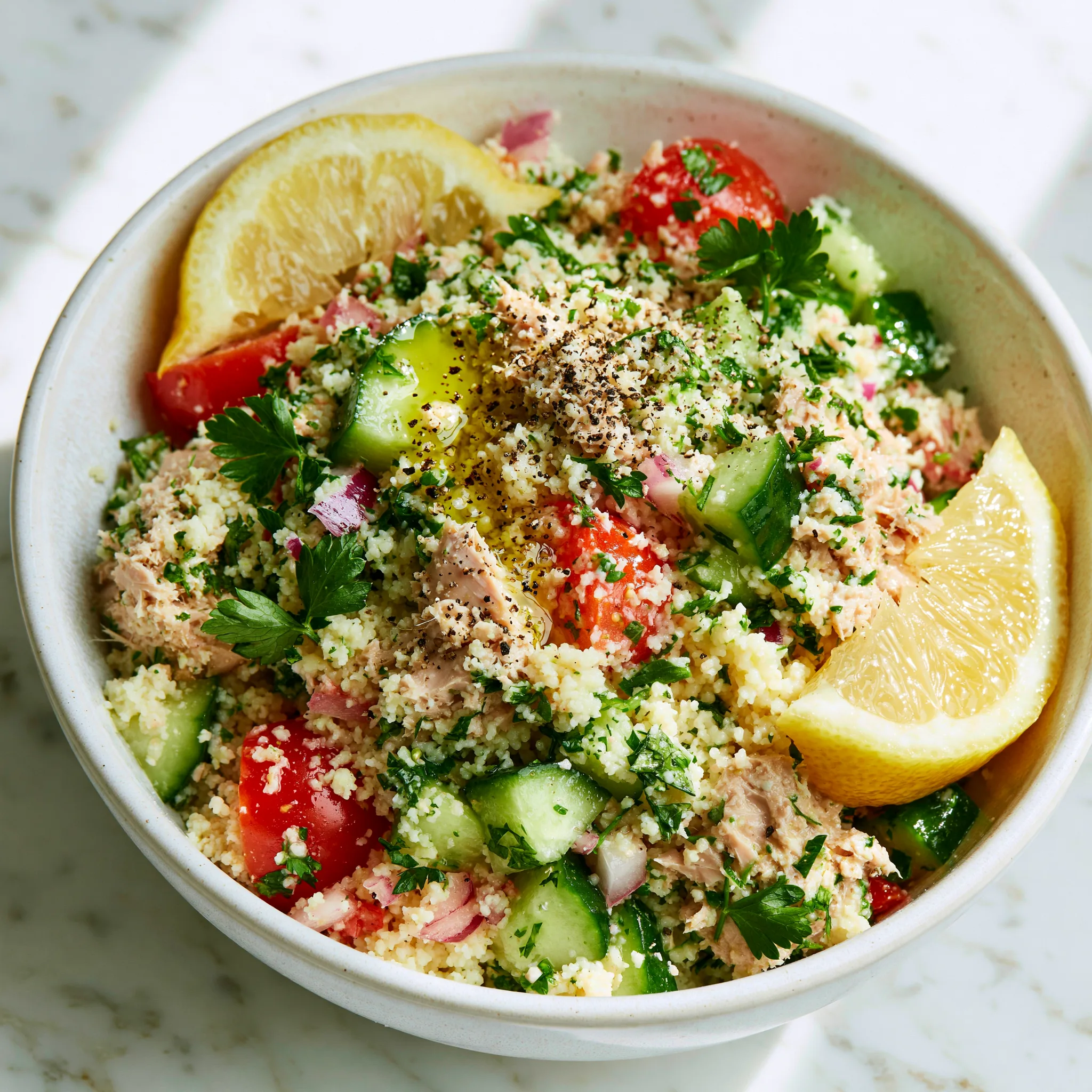
Tuna Salad with Couscous
Ingredients
Equipment
Method
- Cover couscous with boiling broth and let stand 5 minutes.
- Fluff couscous with a fork and cool completely.
- Whisk together olive oil, lemon juice, mustard, garlic, oregano, salt and pepper.
- Combine couscous, tuna, tomatoes, cucumber, onion, parsley and feta.
- Pour dressing over salad and toss gently.
- Chill 15 minutes before serving.