Bulgogi Beef Fried Rice with Kimchi: Easy Korean Rice Recipe
When it comes to comforting meals that deliver bold flavors with minimal effort, few dishes can compete with Bulgogi Beef Fried Rice with Kimchi. This Korean-inspired recipe combines sweet and savory bulgogi beef, tangy fermented kimchi, fluffy fried rice, aromatic garlic, toasted sesame oil, and fresh vegetables into one incredibly satisfying skillet meal.
Whether you’re searching for a quick weeknight dinner, a creative way to use leftover rice, or a restaurant-quality meal you can prepare at home, this recipe checks every box. Every bite offers layers of flavor—the caramelized richness of marinated beef, the gentle heat and acidity of kimchi, and the comforting texture of perfectly fried rice.
Unlike ordinary fried rice, this version takes inspiration from classic Korean cuisine while remaining approachable for home cooks. The ingredients are widely available, the cooking process is straightforward, and the finished meal tastes like something from your favorite Korean restaurant.
If you’re looking for a new family favorite, Bulgogi Beef Fried Rice with Kimchi deserves a permanent place in your dinner rotation.
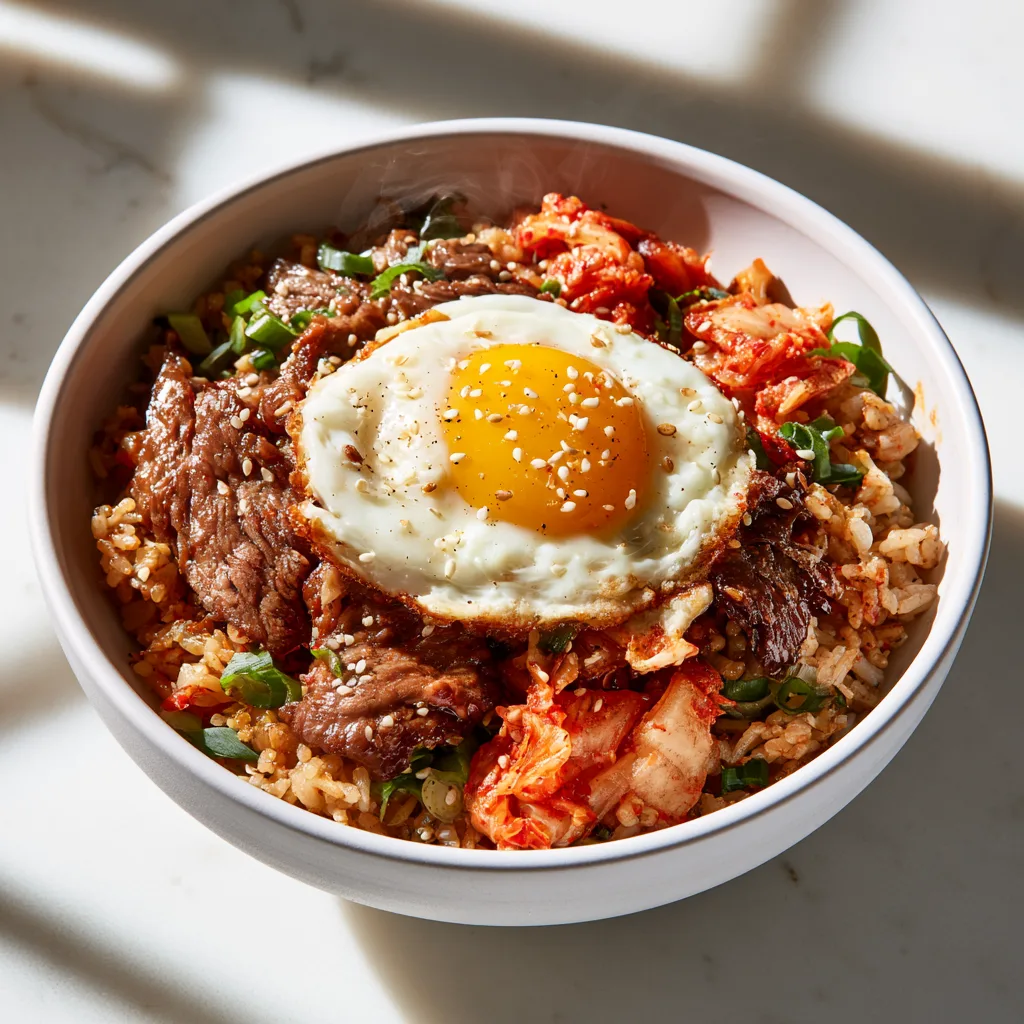
Why You’ll Love This Recipe
There are countless fried rice recipes available, but this one stands out thanks to its perfect balance of flavors and textures.
The sweet soy-based bulgogi marinade caramelizes beautifully as it cooks, creating tender bites of beef with rich umami flavor. Kimchi contributes brightness, acidity, and just enough spice to cut through the richness.
The vegetables provide freshness and color while sesame oil ties everything together with its unmistakable nutty aroma.
Best of all, the entire dish comes together in about 35 minutes, making it ideal for busy evenings.
You’ll also appreciate how customizable it is. Adjust the spice level, swap vegetables, or even use chicken or tofu instead of beef.
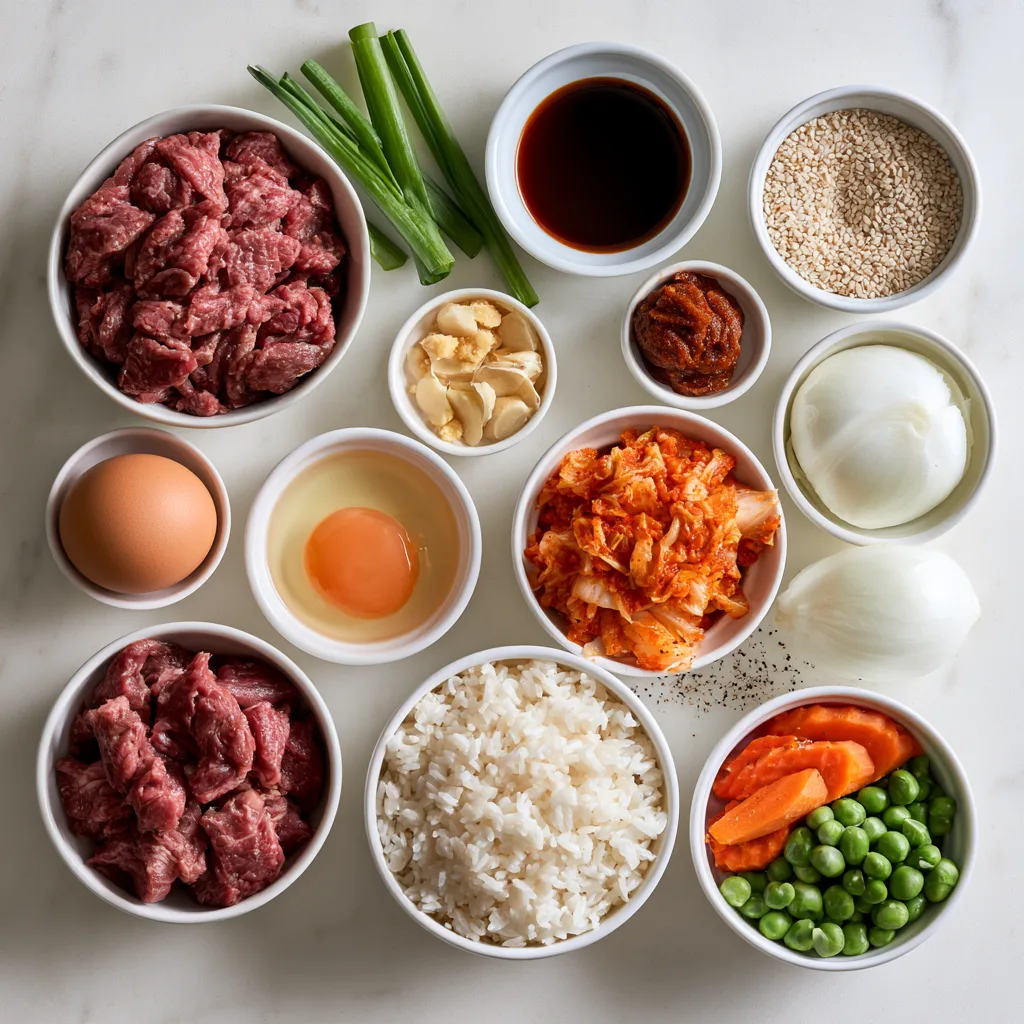
Ingredients
For the Bulgogi Beef
- 1 pound thinly sliced beef sirloin or ribeye
- 3 tablespoons soy sauce
- 1 tablespoon sesame oil
- 2 tablespoons brown sugar
- 3 cloves garlic, minced
- 1 teaspoon grated fresh ginger
- 1 teaspoon rice vinegar
- ½ teaspoon black pepper
For the Fried Rice
- 4 cups cooked cold jasmine rice
- 1½ cups chopped kimchi
- ½ cup kimchi juice
- 1 small onion, diced
- 1 cup frozen peas and carrots
- 2 tablespoons vegetable oil
- 2 green onions, sliced
- 1 tablespoon gochujang (optional)
- 1 tablespoon soy sauce
- 1 teaspoon sesame oil
- 2 teaspoons toasted sesame seeds
Optional Garnishes
- Fried eggs
- Extra kimchi
- Green onions
- Nori strips
- Chili flakes
Why Day-Old Rice Works Best
One of the biggest secrets to exceptional fried rice is using rice that has been chilled overnight.
Freshly cooked rice contains excess moisture, causing it to clump together and steam rather than fry. Cold rice develops a firmer texture that separates easily inside the skillet.
Each grain becomes lightly toasted instead of mushy, creating the signature texture found in restaurant-style fried rice.
If you only have fresh rice available, spread it on a baking sheet and refrigerate it for about 45 minutes before cooking.
Choosing the Best Beef
Traditional bulgogi is often made using ribeye because of its excellent marbling.
However, sirloin, flank steak, or shaved beef also produce excellent results.
The key is slicing the beef very thinly. Slightly freezing the meat for about 20 minutes before slicing makes achieving paper-thin pieces much easier.
Thin slices cook quickly while absorbing the flavorful marinade more effectively.
The Importance of Kimchi
Kimchi is much more than simply spicy cabbage.
Its fermentation creates deep savory complexity along with gentle acidity that balances the sweetness of the bulgogi marinade.
Older kimchi generally works even better in fried rice because its stronger fermented flavor stands up well to high-heat cooking.
Don’t discard the kimchi juice—it contributes tremendous flavor throughout the dish.
Instructions
1. Marinate the Beef
Combine soy sauce, sesame oil, brown sugar, garlic, ginger, rice vinegar, and black pepper in a bowl.
Add the sliced beef and toss until evenly coated.
Allow it to marinate for at least 20 minutes, although one hour produces even deeper flavor.
2. Prepare the Rice
Separate any clumps in the chilled rice using clean hands or a fork.
This ensures every grain cooks evenly without becoming sticky.
3. Cook the Beef
Heat vegetable oil in a large wok or cast-iron skillet over medium-high heat.
Cook the marinated beef in batches, allowing it to caramelize without overcrowding the pan.
Transfer the cooked beef to a plate.
4. Sauté the Vegetables
Using the same skillet, cook the onion until translucent.
Add peas and carrots, stirring until heated through.
Then stir in the chopped kimchi and cook for another 2 to 3 minutes.
5. Add Rice
Increase the heat slightly.
Add the cold rice and break apart any remaining clumps while stirring continuously.
Continue cooking until the rice begins developing lightly toasted edges.
6. Season the Fried Rice
Once the rice is hot and beginning to crisp slightly around the edges, stir in the soy sauce, kimchi juice, sesame oil, and gochujang (if using). Fold everything together gently so the rice is evenly coated without becoming mushy.
Return the cooked bulgogi beef to the skillet and toss until thoroughly combined. Cook for another 2 to 3 minutes so the beef reheats and the flavors meld together.
Finally, sprinkle in most of the sliced green onions and toasted sesame seeds, reserving a little of each for garnish.
7. Serve
Divide the fried rice into serving bowls.
Top each serving with a sunny-side-up or fried egg, additional kimchi, fresh green onions, toasted sesame seeds, or crispy nori strips if desired. Serve immediately while piping hot.
Tips for the Best Bulgogi Beef Fried Rice with Kimchi
Although this recipe is straightforward, a few professional techniques can elevate it from good to exceptional.
Cook over high heat. Fried rice develops its signature texture when cooked quickly over high heat rather than slowly over low heat.
Avoid overcrowding the pan. If making a double batch, cook in two rounds. Too many ingredients lower the pan temperature and cause steaming instead of frying.
Marinate the beef ahead of time. Even 20 minutes makes a difference, but marinating for several hours creates deeper flavor.
Drain overly wet kimchi. Kimchi should contribute flavor, not excess moisture. Reserve the liquid separately so you can control how much is added.
Taste before adding extra soy sauce. Kimchi and bulgogi marinade already contain salt, so adjust seasoning at the end rather than the beginning.
Easy Variations
One of the best things about this recipe is how adaptable it is.
Spicy Version
Increase the gochujang to two tablespoons and garnish with Korean chili flakes (gochugaru) for extra heat.
Extra Vegetable Version
Add mushrooms, zucchini, bell peppers, spinach, bean sprouts, or broccoli for additional nutrition and color.
Chicken Bulgogi Fried Rice
Replace the beef with thinly sliced chicken thighs marinated in the same sauce.
Pork Version
Thin pork shoulder or pork loin also absorbs the sweet-savory marinade beautifully.
Vegetarian Option
Swap the beef for tofu, king oyster mushrooms, or tempeh while keeping the same flavorful marinade.
Low-Carb Version
Replace part or all of the rice with cauliflower rice. Since cauliflower contains more moisture, cook it briefly over high heat to avoid a watery texture.
What to Serve with Bulgogi Beef Fried Rice with Kimchi
Because this dish is hearty enough to stand alone, it only needs a few simple accompaniments.
Popular pairings include:
- Korean cucumber salad
- Pickled radishes
- Steamed edamame
- Korean spinach side dish
- Miso soup
- Egg drop soup
- Seaweed salad
- Fresh lettuce leaves for wrapping bites of fried rice
- Extra kimchi on the side
A cold sparkling beverage or iced tea also complements the savory and slightly spicy flavors.
Storage Instructions
This recipe stores exceptionally well, making it ideal for meal prep.
Refrigerator
Transfer cooled fried rice to an airtight container and refrigerate for up to 4 days.
Freezer
Freeze individual portions in freezer-safe containers for up to 2 months. Thaw overnight in the refrigerator before reheating.
Reheating
Warm leftovers in a skillet over medium-high heat with a splash of water or a teaspoon of sesame oil to restore moisture. A microwave also works for quick lunches, though the skillet preserves the best texture.
Meal Prep Tips
Preparing components in advance makes this recipe even quicker on busy evenings.
- Cook the rice one day ahead.
- Marinate the beef overnight.
- Chop vegetables in advance.
- Toast sesame seeds and store them in a sealed container.
- Portion kimchi ahead of time.
When dinner time arrives, the cooking process takes only about 15 minutes.
Common Mistakes to Avoid
Using Fresh Rice
Fresh rice is too moist and results in sticky fried rice. Chilled rice fries much better.
Overcooking the Beef
Thin slices cook in just a few minutes. Overcooking can make the meat tough.
Skipping the Marinade
Even a short marinating time significantly enhances the flavor of the beef.
Cooking Over Low Heat
High heat helps create lightly crisp rice and caramelized beef, both of which are essential to the dish.
Adding Too Much Liquid
Too much soy sauce or kimchi juice can make the rice soggy. Add gradually and stir well between additions.
Frequently Asked Questions
Can I use leftover steak?
Absolutely. Thinly slice cooked steak and add it during the final few minutes of cooking so it reheats without drying out.
Is kimchi very spicy?
Not always. Many varieties are mildly spicy with a pleasant tanginess. If you prefer less heat, choose a mild kimchi and omit the gochujang.
Can I make this gluten-free?
Yes. Use gluten-free soy sauce or tamari and ensure your gochujang is certified gluten-free.
Which rice works best?
Jasmine rice is ideal because it stays fluffy and separate after chilling. Medium-grain rice also works well.
Can I prepare it ahead?
Yes. The dish reheats beautifully, making it an excellent option for meal prep or packed lunches.
A Brief Look at the Inspiration Behind the Dish
Bulgogi has been a beloved Korean favorite for generations, known for its sweet and savory marinade featuring soy sauce, garlic, sesame oil, and a touch of sweetness. Kimchi, Korea’s iconic fermented vegetable dish, has an equally rich culinary history and is celebrated for its bold flavor and probiotic benefits.
Bringing these two staples together with fried rice creates a meal that is both comforting and practical. It’s also a wonderful example of how leftover rice can be transformed into something deeply satisfying with just a handful of flavorful ingredients.
Home cooks around the world have embraced this combination because it balances savory, tangy, spicy, and slightly sweet notes in every bite.
Final Thoughts
Bulgogi Beef Fried Rice with Kimchi is everything a great one-pan meal should be: flavorful, filling, easy to prepare, and endlessly customizable. The caramelized bulgogi beef, tangy kimchi, perfectly fried rice, and aromatic sesame oil come together in a harmonious blend of textures and flavors that feels both comforting and exciting.
Whether you’re introducing your family to Korean-inspired cooking, searching for a delicious way to use leftover rice, or simply craving a satisfying dinner that comes together quickly, this recipe delivers every time. It’s equally suited for busy weeknights, weekend lunches, meal prep, or casual entertaining.
Once you experience the irresistible combination of savory bulgogi, fermented kimchi, and golden fried rice, it’s easy to see why this dish has become a favorite among home cooks. Keep this recipe in your collection, and you’ll always have a dependable, restaurant-worthy meal ready to impress with minimal effort.
Bulgogi Beef Fried Rice with Kimchi
Ingredients
Equipment
Method
- Combine marinade ingredients and marinate beef for at least 20 minutes.
- Heat oil in a wok and cook beef until caramelized; remove.
- Cook onion, peas, carrots, and kimchi until softened.
- Add cold rice and stir-fry until heated and lightly crisp.
- Mix in kimchi juice, soy sauce, sesame oil, and gochujang.
- Return beef to the pan and toss until combined.
- Garnish with green onions, sesame seeds, and fried eggs if desired.