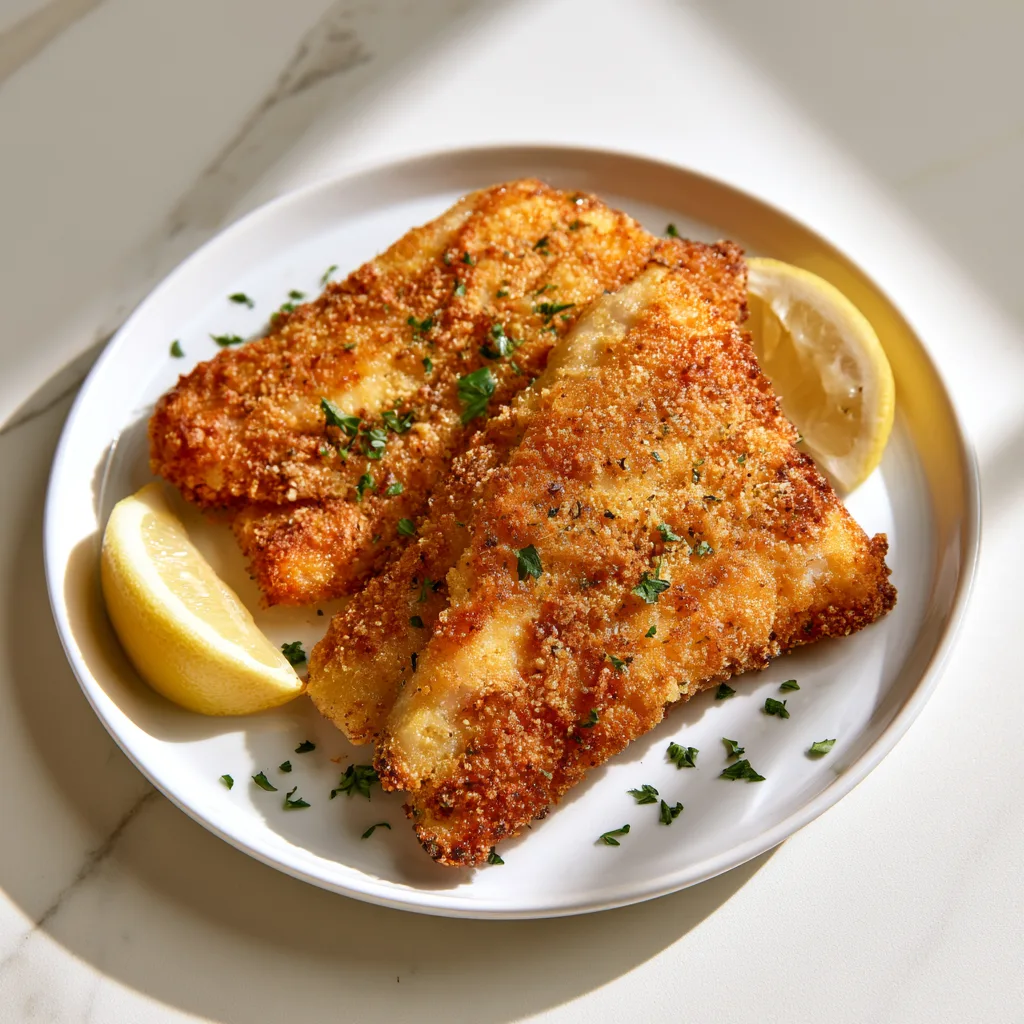
Cornmeal Crusted Walleye: Crispy Lakeside Favorite
There is something especially satisfying about a piece of fresh fish coming out of a skillet with a deeply golden exterior and a tender, delicate center. Cornmeal Crusted Walleye delivers exactly that combination. Mild walleye fillets are dipped in a simple egg mixture, coated in seasoned cornmeal, and cooked in a hot skillet until the outside becomes crisp while the fish inside stays moist and flaky.
Walleye is particularly well suited to pan-frying because its flavor is mild rather than strongly fishy, and its lean flesh cooks quickly. Instead of burying that delicate fish beneath a heavy batter, this pan fried walleye recipe uses a thin cornmeal coating that adds crunch, seasoning, and golden color without overwhelming the fillet.
The entire meal can be on the table in less than 30 minutes, making it useful for everything from a casual summer fish fry to a quick family dinner. Add lemon wedges, potatoes, coleslaw, corn, or a fresh green salad and you have a meal that feels like something served at a lakeside restaurant without needing a deep fryer.
If freshly caught walleye is available, this is also an excellent way to prepare it. Frozen fillets work beautifully as well as long as they are completely thawed and thoroughly dried before breading.
Why Cornmeal Works So Well With Walleye
Cornmeal creates a different texture from breadcrumbs or a flour-only coating. Its naturally coarse texture develops a distinctive crisp surface when it hits hot oil, giving this crispy walleye recipe plenty of crunch without requiring a thick layer of breading.
Combining cornmeal with a smaller amount of all-purpose flour improves the coating further. Flour helps the seasoning distribute evenly and fills some of the spaces between the grains of cornmeal, producing a crust that adheres more consistently to the fish.
Paprika provides both color and mild earthy flavor. Garlic powder and onion powder add savory depth while black pepper gives the coating a subtle bite. A small amount of cayenne can be included when a little heat is welcome, but it is entirely optional.
The result is deliberately simple. Walleye has such a delicate flavor that it does not need an aggressive seasoning blend.
What Does Walleye Taste Like?
Walleye is a freshwater fish prized for its clean, relatively mild flavor. The flesh is generally pale, lean, and tender with a fine flake.
That makes walleye particularly versatile. It can be baked, grilled, broiled, battered, or pan-seared, but frying remains one of the most popular preparations because the crisp exterior contrasts beautifully with the soft fish.
For people who hesitate to eat stronger-tasting seafood, a well-prepared walleye fillet recipe can also be an approachable choice. Fresh lemon further brightens the flavor and balances the richness of the fried crust.
Ingredients
For the Walleye and Cornmeal Crust
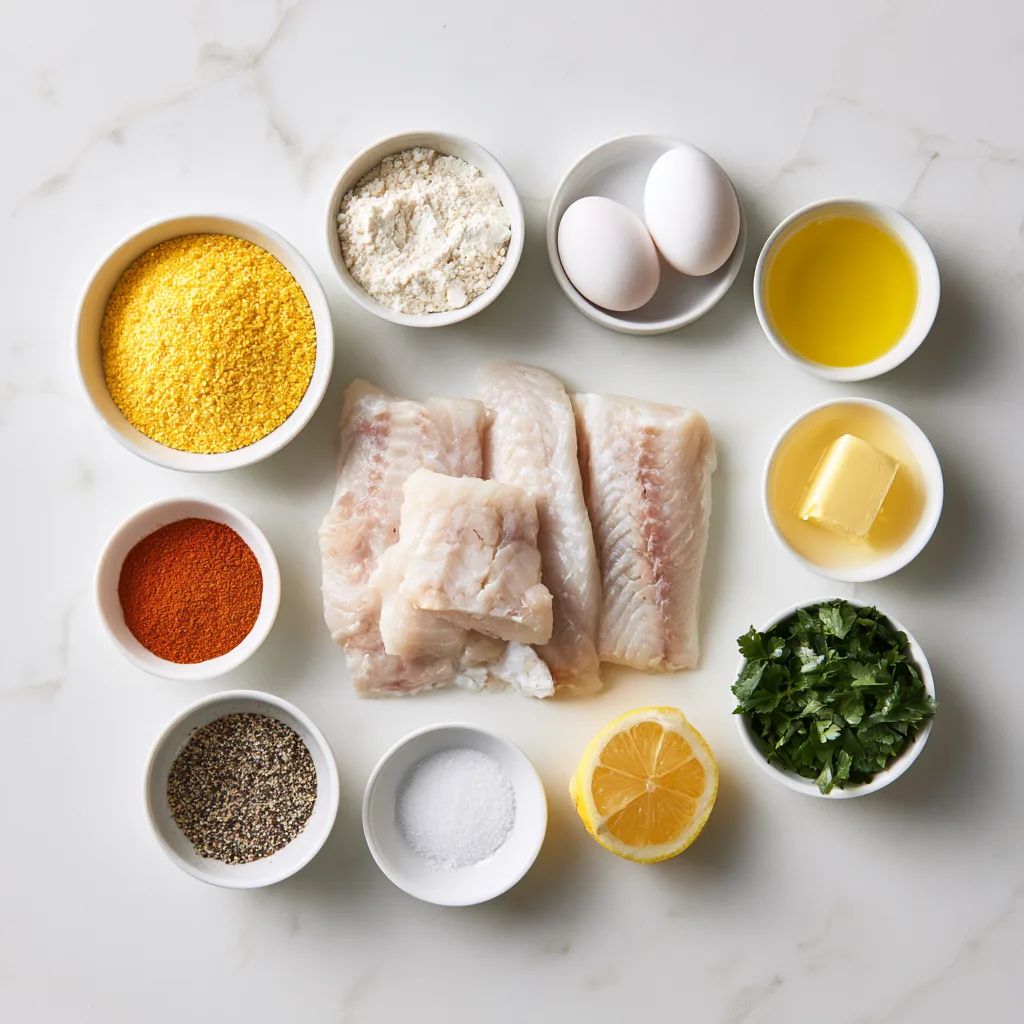
- 4 walleye fillets, about 5–6 ounces each, skin removed
- 1/2 cup fine yellow cornmeal
- 1/3 cup all-purpose flour
- 1 teaspoon kosher salt
- 1 teaspoon paprika
- 1/2 teaspoon garlic powder
- 1/2 teaspoon onion powder
- 1/4 teaspoon freshly ground black pepper
- 1/8 teaspoon cayenne pepper, optional
- 2 large eggs
- 2 tablespoons milk
For Pan-Frying and Serving
- 3 tablespoons neutral cooking oil, such as canola, avocado, or vegetable oil
- 1 tablespoon unsalted butter
- 1 lemon, cut into wedges
- 2 tablespoons chopped fresh parsley, optional
Choosing the Best Walleye Fillets
Good fish makes an enormous difference in a recipe this simple.
Look for fillets that appear moist and firm rather than dried around the edges. Fresh fish should have a clean smell rather than an aggressive fishy odor. If using frozen walleye, thaw it completely in the refrigerator before cooking.
Thickness matters too. Fillets that are relatively similar in thickness will finish cooking at approximately the same time. If some pieces are substantially thinner, remove those from the skillet sooner rather than waiting for the thickest fillet.
Before breading, run your fingers gently over the surface of the fish to check for any remaining pin bones. They can be removed with clean kitchen tweezers.
Most importantly, dry the fillets thoroughly with paper towels. Surface moisture is one of the biggest enemies of crisp breading.
Instructions
1. Prepare the Walleye
Pat all four walleye fillets thoroughly dry with paper towels. Check for any remaining bones and remove them.
Dry fish allows the egg and cornmeal mixtures to adhere more effectively and reduces excess moisture in the skillet.
2. Prepare the Seasoned Cornmeal Coating
In a shallow bowl, combine the cornmeal, flour, kosher salt, paprika, garlic powder, onion powder, black pepper, and cayenne pepper if using.
Stir until the spices are evenly distributed throughout the cornmeal mixture.
A shallow bowl or pie plate works particularly well because it gives each fillet enough room to lie flat.
3. Prepare the Egg Mixture
Crack the eggs into a second shallow bowl and add the milk.
Whisk until the mixture is smooth and the whites are completely incorporated into the yolks.
This thin egg wash acts as the adhesive between the fish and the seasoned cornmeal crust.
4. Coat the Fish
Working with one fillet at a time, place the walleye into the egg mixture and turn it so both sides are coated.
Lift the fillet and allow the excess egg mixture to drip back into the bowl.
Transfer it immediately to the cornmeal mixture. Press the coating gently against both sides of the fish, making sure the surface is evenly covered.
Shake away excess breading and place the coated fillet onto a clean plate.
Repeat with the remaining fish.
5. Let the Coating Rest
Allow the breaded walleye to sit for about 5 minutes before frying.
This short resting period is easy to skip, but it helps hydrate the thin layer of flour in the coating and encourages the crust to remain attached when the fish is turned in the skillet.
6. Heat the Skillet
Place a large skillet over medium to medium-high heat.
Add the cooking oil and allow it to become hot enough to shimmer. Add the butter and let it melt into the oil.
Using mostly oil with a smaller quantity of butter provides the best of both worlds: the oil handles frying heat well, while the butter contributes flavor and attractive browning.
7. Pan-Fry the First Side
Carefully lower the fillets into the skillet in a single layer.
Do not crowd them. If your skillet cannot comfortably accommodate all four pieces, cook them in two batches.
Let the fish cook undisturbed for approximately 3–4 minutes.
Constantly moving the fillets prevents the crust from setting, so resist the temptation to check them repeatedly.
Once the edges appear golden and the underside has formed a crisp crust, the fish should release relatively easily from the pan.
8. Flip and Finish Cooking
Use a thin fish spatula to turn each fillet gently.
Cook the second side for another 2–4 minutes, depending on the thickness of the fish.
The breading should be golden brown and crisp, while the flesh inside should become opaque and flake easily. Fish should reach 145°F or 63°C in the thickest portion.
Avoid cooking it substantially longer than necessary because walleye is lean and can become dry if overcooked.
9. Drain and Rest
Transfer the finished fish to a wire rack or paper towel-lined plate.
A wire rack provides particularly good results because air can circulate underneath the fish rather than allowing steam to soften the bottom crust.
Let the walleye rest for about 2 minutes.
10. Serve
Serve Cornmeal-Crusted Pan-Fried Walleye immediately with fresh lemon wedges.
Add chopped parsley if desired and pair with your favorite fish-fry sides.
The Secret to Extra-Crispy Pan-Fried Walleye
Three details make the biggest difference when trying to achieve a truly crisp coating.
First, keep the fish dry. Water trapped beneath the coating turns to steam during cooking. Too much moisture can loosen the breading and prevent proper browning.
Second, make sure the skillet is hot before adding the walleye. Fish added to cool oil tends to absorb fat while the coating becomes soft rather than crisp.
The oil should shimmer but should not be aggressively smoking.
Third, do not overcrowd the pan. Adding too many cold fillets at once causes the skillet temperature to fall quickly. That creates steaming and uneven browning.
Cooking two batches is considerably better than squeezing four large fillets into a small skillet.
Should You Use Butter or Oil?
A combination is ideal.
Butter gives fried fish wonderful flavor, but the milk solids in regular butter can brown quickly. Neutral cooking oil handles higher frying temperatures more comfortably.
Using approximately three tablespoons of oil with one tablespoon of butter provides enough fat for shallow pan-frying while still adding buttery flavor.
If necessary, add a little additional oil between batches.
Cornmeal-Crusted Walleye Variations
Once the basic technique has been mastered, the seasoning can easily be adapted.
Cajun Walleye
Replace the paprika, garlic powder, onion powder, and cayenne with 1–2 teaspoons of Cajun seasoning.
Because many prepared seasoning blends contain salt, reduce the additional salt accordingly.
Lemon-Pepper Walleye
Increase the black pepper and add finely grated lemon zest to the cornmeal mixture.
Serve with plenty of fresh lemon juice.
Herbed Cornmeal Crust
Mix dried parsley, thyme, or dill into the coating.
Dill is especially good when serving the fish with a creamy sauce or cucumber salad.
Spicy Cornmeal Walleye
Increase the cayenne and add a little smoked paprika.
A spicy version works especially well alongside cooling coleslaw or a creamy dipping sauce.
Gluten-Free Variation
Replace all-purpose flour with a suitable gluten-free flour blend or additional finely ground cornmeal.
The texture will be slightly different but can still become nicely crisp.
What to Serve With Pan-Fried Walleye
This easy fish dinner can move in several different directions depending on the occasion.
For a traditional fish-fry style plate, serve the walleye with crispy potatoes or French fries, creamy coleslaw, tartar sauce, lemon, and pickles.
For something lighter, pair the fish with roasted vegetables, steamed green beans, asparagus, cucumber salad, or a simple leafy green salad.
Corn is another natural partner. Fresh corn on the cob in summer provides sweetness that complements the savory cornmeal crust.
Rice, wild rice, or roasted baby potatoes can turn the fish into a more substantial dinner without overpowering it.
A spoonful of homemade tartar sauce is always welcome, but do not overlook plain lemon. Fresh lemon juice cuts through the richness of the fried coating while allowing the mild flavor of the walleye to remain prominent.
Sauces That Pair Well With Walleye
Cornmeal-crusted fish is flavorful enough to eat without sauce, although several simple condiments make excellent additions.
Classic tartar sauce is an obvious choice. A sauce made with mayonnaise, chopped pickles, lemon, and herbs provides both acidity and creaminess.
Remoulade works well for anyone who prefers more spice.
Garlic aioli offers a richer option, while a yogurt-and-dill sauce provides a lighter contrast.
Hot sauce can also be served at the table rather than added directly to the breading, allowing each person to control the amount of heat.
Why the Coating Falls Off—and How to Prevent It
If breading separates from pan-fried fish, there are several likely causes.
The fish may have been too wet before breading. It may also have been moved too soon after entering the skillet.
Another common mistake is leaving too much egg wash on the fillet. The fish needs only a thin layer to hold the cornmeal in place.
After breading, give the coating its five-minute resting period. Then place the fillet into properly heated oil and leave it alone while the first crust forms.
When it is ready to turn, use a wide, thin spatula and flip it only once.
These small details make this cornmeal crusted walleye much more reliable.
Can You Use Other Fish?
Yes. The same preparation works well with many relatively firm white fish fillets.
Perch, cod, haddock, pollock, catfish, and similar fish can all be prepared with a cornmeal coating.
Cooking time must be adjusted according to thickness. A thick cod fillet will generally take longer than a thin piece of walleye or perch.
The technique matters more than a strict cooking time: cook until the crust is golden and the center of the fish is properly cooked without allowing the fillet to dry out.
Storing Leftover Pan-Fried Walleye
Freshly fried walleye is at its best immediately after cooking because that is when the cornmeal crust is crispiest.
If leftovers remain, allow them to cool before transferring them to an airtight container. Refrigerate promptly and use within a few days.
For reheating, skip the microwave when preserving crispness is important. An oven or air fryer does a much better job of reviving the crust.
Arrange the fish in a single layer and heat just until hot. Reheating it too long can dry the delicate fillets.
Can Cornmeal-Crusted Walleye Be Made Ahead?
The dry coating can easily be mixed ahead of time and stored in an airtight container.
The fish itself is better breaded shortly before frying.
If coated fillets sit in the refrigerator for too long, moisture from the fish eventually works its way into the breading and produces a heavier texture.
For the best results, prepare the cornmeal mixture in advance, then bread and fry the fish just before dinner.
A Classic Way to Cook Freshwater Fish
Pan-frying freshwater fish has long been associated with fishing trips, family meals, cabins, and casual fish fries across regions where walleye is commonly caught.
Part of the appeal is practical. Fresh fish needs relatively little embellishment when it is cooked well.
Cornmeal provides texture. Seasonings bring savory flavor. A skillet gives the coating golden color. Lemon adds brightness.
That simplicity is precisely what makes the preparation so dependable.
There is no complicated batter, deep fryer, or long ingredient list. From start to finish, Cornmeal Crusted Walleye takes about 27 minutes and uses familiar pantry staples.
Frequently Asked Questions
Is walleye good for frying?
Yes. Walleye’s mild flavor and tender, lean flesh make it particularly well suited to pan-frying. The delicate fish contrasts nicely with a crisp exterior.
Do you need to soak walleye before cooking?
No soaking is necessary for good-quality walleye. Simply thaw completely if frozen, remove any bones, and dry the fillets thoroughly before breading.
What is the best cornmeal for frying fish?
Fine or medium yellow cornmeal works well. Fine cornmeal provides a slightly more uniform crust, while medium-ground cornmeal creates a more noticeable crunch.
How do you know when walleye is finished?
The flesh should become opaque and flake easily in the thickest section. A food thermometer inserted into the thickest portion should register 145°F or 63°C.
Why is my fried walleye soggy?
Common causes include adding the fish before the oil is hot, overcrowding the skillet, failing to dry the fillets, or stacking freshly cooked pieces so steam becomes trapped.
Can this recipe be doubled?
Absolutely. Keep the proportions the same and fry the fish in batches. Avoid filling the skillet with too many fillets at once.
Final Tips for the Best Cornmeal-Crusted Pan-Fried Walleye
For consistently excellent results, remember the essentials: start with dry fillets, season the cornmeal thoroughly, let the coating rest briefly, preheat the skillet, avoid crowding, and turn each fillet only when the first side has developed a firm golden crust.
Serve it immediately while the outside is still crunchy and the center remains tender.
With less than half an hour from preparation to serving, Cornmeal-Crusted Pan-Fried Walleye is an uncomplicated way to turn fresh or frozen walleye into a memorable dinner. Its golden crust, mild flaky center, and straightforward seasoning make it equally appropriate for a traditional family fish fry, a summer lakeside meal, or an easy weeknight dinner at home.
Cornmeal-Crusted Pan-Fried Walleye
Ingredients
Equipment
Method
- Pat the walleye fillets very dry with paper towels. Check for pin bones and remove any with clean tweezers.
- In a shallow bowl, combine cornmeal, flour, salt, paprika, garlic powder, onion powder, black pepper, and cayenne if using.
- In a second shallow bowl, whisk the eggs with milk until smooth.
- Dip each walleye fillet into the egg mixture, letting excess drip away, then press both sides into the seasoned cornmeal mixture. Shake off loose coating and place on a plate for 5 minutes so the crust can adhere.
- Heat the oil in a large skillet over medium to medium-high heat until shimmering. Add the butter and let it melt without browning.
- Add the coated fillets in a single layer without crowding the pan. Cook for 3–4 minutes on the first side until deeply golden and crisp.
- Turn carefully with a fish spatula and cook for another 2–4 minutes, depending on thickness, until the second side is golden and the fish flakes easily and reaches 145°F (63°C) in the thickest part.
- Transfer the walleye to a wire rack or paper towel-lined plate. Rest for 2 minutes, then serve hot with lemon wedges and parsley.