
Japanese Fusion Guacamole with Sesame, Wasabi and Nori
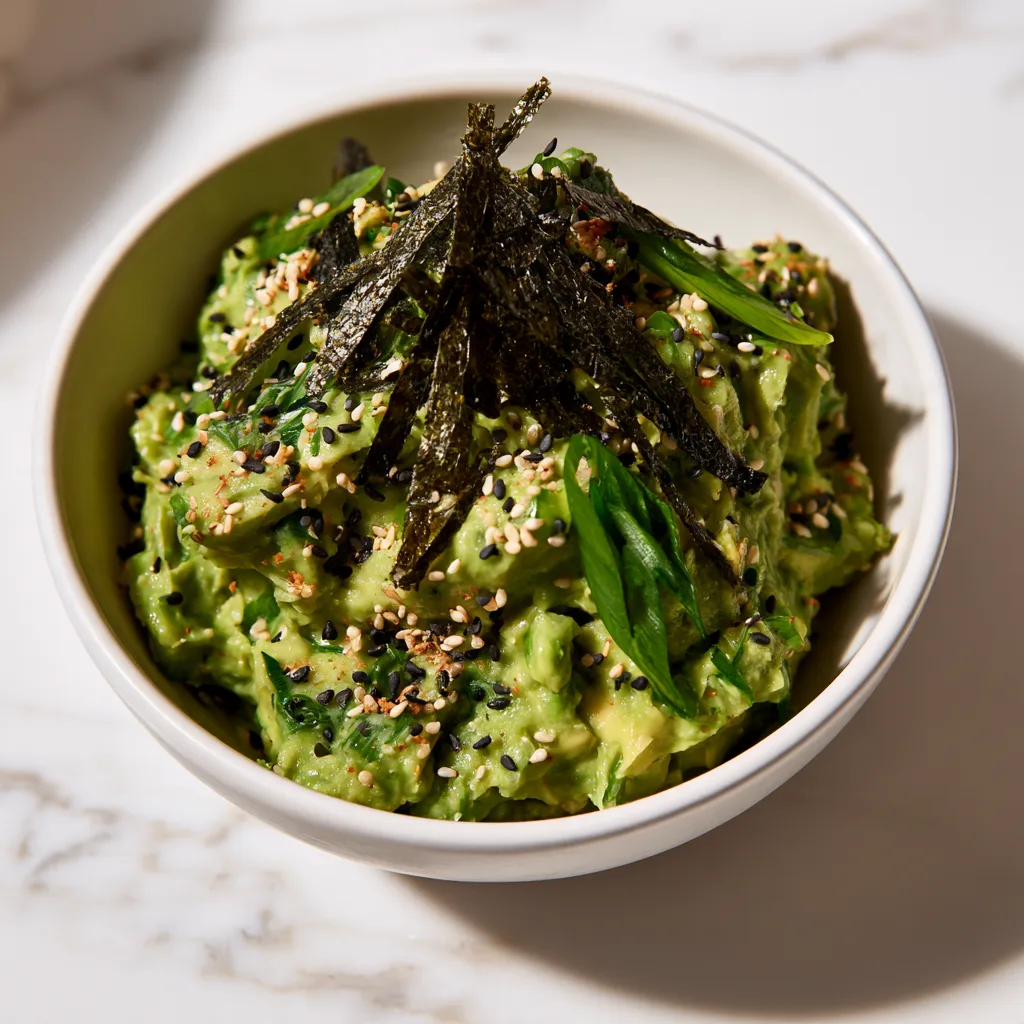
Japanese Fusion Guacamole takes the creamy texture of classic avocado dip and layers it with Japanese-inspired flavors including toasted sesame oil, soy sauce, rice vinegar, ginger, wasabi, scallions, sesame seeds, and nori. The result is fresh, savory, slightly tangy, gently spicy, and packed with umami.
Traditional guacamole is already built around an ingredient that works extremely well with Japanese flavors. Avocado appears frequently alongside sushi, rice bowls, poke-inspired dishes, and modern Japanese fusion food because its mild richness balances soy sauce, wasabi, vinegar, seaweed, and sesame.
That makes Japanese Fusion Guacamole less unusual than it might first sound.
The avocado remains the star. The Japanese-inspired ingredients are added carefully so they enhance rather than overpower it.
A small amount of toasted sesame oil contributes aroma. Soy sauce provides saltiness and umami. Rice vinegar and lime keep the dip bright. Fresh ginger adds a subtle bite, while wasabi creates gentle heat that can easily be adjusted.
The final garnish of toasted sesame seeds, scallions, and shredded nori gives the dip an unmistakably Japanese-inspired finish.
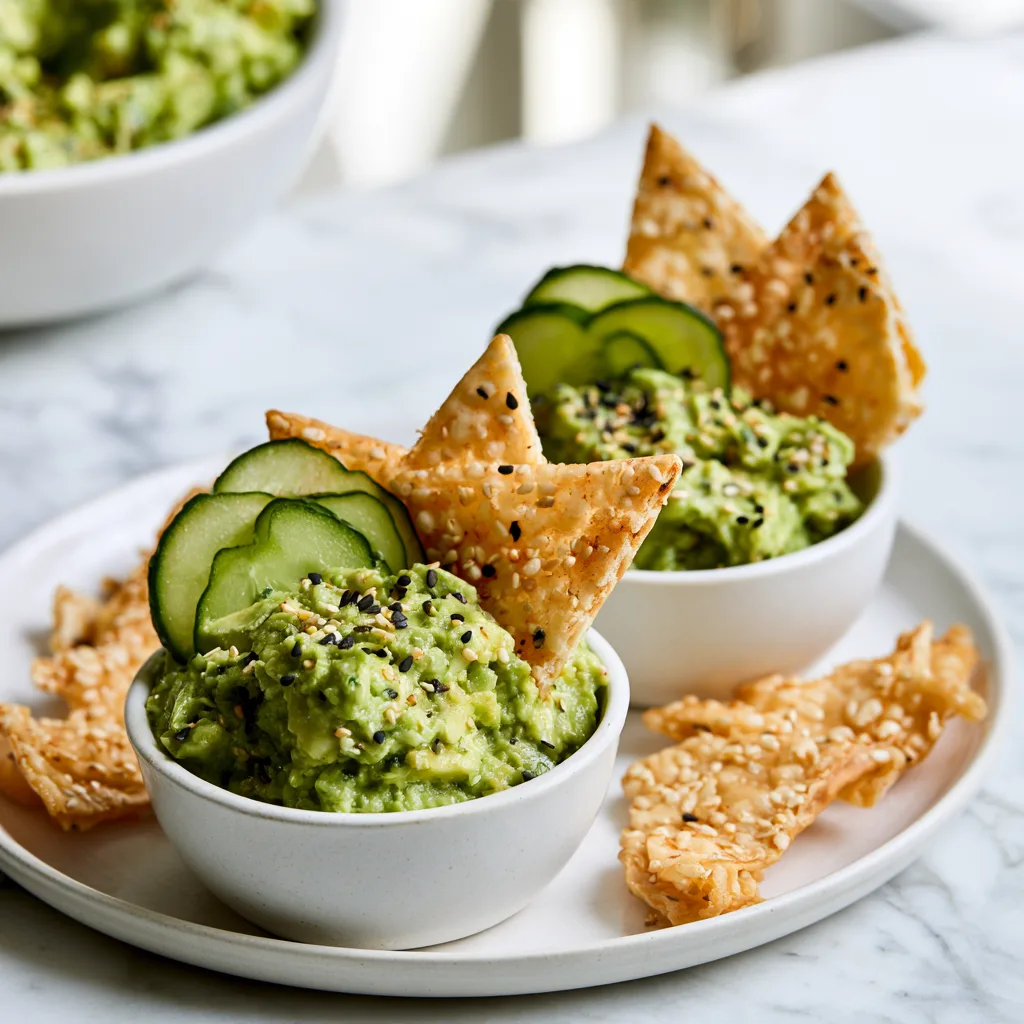
Serve it with rice crackers, wonton chips, cucumber rounds, vegetables, tortilla chips, sushi-inspired appetizers, or spooned over rice bowls and grilled seafood.
Best of all, Japanese Fusion Guacamole takes only about 10 minutes to prepare.
Why Japanese Flavors Work with Avocado
Avocado has a mild flavor and high fat content, giving it a creamy mouthfeel that naturally benefits from salty, acidic, and aromatic ingredients.
Soy sauce cuts through that richness with salt and umami.
Rice vinegar provides clean acidity without dominating the avocado.
Sesame oil has an intense toasted aroma, so even a small quantity significantly changes the flavor.
Wasabi adds sharpness, but unlike a heavy chili sauce, its heat does not need to turn the entire dip fiery.
Nori contributes a subtle savory flavor reminiscent of the sea, while sesame seeds add texture.
Together, these ingredients create an Asian guacamole that still tastes primarily like avocado.
Ingredients
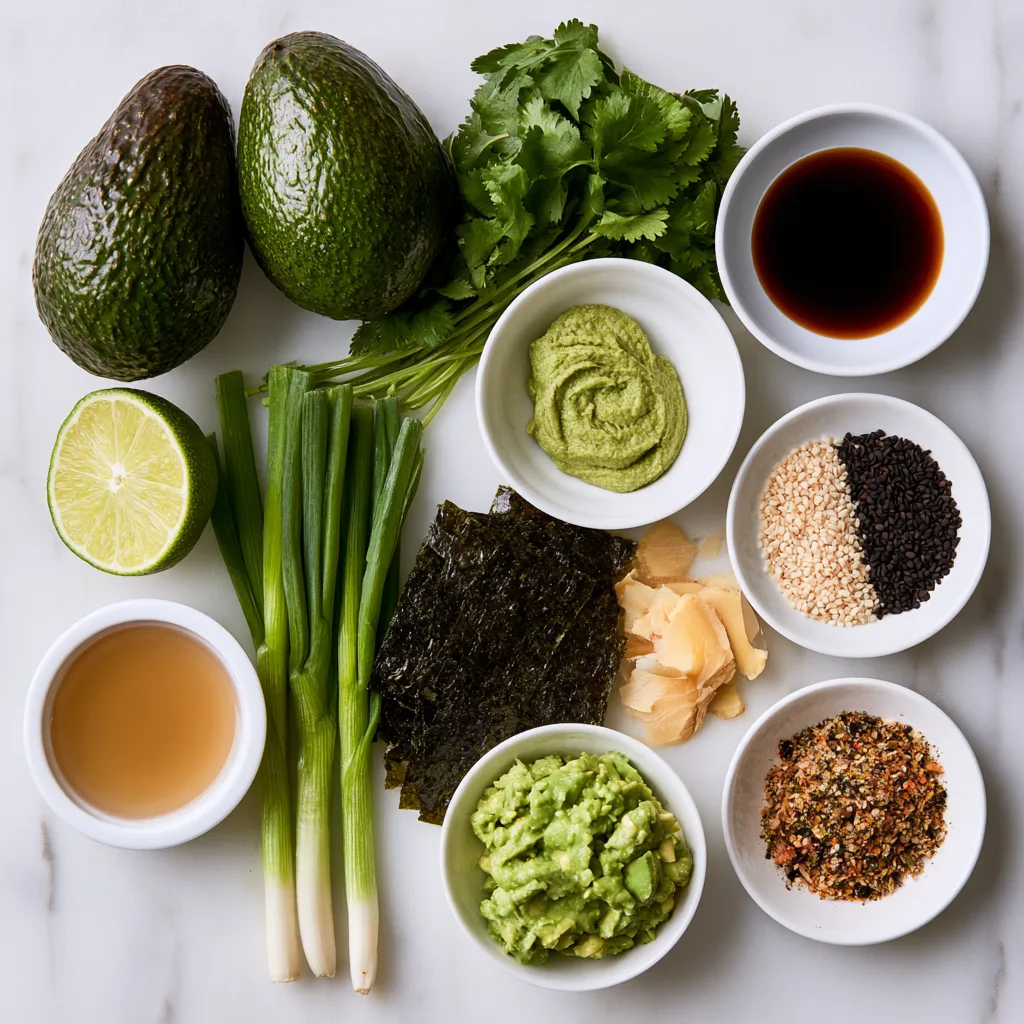
- 3 large ripe avocados
- 2 tablespoons finely sliced green onions
- 1 tablespoon fresh lime juice
- 2 teaspoons rice vinegar
- 2 teaspoons low-sodium soy sauce
- 1 teaspoon toasted sesame oil
- 1/2 teaspoon freshly grated ginger
- 1/2 teaspoon wasabi paste, plus more to taste
- 1 tablespoon chopped fresh cilantro, optional
- 1 teaspoon toasted white sesame seeds
- 1 teaspoon black sesame seeds
- 1 small sheet nori, finely shredded
- 1 teaspoon furikake, optional
- Pinch of salt if needed
For Serving
- Rice crackers
- Wonton chips
- Tortilla chips
- Cucumber rounds
- Carrot sticks
- Radish slices
- Seaweed snacks
Instructions
- Prepare the avocados. Cut the avocados in half, remove the pits, and scoop the flesh into a medium mixing bowl.
- Mash lightly. Use a fork to mash the avocado until creamy but still slightly chunky.
- Add the seasonings. Add lime juice, rice vinegar, soy sauce, toasted sesame oil, ginger, and wasabi.
- Fold gently. Mix until everything is evenly distributed without overworking the avocado.
- Add fresh ingredients. Fold in the sliced green onions and optional cilantro.
- Taste and adjust. Add additional wasabi for heat, lime for acidity, or a pinch of salt if necessary.
- Transfer to a serving bowl. Smooth the top lightly while leaving some natural texture.
- Garnish. Sprinkle with white sesame seeds, black sesame seeds, shredded nori, extra scallions, and optional furikake.
- Serve immediately. Pair with rice crackers, wonton chips, vegetables, tortilla chips, or cucumber slices.
How Ripe Should the Avocados Be?
Avocado texture determines the quality of any guacamole.
The fruit should yield gently when pressed but should not feel extremely soft or hollow.
An underripe avocado remains firm and difficult to mash. More importantly, it lacks the creamy richness needed to carry the stronger flavors of soy, sesame, and wasabi.
An overripe avocado may contain brown fibers and can develop an unpleasant flavor.
If avocados are purchased while firm, leave them at room temperature until they soften. Once ripe, moving them into the refrigerator can slow further ripening for a few days.
Use Toasted Sesame Oil Carefully
Toasted sesame oil is powerful.
One teaspoon is enough for three avocados because the goal is not to make the guacamole taste exclusively like sesame.
Adding too much can hide the fresh avocado flavor and create an oily finish.
If extra sesame flavor is desired, increase the toasted sesame seeds instead. They provide aroma and nuttiness while also contributing texture.
How Much Wasabi Should You Use?
Wasabi intensity varies significantly between products.
Start with half a teaspoon and taste.
The objective is a gentle wasabi warmth that appears after the avocado rather than a sharp burst that dominates every bite.
For a stronger wasabi guacamole, increase the amount gradually.
If serving guests with different spice preferences, keep the dip mild and offer additional wasabi on the side.
Fresh Wasabi vs Prepared Wasabi Paste
Authentic fresh wasabi is expensive and difficult to find in many regions.
Commercially prepared wasabi paste is far more accessible and works perfectly well for this fusion recipe.
Many prepared products use horseradish as a primary ingredient. That is entirely acceptable here because the recipe is a modern fusion dip rather than a traditional Japanese preparation.
The important factor is controlling the amount so the avocado remains noticeable.
The Role of Rice Vinegar and Lime
Using both rice vinegar and lime might initially seem unnecessary, but they contribute slightly different qualities.
Lime provides bright citrus aroma and acidity familiar from classic guacamole.
Rice vinegar has a softer, clean acidity that reinforces the Japanese-inspired profile.
Together, they keep the rich avocado balanced without making the dip excessively sour.
They also help slow browning to some extent, although no acidic ingredient can completely prevent cut avocado from oxidizing.
Why Soy Sauce Works Better Than Salt Alone
Salt seasons avocado, but soy sauce contributes additional savory depth.
Only a small amount is needed.
Using low-sodium soy sauce gives better control over the final salt level. Tamari can also be used, particularly when a gluten-free option is required, provided the selected product is certified gluten-free.
Taste before adding any additional salt because nori, furikake, crackers, and soy sauce may already provide plenty.
Texture: Smooth or Chunky?
Japanese Fusion Guacamole is best when slightly chunky.
A completely smooth dip can still taste good, but leaving small pieces of avocado creates a more interesting texture and keeps the dish recognizable as guacamole.
Mash the avocado first, then fold in the seasonings.
Avoid placing everything in a food processor unless an intentionally smooth avocado spread is desired.
What to Serve with Japanese Fusion Guacamole
Traditional tortilla chips remain a perfectly good choice, but Japanese-inspired dippers make the fusion concept more distinctive.
Rice Crackers
Their crisp texture and mild flavor pair particularly well with sesame and nori.
Wonton Chips
Baked or fried wonton wrappers provide a light, crunchy base and are excellent for entertaining.
Cucumber Slices
Fresh cucumber keeps the appetizer light and provides a cool contrast to wasabi.
Seaweed Snacks
Crispy seasoned nori adds additional umami and reinforces the Japanese flavor profile.
Vegetable Sticks
Carrots, radishes, bell peppers, and snap peas all work well.
More Ways to Use Japanese Avocado Dip
This recipe does not have to remain a dip.
Spread Japanese Fusion Guacamole over toast and top it with sesame seeds and a soft-boiled egg.
Spoon it over salmon or tuna rice bowls.
Use it as a creamy topping for grilled shrimp.
Add a small spoonful to sushi-inspired hand rolls.
Serve it alongside seared tuna.
Spread it inside wraps with crunchy vegetables.
It also makes an interesting topping for burgers made with salmon, tuna, chicken, or vegetables.
Spicy Variation
For additional heat, add:
- More wasabi
- Sriracha
- Shichimi togarashi
- Finely diced fresh chili
Shichimi togarashi works particularly well because its mixture of chili and aromatic ingredients complements sesame and seaweed.
Use spicy additions sparingly so they do not overpower the avocado.
Creamy Miso Variation
Whisk one teaspoon of white miso with the rice vinegar before stirring it into the guacamole.
White miso adds a slightly sweet, fermented savoriness.
If using miso, reduce the soy sauce slightly because both ingredients contribute salt.
Sushi-Inspired Guacamole
For an even more pronounced sushi-inspired version, top the finished dip with finely diced cucumber, pickled ginger, sesame seeds, and nori.
A small amount of imitation crab or cooked shrimp can also be served separately for guests to spoon on top.
Can Japanese Fusion Guacamole Be Made Ahead?
Guacamole is always best shortly after preparation because avocado begins oxidizing once exposed to air.
However, it can be prepared several hours ahead.
Transfer it to an airtight container and press plastic wrap directly against the entire surface of the guacamole, eliminating as much trapped air as possible.
Cover and refrigerate.
Add sesame seeds, nori, scallions, and furikake immediately before serving so the toppings remain fresh.
How to Keep Guacamole Green
Acid helps slow oxidation but does not stop it completely.
The most effective method is minimizing contact with air.
After preparing the dip:
Press plastic wrap directly onto the surface.
Keep it refrigerated.
Avoid stirring unnecessarily before serving.
Add fresh garnish only at the last moment.
If a thin darker layer develops, gently scrape it away or stir it into the guacamole if the flavor remains fresh.
Party Serving Ideas
Japanese Fusion Guacamole makes an excellent appetizer because it is colorful, quick, and unusual enough to become a conversation piece.
For a party board, place the bowl in the center and surround it with rice crackers, wonton chips, cucumber rounds, carrots, radishes, seaweed snacks, and sesame crackers.
The combination gives guests several textures while making the platter visually interesting.
Small individual servings can also be spooned onto cucumber slices or wonton chips and topped with sesame seeds and nori.
That format works especially well for cocktail parties and appetizer tables.
Common Mistakes to Avoid
Do not use unripe avocado. No amount of seasoning can compensate for hard, bland fruit.
Do not pour sesame oil freely. Measure it.
Avoid adding large amounts of soy sauce before tasting because the dip can quickly become too salty.
Do not add the nori too early if storing the guacamole. Moisture softens it.
And resist the temptation to combine every possible Japanese condiment in one bowl. Miso, ponzu, teriyaki sauce, wasabi, sesame, soy, furikake, and chili can become overwhelming when used simultaneously.
Simple flavor balance produces a better result.
A Fresh Fusion Appetizer in 10 Minutes
The appeal of Japanese Fusion Guacamole is its combination of familiarity and novelty.
Everyone recognizes creamy avocado dip, but sesame oil, rice vinegar, soy sauce, ginger, wasabi, nori, and sesame seeds create a noticeably different flavor profile.
There is no cooking required.
There is minimal cleanup.
The recipe can be scaled easily for parties and customized from mild to spicy.
It is equally suitable for casual snacking, game-day spreads, sushi-inspired dinners, appetizer boards, or modern fusion menus.
Most importantly, the ingredients support rather than compete with the avocado.
Creamy, fresh avocado remains at the center, while Japanese-inspired seasonings add saltiness, acidity, heat, nuttiness, and umami around it.
That balance turns a simple bowl of guacamole into something distinctive without making it complicated.
Japanese Fusion Guacamole
Ingredients
Equipment
Method
- Cut the avocados in half, remove the pits, and scoop the flesh into a mixing bowl.
- Mash the avocado with a fork until creamy but still slightly chunky.
- Add lime juice, rice vinegar, soy sauce, toasted sesame oil, ginger, and wasabi paste.
- Fold gently until the seasonings are evenly distributed.
- Stir in sliced green onions and optional cilantro.
- Taste and adjust with additional wasabi, lime juice, or a small pinch of salt if needed.
- Transfer the guacamole to a serving bowl.
- Top with white and black sesame seeds, shredded nori, additional scallions, and optional furikake.
- Serve immediately with rice crackers, wonton chips, tortilla chips, cucumber rounds, or vegetables.


