Broiled Clams With Tomatoes, Butter, and Tarragon: Elegant Seafood Appetizer
There is something wonderfully satisfying about a plate of freshly cooked clams, especially when they are covered in melted butter, juicy tomatoes, and fragrant herbs. This Broiled Clams With Tomatoes, Butter, and Tarragon Recipe combines simple coastal ingredients to create an elegant seafood appetizer that looks impressive but requires surprisingly little effort.
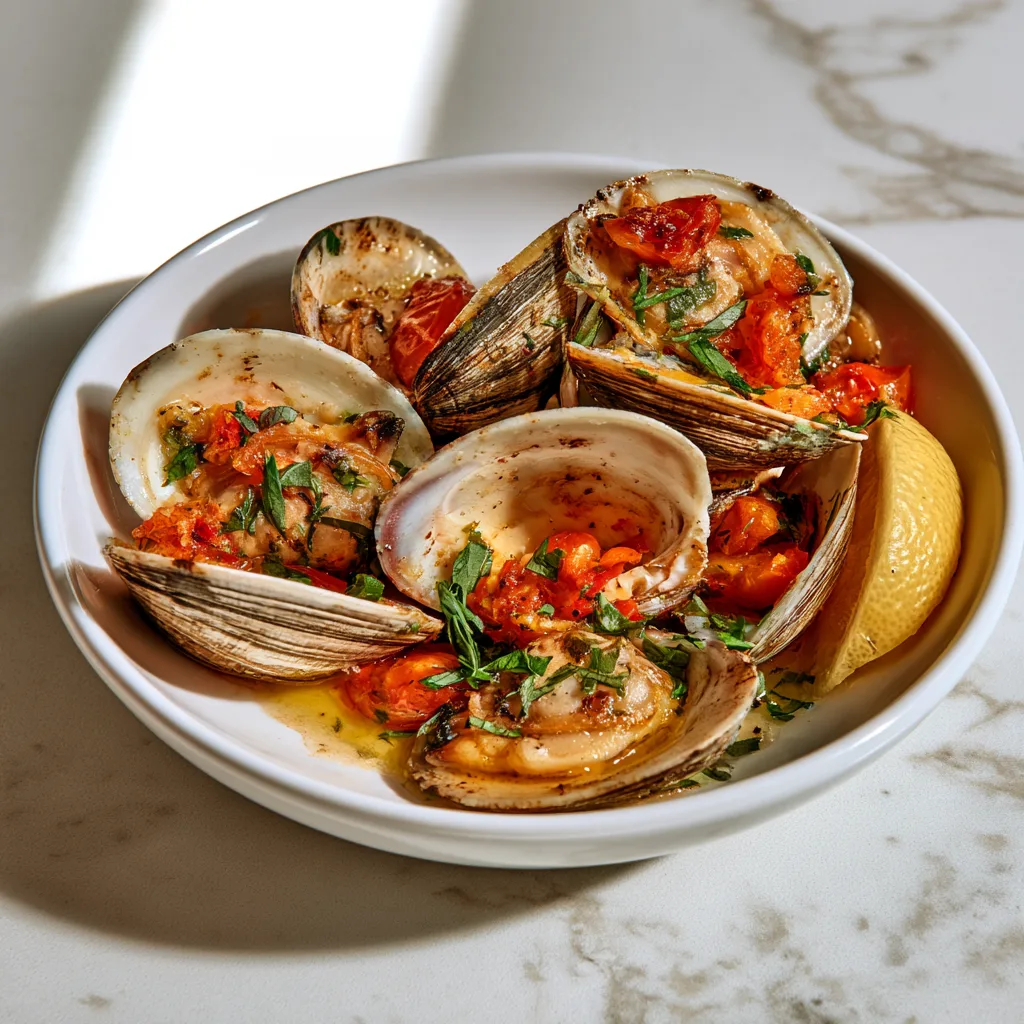
Tender littleneck clams are first gently steamed, then nestled into their half shells and topped with a rich mixture of garlic butter, softened cherry tomatoes, shallots, and fresh tarragon. A quick trip under the broiler brings everything together, producing bubbling butter, lightly caramelized tomatoes, and a delicious aroma that makes this dish difficult to resist.
The combination is beautifully balanced. The natural brininess of the clams complements the sweetness of ripe tomatoes, while butter adds richness and fresh tarragon contributes a delicate, slightly anise-like flavor. A squeeze of lemon brightens everything just before serving.
Best of all, this broiled clams recipe takes approximately 35 minutes from start to finish, making it suitable for dinner parties, holiday appetizers, romantic dinners, or a special seafood meal at home.
Whether you are an experienced seafood cook or preparing fresh clams for the first time, this straightforward method delivers a flavorful dish without complicated techniques.
Why You’ll Love These Broiled Clams
Clams have a naturally delicate sweetness that pairs exceptionally well with butter and aromatic herbs. Unlike seafood recipes that rely on heavy sauces or complicated preparations, this dish allows the fresh ingredients to shine.
Here are several reasons these broiled clams deserve a place on your menu.
Fresh, balanced flavors: Sweet cherry tomatoes, savory garlic, rich butter, and fragrant tarragon create a delicious contrast to the clams’ natural ocean flavor.
Simple preparation: Although the finished dish looks restaurant-worthy, the cooking process involves basic steaming, a quick stovetop sauce, and a few minutes under the broiler.
Perfect for entertaining: Individual clam shells create naturally elegant bite-sized portions that guests can easily enjoy.
Ready in 35 minutes: The short cooking time makes this an excellent choice when you want something special without spending hours in the kitchen.
Easy to customize: The tomato-butter mixture can be adjusted with different herbs, a hint of spice, or a splash of white wine.
Naturally satisfying: Fresh clams provide protein and important nutrients, while the tomatoes and herbs contribute freshness and color.
Another wonderful feature of this recipe is the contrast between the tender clam meat and the lightly browned tomato-butter topping. Every shell holds a small portion of savory sauce, making each bite flavorful.
What Makes Tomatoes, Butter, and Tarragon Such a Good Combination?
The secret to this dish is the way three distinctive ingredients complement one another.
Sweet Tomatoes Add Freshness
Cherry tomatoes are particularly well suited to this recipe because they become sweeter and softer when gently cooked.
Their natural acidity balances the richness of the butter, preventing the finished appetizer from tasting overly heavy.
As the tomatoes soften, they release juices that blend beautifully with the garlic, shallots, and clam cooking liquid.
Butter Creates a Rich, Silky Sauce
Butter serves as the foundation of the topping, adding a smooth texture and a rich flavor.
When combined with tomato juices and a small amount of reserved clam broth, it creates a glossy sauce that coats the seafood without overwhelming it.
Using unsalted butter also allows better control over the seasoning, which is important because clams naturally contain salt.
Tarragon Adds an Elegant Herbal Note
Fresh tarragon is a classic partner for seafood.
Its distinctive flavor has subtle hints of anise and sweetness, making it especially appealing with shellfish and buttery sauces.
Unlike stronger herbs, tarragon adds complexity without hiding the natural flavor of the clams.
Adding some during cooking and reserving the rest for garnishing provides both aromatic depth and a bright, fresh finish.
Together, these ingredients transform a simple plate of clams into an appetizer with layers of flavor.
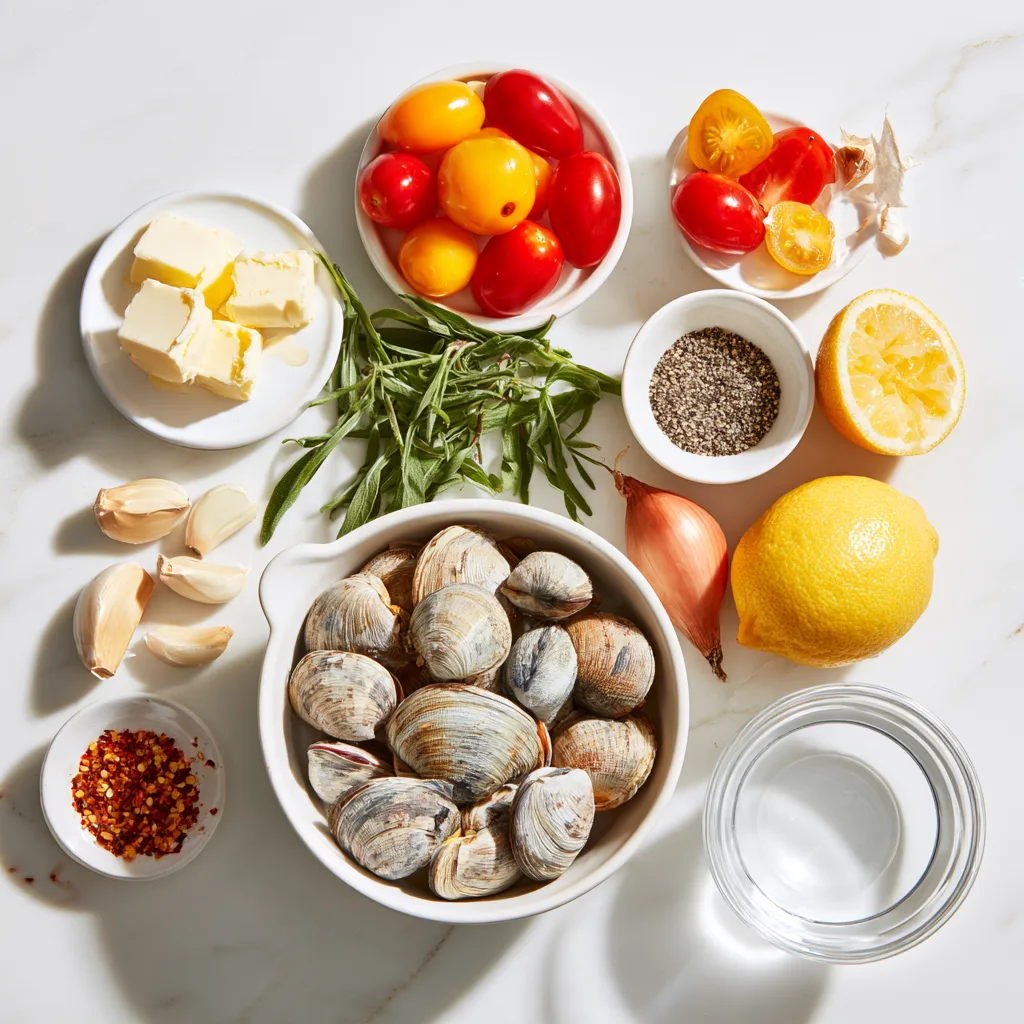
Ingredients for Broiled Clams With Tomatoes, Butter, and Tarragon
This recipe serves approximately 4 people as an appetizer and uses ingredients commonly available at seafood markets and grocery stores.
For the Clams
- 2 pounds fresh littleneck clams, approximately 24–30 clams, scrubbed
- 1/4 cup water, for steaming
For the Tomato-Tarragon Butter
- 4 tablespoons unsalted butter, divided
- 1 small shallot, finely minced
- 2 garlic cloves, minced
- 1 cup cherry tomatoes, finely chopped
- 2 tablespoons reserved clam steaming liquid, strained
- 2 tablespoons fresh tarragon, chopped and divided
- 1/4 teaspoon freshly ground black pepper
- 1/8 teaspoon crushed red pepper flakes, optional
For Serving
- 1 medium lemon, using approximately 1 tablespoon juice for the sauce and cutting the remainder into wedges
Ingredient Notes and Substitutions
Littleneck clams: These small, tender clams are ideal because they cook quickly and fit neatly into individual serving shells. Other small hard-shell clams can work, although cooking times may vary depending on their size.
Cherry tomatoes: Choose ripe, firm tomatoes with good natural sweetness. Red or yellow varieties both work beautifully.
Unsalted butter: Unsalted butter is recommended because the clams and reserved cooking liquid already contribute a naturally salty flavor.
Fresh tarragon: Fresh herbs provide the best flavor. Dried tarragon can be substituted in a pinch, but use a much smaller quantity because its flavor is concentrated.
Shallot: A small amount of finely minced sweet onion can replace the shallot if necessary.
Garlic: Fresh garlic is preferable to garlic powder because it creates a more aromatic butter sauce.
Lemon: Fresh lemon juice adds brightness and balances the richness of the butter.
How to Choose and Prepare Fresh Clams
The quality of the clams makes a significant difference in the finished dish.
Fresh littleneck clams should have intact shells and a clean, mild ocean smell. Avoid shellfish with cracked shells or a strong, unpleasant odor.
Purchase live clams from a reputable seafood market or fishmonger. Keep them refrigerated until you are ready to prepare the recipe.
Before cooking, inspect each clam carefully. Shells should generally be closed, although a slightly open live clam may close when gently tapped.
Discard any clam with a broken shell or one that remains open and does not respond when tapped.
Next, rinse the clams under cold running water and scrub their shells with a stiff brush to remove sand, dirt, or other debris.
Some clams may contain small amounts of sand. Ask your fishmonger whether the clams have already been purged and whether any additional cleaning is recommended.
Do not store live clams submerged in fresh water or sealed in an airtight container.
Proper handling helps preserve their quality and ensures that the finished clams with tomatoes have a clean, delicate flavor.
How to Make Broiled Clams With Tomatoes, Butter, and Tarragon
The process is divided into three simple stages: steaming the clams, preparing the tomato-tarragon butter, and finishing everything under the broiler.
Prep Time: 20 minutes
Cook Time: 15 minutes
Total Time: 35 minutes
Servings: 4 appetizer servings
Difficulty: Easy
Instructions
1. Clean and inspect the clams.
Scrub the fresh littleneck clams thoroughly under cold running water. Remove any visible sand or debris from the shells.
Discard broken clams and any open clams that do not close when gently tapped.
2. Steam the clams.
Pour 1/4 cup water into a large pot and bring it to a boil over medium-high heat.
Add the cleaned clams, cover with a lid, and steam for approximately 5–7 minutes, checking as the shells open.
Transfer the opened clams to a clean plate. Discard any clams that remain closed after cooking.
3. Reserve the cooking liquid and prepare the shells.
Carefully strain the liquid remaining in the pot through a fine-mesh strainer to remove any grit.
Reserve 2 tablespoons of the flavorful liquid for the butter sauce.
Once the clams are cool enough to handle safely, remove and discard the empty top half of each shell.
Leave the cooked clam meat resting in the deeper half shell.
4. Sauté the shallot and garlic.
Place a large skillet over medium heat and melt 2 tablespoons of the unsalted butter.
Add the minced shallot and sauté for approximately 1 minute until slightly softened.
Stir in the minced garlic and cook for another 30 seconds, just until fragrant.
Avoid browning the garlic because it can develop a bitter flavor.
5. Add the tomatoes and seasonings.
Add the finely chopped cherry tomatoes to the skillet.
Cook for approximately 2–3 minutes, stirring occasionally, until the tomatoes begin to soften and some of their excess moisture evaporates.
Stir in the reserved clam cooking liquid, 1 tablespoon fresh lemon juice, black pepper, optional crushed red pepper flakes, and 1 tablespoon chopped tarragon.
6. Finish the tomato-tarragon butter.
Remove the skillet from the heat.
Add the remaining 2 tablespoons butter and stir gently until completely melted and incorporated into the tomato mixture.
The sauce should appear glossy, aromatic, and slightly thickened.
Preheat the oven broiler to high and position an oven rack approximately 6 inches from the heating element.
7. Arrange and fill the clam shells.
Line a rimmed baking sheet with crumpled aluminum foil.
The folds in the foil help hold the clam shells steady and prevent them from tipping over.
Arrange the clam half shells across the prepared baking sheet.
Spoon a little of the warm tomato-tarragon butter mixture over each clam, ensuring that every portion receives some tomatoes, garlic, and flavorful sauce.
8. Broil until bubbling.
Place the baking sheet under the preheated broiler.
Broil for approximately 2–3 minutes, watching closely, until the butter begins bubbling and the tomato topping develops a little golden color.
Because the clams have already been steamed, this final step is intended to heat and lightly caramelize the topping rather than cook the seafood for an extended period.
Remove the baking sheet promptly to prevent the clams from becoming tough.
9. Garnish and serve.
Sprinkle the broiled clams with the remaining tablespoon of fresh chopped tarragon.
Transfer them carefully to a serving platter or shallow white bowl.
Serve immediately with lemon wedges and crusty bread, if desired.
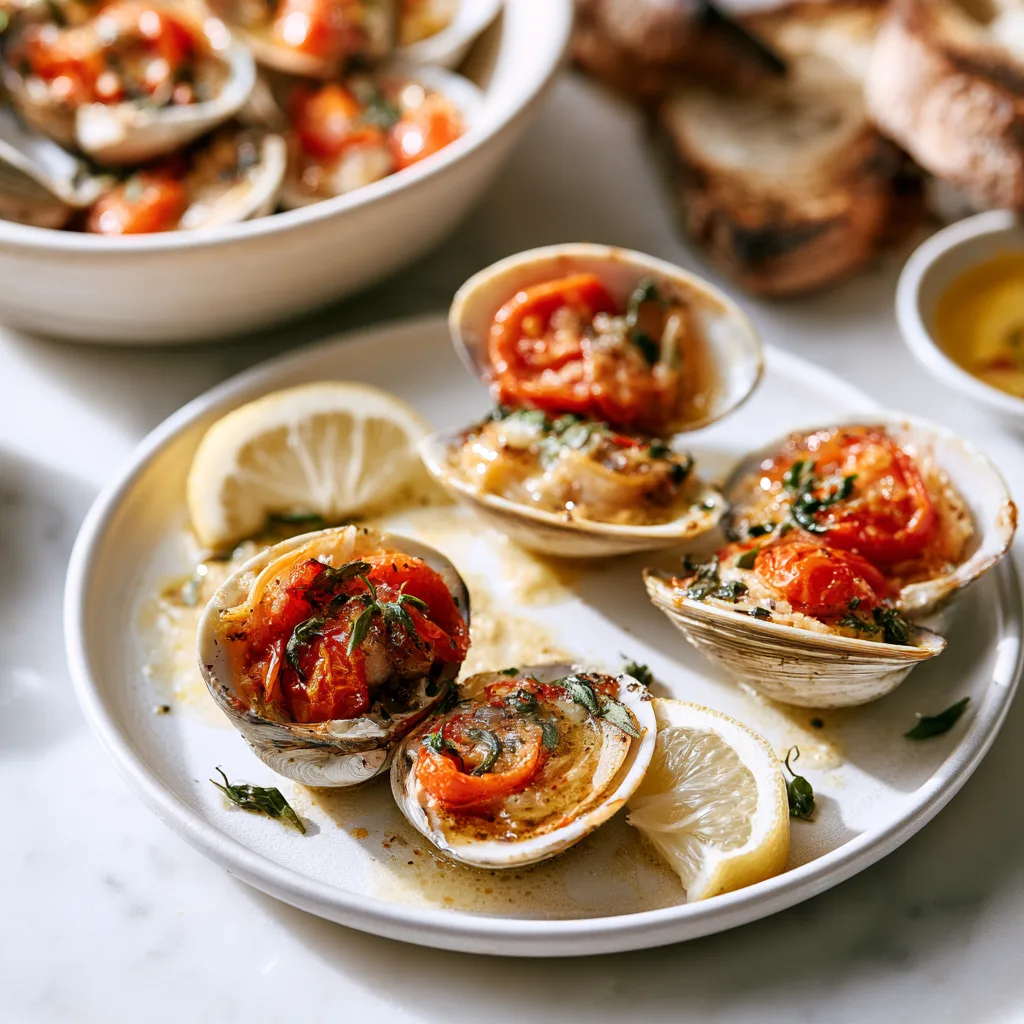
The finished tarragon butter clams should be tender, juicy, and coated in a fragrant, lightly golden sauce.
Expert Tips for Perfect Broiled Clams
Even a simple seafood appetizer benefits from a few careful techniques.
Avoid Overcooking the Clams
Clams become firm and rubbery when exposed to excessive heat.
Because they are steamed before broiling, they need only a brief final cooking period.
Keep a close eye on the baking sheet and remove it as soon as the topping bubbles and begins to color.
Chop the Tomatoes Finely
Finely chopped tomatoes distribute more evenly across the relatively small clam shells.
Large tomato pieces may slide off the seafood or prevent the butter sauce from coating everything properly.
Smaller pieces also soften quickly, creating a more cohesive topping.
Save Some Clam Cooking Liquid
The liquid released during steaming contains a concentrated seafood flavor.
Adding a small amount to the tomato-butter sauce enhances its savory character.
Always strain it carefully, since even properly cleaned clams may release a little grit.
Use Fresh Tarragon Whenever Possible
Fresh tarragon contributes a delicate herbal aroma that complements the seafood.
For the most balanced flavor, add half to the warm sauce and sprinkle the remaining herbs over the clams immediately before serving.
Keep the Shells Stable
Clam shells have uneven bottoms, making them prone to tipping.
Crumpled aluminum foil creates a simple support that holds the shells in place during broiling.
This small preparation step prevents valuable butter sauce from spilling onto the baking sheet.
Taste Before Adding Salt
Fresh clams and their cooking liquid naturally contribute saltiness.
Taste the finished tomato-butter mixture before adding any additional seasoning.
Often, no extra salt is necessary.
Delicious Variations to Explore
The combination of clams, butter, and fresh herbs provides an excellent foundation for several variations.
Garlic and White Wine Broiled Clams
For a slightly more complex flavor, add a splash of dry white wine to the skillet while cooking the tomatoes.
Allow the wine to reduce before stirring in the final butter.
The wine contributes acidity and complements the natural sweetness of the shellfish.
Spicy Tomato Butter Clams
Increase the crushed red pepper flakes for a subtle kick.
A small pinch of cayenne pepper can also work, although it should be used sparingly.
The goal is to add gentle warmth without overpowering the delicate seafood.
Mediterranean-Inspired Clams
Add a few finely chopped olives and a small amount of lemon zest to the tomato mixture.
This variation introduces additional savory notes and a more pronounced citrus aroma.
Use less reserved clam liquid if the olives are particularly salty.
Herbed Garlic Butter Clams
If fresh tarragon is unavailable, substitute a mixture of parsley and chives.
The flavor will be different but still fresh and well suited to seafood.
Broiled Clams with Breadcrumb Topping
For a slightly crispier finish, sprinkle a small amount of fine breadcrumbs over the filled clam shells before broiling.
The breadcrumbs absorb some of the flavorful butter and develop a delicate golden crust.
Use only a light coating so the clam meat remains the star of the dish.
What to Serve With Broiled Clams
These clams with garlic butter are flavorful enough to stand alone, but several simple side dishes can turn them into a more substantial seafood meal.
Crusty Bread
Warm baguette slices or rustic sourdough are ideal for soaking up the tomato-butter sauce.
A lightly toasted surface adds texture without competing with the delicate clams.
Fresh Green Salad
A salad of arugula, mixed greens, and a light lemon vinaigrette provides a refreshing contrast to the richness of the butter.
The peppery flavor of arugula works particularly well with shellfish.
Lemon-Herb Pasta
A modest portion of pasta tossed with olive oil, lemon zest, and fresh herbs makes an excellent accompaniment.
Keep the pasta lightly seasoned so the broiled clams remain the main attraction.
Roasted Vegetables
Roasted asparagus, zucchini, or green beans pair beautifully with this appetizer.
Their mild flavors complement the tomatoes and tarragon without making the meal overly heavy.
A Simple Seafood Dinner
For a dinner-party menu, serve these clams as a starter before baked fish, grilled shrimp, or a light seafood pasta.
The elegant presentation makes them especially suitable for special occasions.
How to Prepare Broiled Clams for Entertaining
One of the best features of this recipe is how easily the individual components can be organized before guests arrive.
The shallot, garlic, tomatoes, and tarragon can be chopped ahead of time and kept refrigerated in separate covered containers.
You can also prepare the lemon wedges and arrange your serving platter in advance.
Keep the live clams properly refrigerated until you are ready to cook them.
For the best texture, steam the clams, prepare the butter sauce, and broil the assembled appetizer shortly before serving.
The finished clams are most enjoyable when the butter is still warm and bubbling.
If you are preparing several appetizers for a party, serve the clams in small batches so guests can enjoy them fresh from the oven.
A platter of warm broiled clams with tomatoes, butter, and tarragon makes an attractive centerpiece for a seafood-themed gathering without requiring elaborate decoration.
How to Store and Reheat Leftover Clams
Although this dish is best enjoyed immediately, leftovers can be stored for a short period.
Refrigerating Leftovers
Allow the cooked clams to cool briefly, then refrigerate promptly in a shallow, airtight container.
For the best quality, consume leftovers within 1 day.
It is generally easier to remove the cooked clam meat from the shells before storing.
Keep any remaining tomato-butter sauce with the clams to help prevent them from drying out.
Reheating
Reheat leftovers gently in a skillet over low heat with a small splash of water.
Heat until thoroughly hot, avoiding prolonged cooking that could toughen the seafood.
The butter sauce may separate slightly during storage, but gentle warming and stirring can help bring it together again.
Can You Freeze Broiled Clams?
Freezing is not recommended for this particular preparation.
Although cooked clam meat can be frozen, the tomatoes may release excess moisture after thawing, and the butter sauce can change texture.
For the best flavor and presentation, prepare this recipe fresh.
Common Mistakes to Avoid
Understanding a few common problems can help you achieve better results.
Using clams that are not fresh: Shellfish quality is essential. Purchase from a trustworthy supplier and discard damaged or nonresponsive clams before cooking.
Skipping the cleaning process: Even a small amount of sand can affect the eating experience. Scrub the shells thoroughly and strain the cooking liquid.
Adding too much liquid: The tomato topping should be moist and glossy, not watery. Allow the chopped tomatoes to soften and reduce slightly before adding the reserved clam liquid.
Using too much tarragon: Tarragon has a distinctive flavor that can become dominant in large quantities. Measure it carefully to maintain the balance of the dish.
Broiling for too long: Extended broiling can dry out the seafood. Remove the clams once the topping bubbles and begins to brown.
Serving the clams too late: Butter sauces are most appealing when warm. Plan to serve the appetizer immediately after broiling.
Avoiding these mistakes helps preserve the delicate texture and balanced flavor that make this dish special.
Frequently Asked Questions
What type of clams are best for broiling?
Littleneck clams are among the best choices because they are relatively small, tender, and easy to serve individually.
Their shells are also conveniently sized for holding a spoonful of tomato-butter topping.
Other small hard-shell clams may be substituted, but larger varieties may require different cooking times.
Do I need to steam clams before broiling them?
For this recipe, steaming is recommended.
It opens the shells naturally, makes the clams easier to prepare, and allows you to reserve some flavorful cooking liquid for the sauce.
The short broiling stage then adds color and finishes the topping without requiring a lengthy cooking period.
Can I use dried tarragon instead of fresh?
Yes, although fresh tarragon produces a brighter flavor.
As a general substitution, use approximately 2 teaspoons dried tarragon in place of the 2 tablespoons fresh tarragon.
Add the dried herb during sauce preparation so it has time to soften and release its aroma.
Why are my broiled clams rubbery?
Rubbery clams are usually a result of overcooking.
Clam meat is naturally tender but becomes firmer when exposed to high temperatures for too long.
To prevent this, steam only as needed and limit broiling to the time required for the butter sauce to bubble and lightly brown.
Can I prepare the tomato-tarragon butter ahead of time?
Yes.
The tomato-butter mixture can be prepared in advance and refrigerated in an airtight container for up to 1 day.
When ready to serve, gently warm the mixture before spooning it over freshly cooked clams.
For the best flavor, reserve a little fresh tarragon to add after broiling.
Are broiled clams suitable for a holiday appetizer?
Absolutely.
Their individual shells create an elegant presentation, and the combination of red tomatoes and green herbs looks particularly attractive on a holiday table.
They are an excellent option for Christmas gatherings, New Year’s Eve celebrations, and seafood dinner parties.
Can I make this recipe without butter?
Butter contributes much of the dish’s characteristic richness, but olive oil can be used for a dairy-free variation.
The resulting sauce will be lighter and less creamy, with a more pronounced olive oil flavor.
For the original taste and texture, unsalted butter remains the preferred choice.
How many clams should I serve per person?
For an appetizer, approximately 6–8 small clams per person is a reasonable starting point.
This recipe uses around 24–30 littleneck clams, making it suitable for four appetizer servings.
If the clams are served as a main course, consider increasing the quantity and adding a substantial side dish.
The Coastal Inspiration Behind This Dish
Clams have long been an important ingredient in coastal cooking traditions, particularly in regions where fresh shellfish is readily available.
Along the American Atlantic coast, clams are commonly steamed, baked, grilled, or incorporated into seafood soups and pasta dishes.
Broiling them in their shells offers an appealing alternative because each shell acts as a natural serving vessel.
The addition of tomatoes and fresh herbs introduces flavors associated with Mediterranean-inspired seafood cooking, while the butter sauce reflects the rich, comforting character of classic American shellfish dishes.
Tarragon brings a subtle French-inspired element, particularly because the herb is frequently paired with seafood and buttery sauces.
The result is not intended to reproduce one specific regional specialty. Instead, this recipe combines familiar coastal ingredients into a simple, modern seafood appetizer.
Its appeal comes from allowing the clams themselves to remain the focus while surrounding them with complementary flavors.
Final Thoughts
This Broiled Clams With Tomatoes, Butter, and Tarragon Recipe proves that preparing an elegant seafood appetizer does not have to be complicated.
With fresh littleneck clams, ripe cherry tomatoes, fragrant garlic, rich butter, and aromatic tarragon, a handful of ingredients becomes a beautifully balanced dish.
The steaming method keeps the clams tender, while a quick finish under the broiler creates a warm, flavorful topping with just enough golden color.
Whether served as a holiday starter, an appetizer for guests, or part of a relaxed coastal-inspired dinner, these broiled clams offer an appealing combination of simplicity and sophistication.
Serve them warm with fresh lemon wedges and crusty bread to capture every last drop of the delicious tomato-tarragon butter.
Broiled Clams With Tomatoes, Butter, and Tarragon
Ingredients
Equipment
Method
- Scrub the clams under cold running water. Discard cracked clams and any open clams that do not close when gently tapped.
- Add 1/4 cup water to a large pot, bring to a boil, then add the clams and cover. Steam for about 5–7 minutes, checking as they open. Discard any clams that remain closed after cooking.
- Transfer the opened clams to a plate. Strain the steaming liquid through a fine-mesh strainer and reserve 2 tablespoons. Carefully remove and discard the empty top shells, leaving the clam meat in the deeper half shells.
- Melt 2 tablespoons butter in a skillet over medium heat. Add the minced shallot and cook for 1 minute, then add the garlic and cook for 30 seconds until fragrant.
- Add the chopped cherry tomatoes and cook for 2–3 minutes until softened and some of their moisture evaporates. Stir in 2 tablespoons strained clam liquid, 1 tablespoon lemon juice, black pepper, optional red pepper flakes, and 1 tablespoon chopped tarragon.
- Remove the skillet from the heat and stir in the remaining 2 tablespoons butter until glossy. Preheat the broiler to high and set a rack about 6 inches from the heat source.
- Nestle the clam half shells securely on a rimmed baking sheet lined with crumpled aluminum foil. Spoon a little tomato-tarragon butter over each clam, distributing the sauce evenly.
- Broil for 2–3 minutes, watching closely, until the butter is bubbling and the tomato topping begins to lightly brown. Do not overcook.
- Sprinkle with the remaining tablespoon of fresh tarragon and serve immediately with lemon wedges and crusty bread, if desired.