Ackee and Saltfish: Jamaican Breakfast Classic
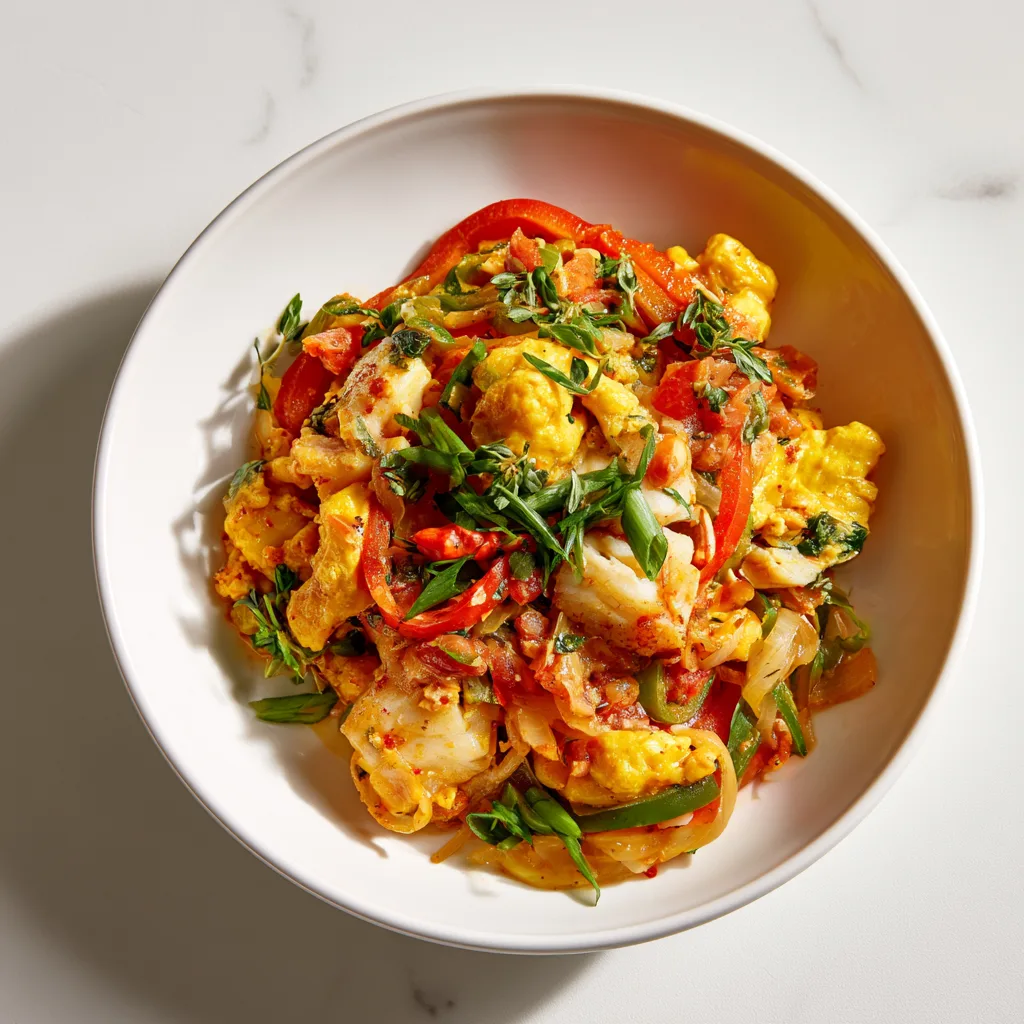
Ackee and Saltfish is one of the most recognizable dishes in Jamaican cooking, combining buttery pieces of ackee with savory salted cod, onions, peppers, tomatoes, scallions, thyme, and a touch of Scotch bonnet heat. The combination is colorful, deeply flavorful, and surprisingly simple once the saltfish has been properly prepared.
Often served as part of a hearty Jamaican breakfast, ackee and saltfish can just as easily become lunch or dinner. It pairs beautifully with fried plantains, boiled green bananas, dumplings, breadfruit, rice, or other Caribbean side dishes. The salt cod provides satisfying savory flavor while the delicate ackee absorbs the aromatics surrounding it.
One of the most important things to understand when preparing Jamaican ackee and saltfish at home is that ackee should be handled gently. Its soft texture can resemble scrambled eggs once cooked, but it is actually a fruit. For this recipe, commercially canned ackee packed in brine is the easiest and most convenient option. Drain it carefully and fold it into the skillet near the end so the pieces remain intact.
The other important component is the saltfish. Salted cod must be soaked or boiled sufficiently to remove excess salt before it is added to the dish. Once that step is complete, the remaining preparation is quick.
This Jamaican Ackee and Saltfish recipe serves four and can be on the table in about 45 minutes using the quick-boil method for desalting the cod.
What Is Ackee and Saltfish?
Ackee and saltfish is widely associated with Jamaican cuisine and is considered Jamaica’s national dish. The two main ingredients create a distinctive balance.
Ackee has a soft, creamy texture and a mild, slightly nutty flavor. When cooked, the pale yellow pieces look somewhat like softly scrambled eggs, although their flavor and texture are entirely different.
Saltfish usually refers to salted cod that has been preserved with salt. Because of the curing process, it needs to be rinsed and desalted before cooking.
The two ingredients are traditionally brought together with aromatic vegetables and herbs. Onion adds sweetness, peppers provide freshness, tomato adds a little acidity, thyme gives the dish its characteristic herbal note, and Scotch bonnet brings the unmistakable fruity heat associated with many Jamaican dishes.
Rather than overwhelming the ackee with spices, the seasonings complement its naturally delicate character.
Why This Jamaican Ackee and Saltfish Recipe Works
A good ackee and saltfish recipe should have noticeable pieces of both ackee and cod rather than becoming one homogeneous mixture. The cooking order makes a significant difference.
The aromatics are sautéed first so they have time to soften and release their flavors. The prepared saltfish is then added so its savory character spreads throughout the vegetables. Ackee goes in last because it requires very little cooking.
This method gives you tender vegetables, flaky fish, and intact pieces of creamy ackee.
The recipe also uses both red and green bell peppers. Beyond providing beautiful color, they contribute gentle sweetness that balances the salty cod and spicy Scotch bonnet.
Fresh thyme and scallions complete the mixture without requiring a complicated spice blend.
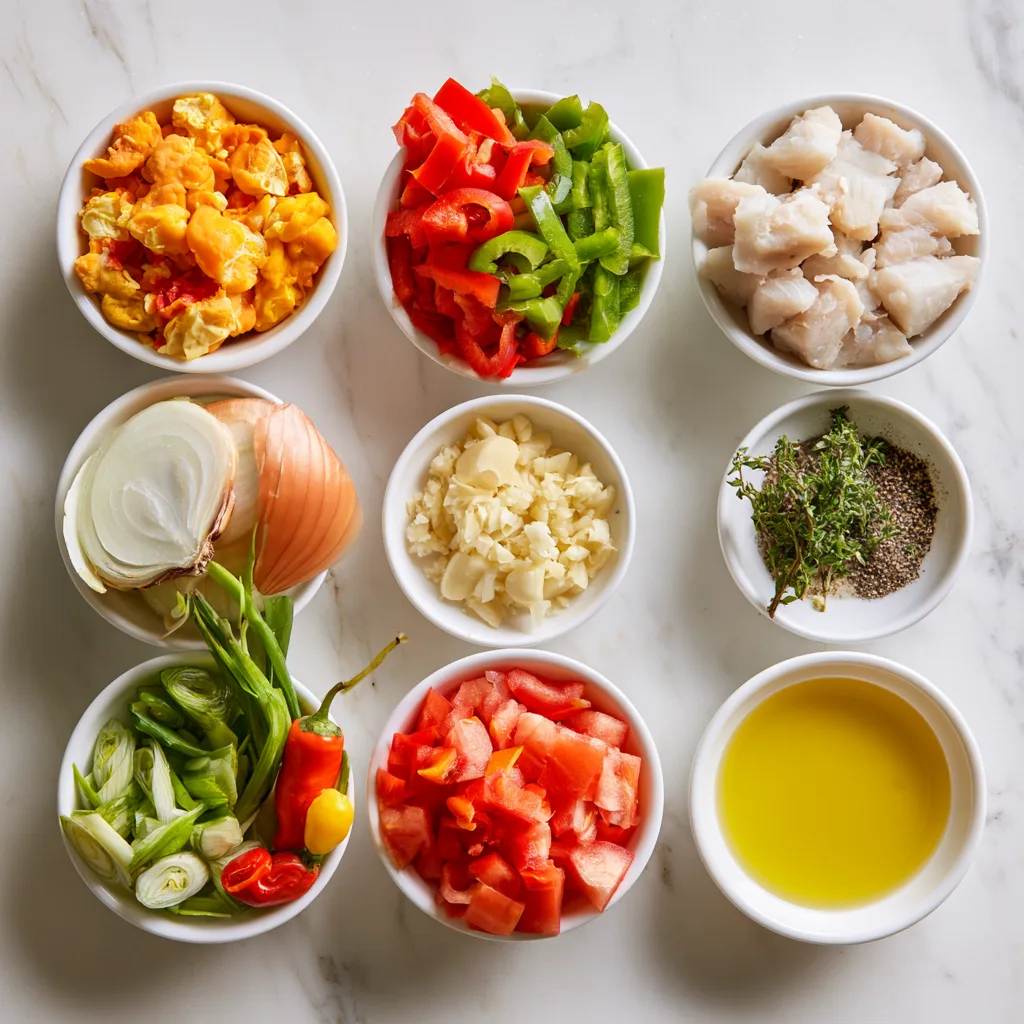
Ingredients
For the Saltfish
- 12 ounces salted cod
- Water, for rinsing and boiling
For the Ackee Mixture
- 1 can (19 ounces) ackee in brine, carefully drained
- 2 tablespoons neutral cooking oil
- 1 medium onion, thinly sliced
- 1/2 red bell pepper, thinly sliced
- 1/2 green bell pepper, thinly sliced
- 2 scallions, sliced
- 2 garlic cloves, finely minced
- 1 medium tomato, chopped
- 1/2 Scotch bonnet pepper, thinly sliced or minced, adjusted to taste
- 1 teaspoon fresh thyme leaves
- 1/2 teaspoon freshly ground black pepper
- Extra scallions or thyme for garnish, optional
A Note About Cooking With Ackee
Commercially canned ackee is the most practical choice for this recipe because it has already been processed appropriately. Drain the canned ackee and handle it gently.
Fresh ackee requires specialized knowledge because improperly harvested or prepared ackee can be unsafe to eat. Unless you are experienced with preparing fresh ackee correctly, commercially prepared canned ackee is the better option for home cooking.
Once drained, do not vigorously rinse, mash, or stir the ackee. The goal is to preserve those beautiful yellow pieces until serving.
Instructions
1. Rinse the saltfish
Rinse the salted cod thoroughly under cool running water to remove salt from the surface.
Place the fish in a medium saucepan and cover it generously with fresh water.
2. Boil and desalt the cod
Bring the water to a boil and cook the cod for approximately 8 to 10 minutes.
Drain the water, taste a tiny piece once cool enough to handle, and determine whether the fish is still excessively salty. If necessary, refill the pan with fresh water and repeat the boiling process.
The cod should retain some saltiness because that savory flavor seasons the finished dish, but it should not taste overwhelmingly salty.
An overnight soaking method can also be used. Place the cod in cool water in the refrigerator and change the water several times before cooking.
3. Flake the saltfish
Allow the fish to cool enough to handle comfortably.
Remove any skin or bones if necessary, then break the cod into medium-sized flakes with your fingers or a fork.
Avoid shredding it too finely. Larger pieces provide better texture in the finished ackee and saltfish.
Set aside.
4. Prepare the ackee
Open the canned ackee and carefully pour it into a colander.
Allow the brine to drain without pressing or tossing the pieces excessively.
Set the drained ackee aside while you prepare the vegetables.
5. Sauté the aromatics
Heat 2 tablespoons of cooking oil in a large skillet over medium heat.
Add the sliced onion, red bell pepper, and green bell pepper. Cook for about 3 to 4 minutes, stirring occasionally, until the onion begins to soften.
Add the scallions and garlic and cook for another minute.
The vegetables should become aromatic while retaining some texture.
6. Add tomato, thyme, and Scotch bonnet
Add the chopped tomato, Scotch bonnet pepper, and fresh thyme.
Cook for approximately 2 minutes.
The tomato should soften slightly but does not need to break down into a sauce.
Scotch bonnet peppers can be very hot, so adjust the quantity according to your preference. Removing the seeds and inner membrane can help moderate the heat.
7. Add the saltfish
Add the prepared flaked cod to the skillet.
Season with black pepper and gently stir everything together.
Cook for approximately 3 to 4 minutes so the cod heats through and absorbs the flavors of the vegetables, herbs, and peppers.
Taste before adding any additional salt. In most cases, the remaining saltiness of the cod provides all the seasoning the dish needs.
8. Fold in the ackee
Reduce the heat to medium-low.
Add the drained ackee to the skillet and use a wide spoon or spatula to gently fold it through the saltfish mixture.
Avoid vigorous stirring.
Cook for another 2 to 3 minutes, just until the ackee is heated through.
9. Serve
Remove the skillet from the heat and garnish with additional scallions or fresh thyme if desired.
Serve the Ackee and Saltfish warm with your preferred Jamaican or Caribbean breakfast sides.
The Secret to Perfect Ackee and Saltfish
The biggest mistake when preparing ackee and saltfish is treating the ackee like an ingredient that needs extensive cooking.
It doesn’t.
Once the canned ackee is added to the skillet, the goal is primarily to heat it and lightly coat it with the aromatic mixture.
Use a folding motion rather than stirring in circles. Slide a wide spatula beneath the ingredients and gently turn them over.
This preserves the texture and gives the finished dish a more attractive appearance.
How Salty Should the Saltfish Be?
The answer depends partly on personal preference, but saltfish should be noticeably savory without dominating every other ingredient.
Salt cod varies significantly in saltiness, which is why tasting it after the first boil is useful.
If the first boiling leaves it extremely salty, repeat the process with fresh water. If it tastes pleasantly seasoned, you can move on.
Avoid removing absolutely every trace of salt because the fish is responsible for seasoning much of the final dish.
It is also the reason this recipe does not automatically include additional salt.
Best Sides for Ackee and Saltfish
One of the best things about Jamaican Ackee and Saltfish is the variety of accompaniments that work with it.
Fried plantains provide sweetness against the savory saltfish and Scotch bonnet.
Fried dumplings are another satisfying option and are excellent for picking up little pieces of ackee and vegetables.
Boiled green bananas offer a mild, starchy contrast that keeps the focus on the main dish.
Breadfruit is another classic Caribbean pairing when available.
Ackee and saltfish can also be served with rice, roasted potatoes, avocado, or simple toast when traditional Caribbean sides are unavailable.
For a generous weekend breakfast, serve several sides together and place the ackee and saltfish at the center of the table.
Tips for the Best Jamaican Ackee and Saltfish
Don’t skip desalting the cod
Salt cod is intentionally heavily cured. Cooking it straight from the package will usually make the finished meal much too salty.
Drain canned ackee carefully
Pour it into a colander and allow gravity to do the work. Excessive handling can cause the tender pieces to crumble.
Add ackee last
The saltfish and vegetables benefit from sautéing. The ackee does not need the same treatment.
Control your Scotch bonnet
Scotch bonnet contributes both heat and a distinctive fruity flavor. Start with a smaller amount if you are uncertain about the spice level.
Taste before seasoning
Saltfish often provides enough sodium for the entire skillet. Always taste before adding salt.
Keep some texture in the vegetables
The peppers and onions should soften but do not need to disappear into the mixture. Their texture makes every bite more interesting.
Variations
Traditional foods naturally develop household variations, and ackee and saltfish is no exception.
More Tomato
Add another chopped tomato for a juicier mixture with more acidity.
Extra Pepper
Anyone who loves spicy Caribbean food can increase the Scotch bonnet. Add gradually because heat levels vary considerably between peppers.
No Garlic
Garlic is delicious in the dish but can simply be omitted for a more streamlined flavor profile.
More Bell Peppers
Add additional red, green, yellow, or orange peppers for a vegetable-forward version.
Extra Thyme
Fresh thyme is particularly good with both saltfish and vegetables. Add another small sprig while sautéing and remove any woody stem before serving.
Can You Prepare Ackee and Saltfish Ahead of Time?
Yes, although the texture is at its best shortly after cooking.
One convenient approach is to prepare the saltfish ahead. Desalt, cook, clean, and flake the cod, then refrigerate it in an airtight container.
Slice the vegetables ahead as well.
When you are ready to eat, sauté the vegetables and cod, then fold in freshly drained canned ackee.
This makes the final cooking process remarkably quick.
How to Store Leftovers
Allow leftovers to cool, then transfer them to an airtight container.
Refrigerate and use within about 2 to 3 days.
Reheat gently in a skillet over low to medium-low heat. Aggressive stirring can break the ackee apart, so turn the mixture carefully as it warms.
A microwave can also be used in short intervals, although skillet reheating generally gives you better control over the texture.
What Does Ackee Taste Like?
Ackee has a mild flavor that is difficult to compare directly with another fruit.
Its texture is soft, creamy, and slightly buttery. Because it is subtle, it works especially well with strongly seasoned ingredients such as salted cod, thyme, onion, and Scotch bonnet.
Although cooked ackee resembles scrambled eggs visually, it does not taste like eggs.
That contrast between appearance and flavor is part of what makes the dish memorable for anyone encountering ackee for the first time.
Is Ackee and Saltfish Only for Breakfast?
Not at all.
Ackee and saltfish is strongly associated with Jamaican breakfast, but there is no reason to limit it to the morning.
The combination contains enough protein and richness to make a satisfying lunch or dinner, especially when served with vegetables and a starchy side.
It is also useful for brunch because it can be paired with both traditional Caribbean accompaniments and more familiar breakfast foods.
A Jamaican Dish Worth Learning
Ackee and Saltfish represents the kind of cooking in which careful technique matters more than a long ingredient list.
Properly desalting the cod provides the right savory foundation. Sautéing the onions, peppers, tomato, scallions, thyme, and Scotch bonnet builds layers of flavor. Folding the ackee into the skillet at the very end preserves its soft, distinctive texture.
The result is colorful without being complicated, spicy without requiring excessive seasoning, and satisfying enough for breakfast, brunch, lunch, or dinner.
For anyone exploring Jamaican cooking at home, Jamaican Ackee and Saltfish is an essential dish to become familiar with. Pair it with fried plantain for sweet contrast, add dumplings for a hearty weekend breakfast, or serve it with boiled green bananas for a more traditional Caribbean-style meal.
Once the cod is prepared, the actual skillet portion takes only minutes, making this classic Jamaican breakfast recipe much more approachable than it may initially appear.
Ackee and Saltfish
Ingredients
Equipment
Method
- Rinse the salted cod thoroughly under cool running water. Place it in a medium saucepan and cover generously with fresh water.
- Bring the water to a boil and cook the cod for 8–10 minutes. Drain and taste a small cooled piece. If it remains excessively salty, cover with fresh water and repeat the boiling process.
- Allow the cod to cool enough to handle. Remove any skin or bones and break the fish into medium-sized flakes. Set aside.
- Carefully drain the canned ackee in a colander without pressing or vigorously stirring the pieces. Set aside.
- Heat the cooking oil in a large skillet over medium heat. Add the onion and red and green bell peppers. Cook for 3–4 minutes until beginning to soften.
- Add the scallions and garlic and cook for 1 minute. Add the tomato, Scotch bonnet pepper, and thyme and cook for another 2 minutes.
- Add the flaked saltfish and black pepper. Stir gently and cook for 3–4 minutes until the fish is heated through and combined with the vegetables.
- Reduce heat to medium-low and carefully fold in the drained ackee. Cook for 2–3 minutes until heated through, avoiding vigorous stirring so the ackee remains intact.
- Remove from the heat, garnish with additional scallions or thyme if desired, and serve warm with fried plantain, dumplings, boiled green bananas, breadfruit, or another preferred side.