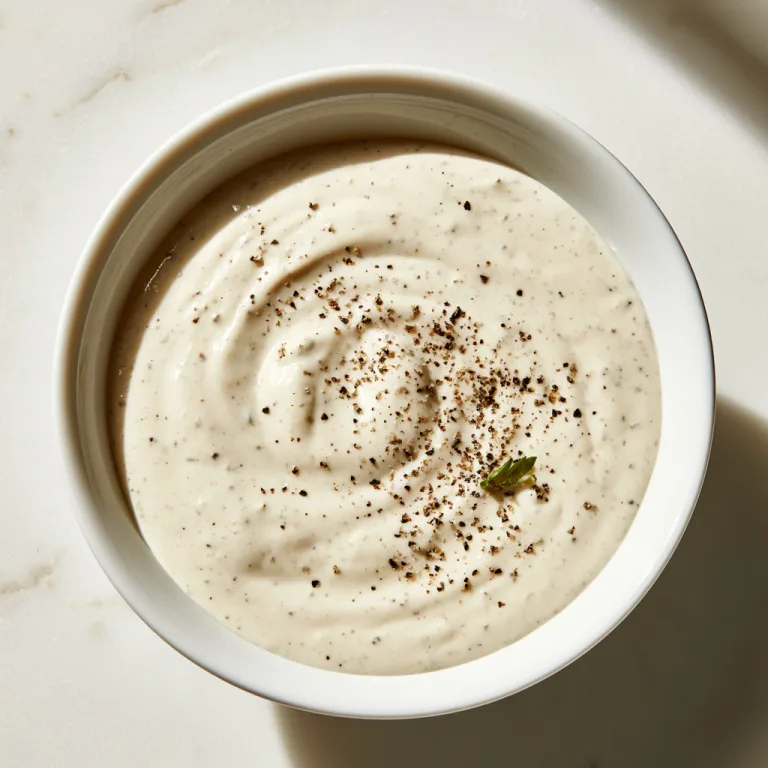
Roasted Butternut Squash with Sage Pesto – Easy Fall Side Dish
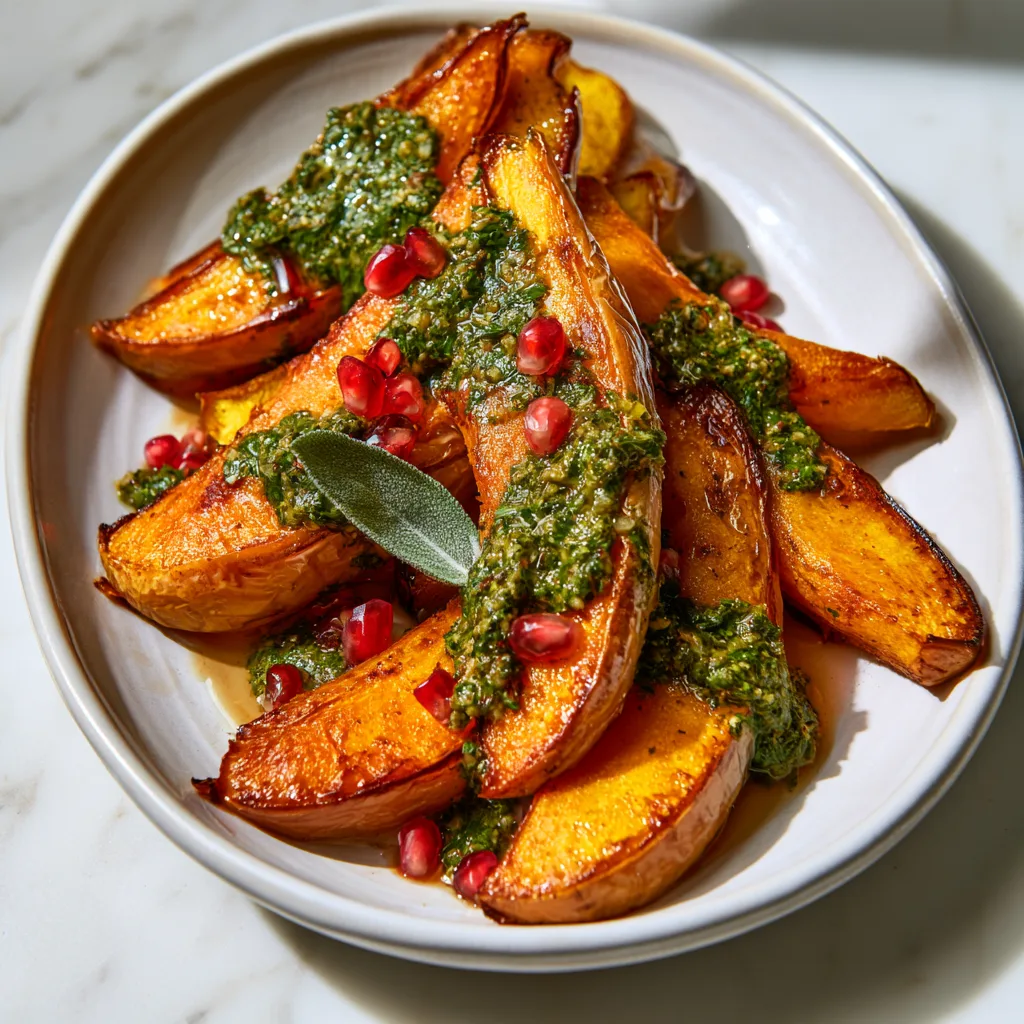
When fall vegetables start appearing at the market, butternut squash deserves a place at the center of the table. Its naturally sweet flesh turns silky in the oven, while the edges develop the kind of golden color that makes a simple vegetable feel special. This roasted butternut squash with sage pesto brings that cozy flavor together with a bright, herb-packed sauce, giving you a side dish that looks festive without requiring complicated techniques.
The squash wedges are tossed with olive oil, a little maple syrup, and smoked paprika before roasting. While they cook, you can blend fresh sage, parsley, toasted walnuts, Parmesan, garlic, and lemon into a spoonable pesto. The result is a lovely contrast: sweet and savory, tender and slightly crisp, earthy and fresh. A scatter of pomegranate seeds is optional, but it adds color and a tart little pop that feels right at home on a holiday platter.
This recipe makes four side-dish servings in about 55 minutes, including preparation. It’s easy enough for a regular family dinner, yet pretty enough to serve as a vegetarian Thanksgiving side dish, at a fall potluck, or alongside a Sunday roast.
Why You’ll Love This Roasted Butternut Squash Recipe
There is more to this dish than a tray of roasted vegetables. Each part has a purpose, and the preparation is designed to be approachable even if you rarely cook winter squash.
The oven does most of the work. Once the squash is cut and seasoned, it roasts largely unattended. You can use that time to make the pesto, finish another main course, or set the table.
The flavors are balanced. Butternut squash has natural sweetness, so it benefits from smoky paprika and a little salt. The pesto contributes herbal depth, lemony acidity, and richness from walnuts and olive oil. Neither element needs to be overly seasoned to taste complete.
It makes an attractive seasonal centerpiece. Golden wedges and green pesto look beautiful together. For a holiday meal, pomegranate seeds create another layer of color without changing the overall character of the dish.
It works for several occasions. These roasted butternut squash wedges can sit beside roast chicken, grains, lentils, or other vegetable sides. They can also become the base of a substantial lunch bowl with chickpeas and greens.
What Makes Sage Pesto Different?
Traditional basil pesto is fresh, fragrant, and familiar. Sage has a more assertive personality: slightly peppery, earthy, and woodsy, with an aroma many people associate with autumn meals.
Used on its own, raw sage can overpower a sauce, which is why this sage pesto recipe combines it with parsley. The parsley adds brightness and softens the stronger herbal notes without hiding them.
Walnuts replace the pine nuts often associated with pesto. Their rounded, nutty flavor suits roasted squash, and lightly toasting them brings out more aroma.
Parmesan gives the sauce savory depth, while fresh lemon juice keeps it lively rather than heavy. Finally, a modest splash of cold water, if needed, makes the sauce easier to drizzle over the warm wedges.
One useful detail: this pesto is added after roasting. A fresh herb sauce can lose its vibrant appearance and delicate notes when exposed to prolonged oven heat. Spoon it over the squash just before serving so the contrast stays sharp and the presentation looks fresh.
Ingredients
The quantities below make four servings as a side dish. Choose a firm squash that feels heavy for its size, and use fresh herbs for the best color and flavor.
For the Roasted Butternut Squash
- 1 medium-large butternut squash (about 2.5 pounds or 1.1 kg whole), peeled, seeded, and cut into 3/4-inch-thick wedges
- 2 tablespoons olive oil
- 1 tablespoon pure maple syrup
- 1/2 teaspoon smoked paprika
- 3/4 teaspoon fine sea salt
- 1/4 teaspoon freshly ground black pepper
For the Sage-Walnut Pesto
- 1/3 cup walnuts, roughly chopped and lightly toasted
- 1/2 cup fresh sage leaves, loosely packed
- 1/2 cup fresh flat-leaf parsley, loosely packed
- 1/4 cup finely grated Parmesan cheese
- 1 small garlic clove, peeled
- 1 1/2 tablespoons fresh lemon juice
- 1/3 cup extra-virgin olive oil
- 1/4 teaspoon fine sea salt, plus more to taste
- 1–2 tablespoons cold water, optional, to thin the pesto
Optional Garnish
- 2 tablespoons pomegranate seeds (arils)
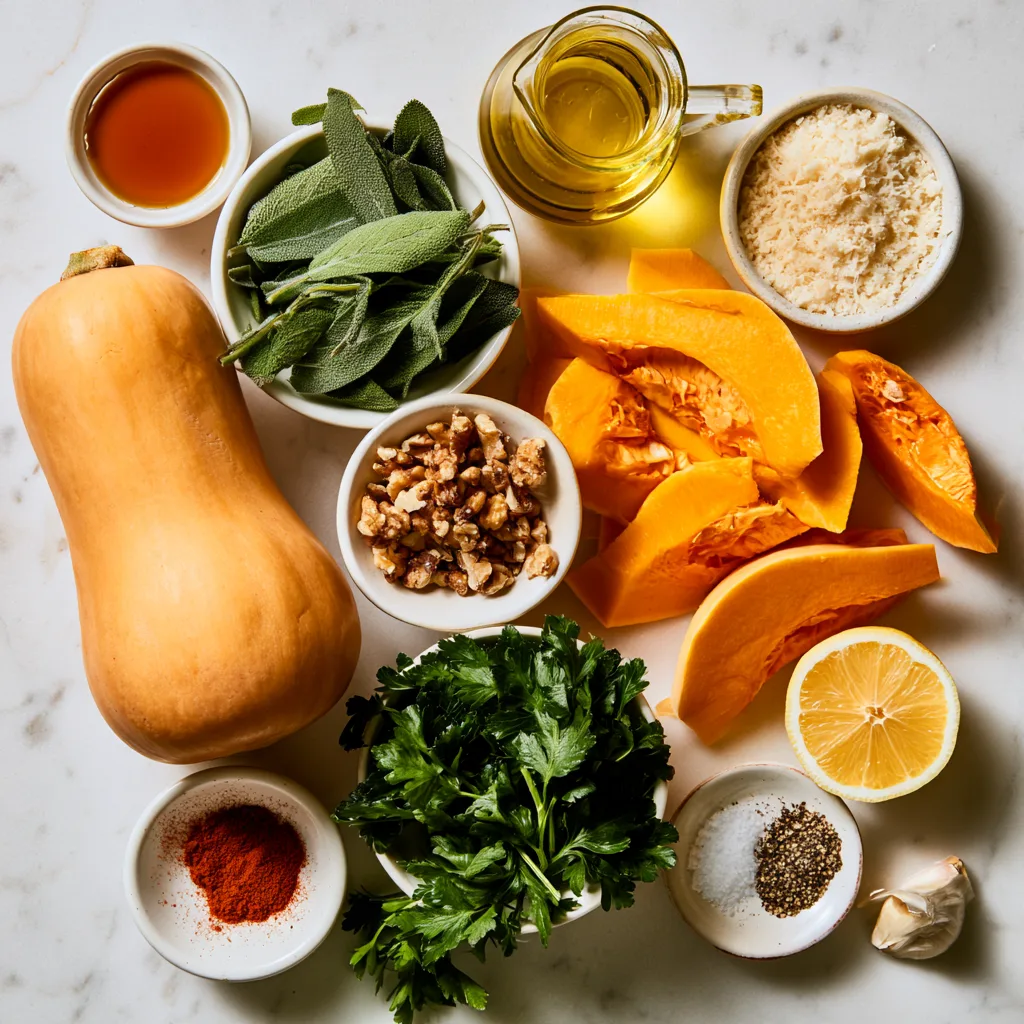
The maple syrup is a supporting ingredient rather than a dominant flavor. Its small amount encourages browning and complements the squash without turning the dish into something sweet.
Smoked paprika brings warmth; it should not make the finished vegetables hot or spicy.
If you are cooking for vegetarians, check the cheese label. Some traditional Parmesan is made with animal rennet. A vegetarian-friendly hard cheese works just as well in the pesto. For a completely plant-based version, see the variations below.
How to Prepare Butternut Squash for Roasting
A butternut squash can look intimidating on the cutting board, but its shape actually makes it manageable.
Place it on a stable surface and trim a small slice from each end. Cut it lengthwise with a sturdy, sharp knife, then remove the seeds with a spoon. Peel the skin with a vegetable peeler, working carefully around the curved sections.
Cut the cleaned halves into wedges approximately 3/4 inch thick. If the squash is particularly large, divide the long neck into shorter sections before slicing.
The goal is not perfectly identical pieces, but pieces close enough in thickness to become tender at about the same time.
Avoid very thin slices because their edges may darken before the centers develop a satisfying texture. Very thick wedges take longer and can brown unevenly.
If you prefer cubes instead of wedges, that works too; start checking them earlier because smaller pieces usually cook faster.
Instructions: How to Make Roasted Butternut Squash with Sage Pesto
Step 1: Heat the Oven
Preheat the oven to 425°F (220°C).
Set out a large rimmed baking sheet. You can line it with parchment paper for easier cleanup, although direct contact with the metal pan can help the squash brown a little more deeply.
Step 2: Cut the Squash
Halve the butternut squash lengthwise, scoop out the seeds, peel away the skin, and slice into even 3/4-inch wedges or crescent-shaped pieces.
Pat the pieces dry if they are especially wet after washing. Excess surface moisture can slow browning.
Step 3: Add the Seasoning
Place the wedges in a mixing bowl.
Add 2 tablespoons olive oil, 1 tablespoon maple syrup, 1/2 teaspoon smoked paprika, 3/4 teaspoon salt, and 1/4 teaspoon black pepper.
Toss until each piece is lightly coated. A thin, even coating works better than leaving pools of oil or syrup on the tray.
Step 4: Roast Until Golden
Arrange the squash on the baking sheet in one layer, leaving a little space between pieces.
Roast for 30–35 minutes, turning the wedges once after about 20 minutes.
Look for golden, caramelized edges and centers that give easily when pierced with a fork.
The exact timing depends on the size of your wedges and your oven.
Step 5: Toast the Walnuts
While the squash roasts, place the walnuts in a dry skillet over medium-low heat.
Stir frequently for 3–5 minutes, just until fragrant and lightly toasted.
Transfer them to a plate to cool briefly.
Watch closely, since nuts can go from golden to burnt quite quickly.
Step 6: Blend the Sage Pesto
Put the toasted walnuts, sage leaves, parsley, Parmesan, garlic, lemon juice, and 1/4 teaspoon salt into a food processor.
Pulse until finely chopped.
Add 1/3 cup extra-virgin olive oil gradually, pulsing in short bursts, until the mixture looks like a textured, spoonable sauce.
If it seems too thick, blend in 1–2 tablespoons cold water.
Taste and adjust lemon or salt as needed.
Step 7: Assemble and Serve
Transfer the hot squash wedges to a white serving platter.
Drizzle some pesto over the top, leaving parts of the golden squash visible.
Add pomegranate seeds if using.
Serve immediately, with any extra pesto in a small bowl so everyone can add more to their plate.
Tips for Perfectly Caramelized Squash
Give the pieces room.
Crowded squash releases steam, especially on a small pan. When wedges overlap or sit tightly together, the surface stays moist and browns less effectively.
Use two baking sheets if necessary rather than piling everything onto one.
Use high heat, but watch the maple syrup.
A 425°F oven helps create roasted edges while keeping the centers tender.
Because maple syrup contains sugar, look at the wedges during the final minutes. If the darkest edges begin to burn before the flesh softens, lower the heat slightly or move the pan to a lower rack.
Turn only when needed.
Flipping once is usually enough. Letting the squash sit undisturbed for much of the roast encourages the surface in contact with the pan to color nicely.
Judge doneness by texture, not just the timer.
A fork should slide into the thickest part with little resistance. Pale, hard centers need additional time even if the recipe’s suggested 35 minutes have passed.
Add pesto at the end.
Drizzling pesto over the squash right before serving preserves its fresh color and keeps the walnuts tasting nutty rather than toasted a second time in the oven.
How to Get the Sage Pesto Just Right
Pesto should be flavorful and textured, not necessarily perfectly smooth.
A few small bits of walnut give this sauce character, particularly against soft roasted squash.
Pulse rather than running the processor continuously, and scrape down the sides as needed.
If the pesto tastes too intense, add a little more parsley or an extra drizzle of olive oil.
If it tastes flat, try another small squeeze of lemon before adding more salt.
If it feels oily, a teaspoon or two of cold water can help loosen and bring the mixture together.
Add adjustments gradually, tasting between each one.
Fresh sage is important here.
Dried sage is much more concentrated and does not blend into a fresh green sauce in the same way, so it is not a direct substitute.
If you cannot find enough fresh sage, use a smaller quantity and increase the parsley instead.
Variations and Easy Substitutions
Make It Vegan
Replace Parmesan with a vegan hard cheese or a little nutritional yeast.
The sauce will still have plenty of flavor from the walnuts, garlic, herbs, and lemon.
All the squash ingredients are already plant-based.
Skip the Maple Syrup
For a less sweet version, leave it out and roast the wedges with olive oil, salt, pepper, and smoked paprika.
The squash will still develop sweetness naturally as it cooks.
Use Pumpkin Seeds
If you are out of walnuts, toasted pumpkin seeds can create a pleasantly earthy pesto.
The sauce will taste slightly different, but it pairs beautifully with autumn vegetables.
Add a Little Heat
A small pinch of crushed red pepper mixed into the roasted squash seasoning adds gentle warmth.
Start with less than you think you need so the sage remains noticeable.
Change the Garnish
Chopped toasted walnuts add crunch, while pomegranate seeds bring color and acidity.
A little lemon zest over the finished platter can make the herbs taste even fresher.
What to Serve with Roasted Butternut Squash Wedges
As an easy fall side dish, this squash fits into many different menus.
It pairs naturally with roasted chicken or turkey, especially when the rest of the meal includes simple grains or greens.
The savory pesto keeps the squash from feeling too sweet beside a rich main course.
For a vegetarian dinner, serve the wedges over warm farro, quinoa, or lentils.
Add sautéed spinach or kale and a spoonful of extra pesto, and the side dish becomes a satisfying bowl.
Roasted chickpeas are another practical addition when you want more protein and texture.
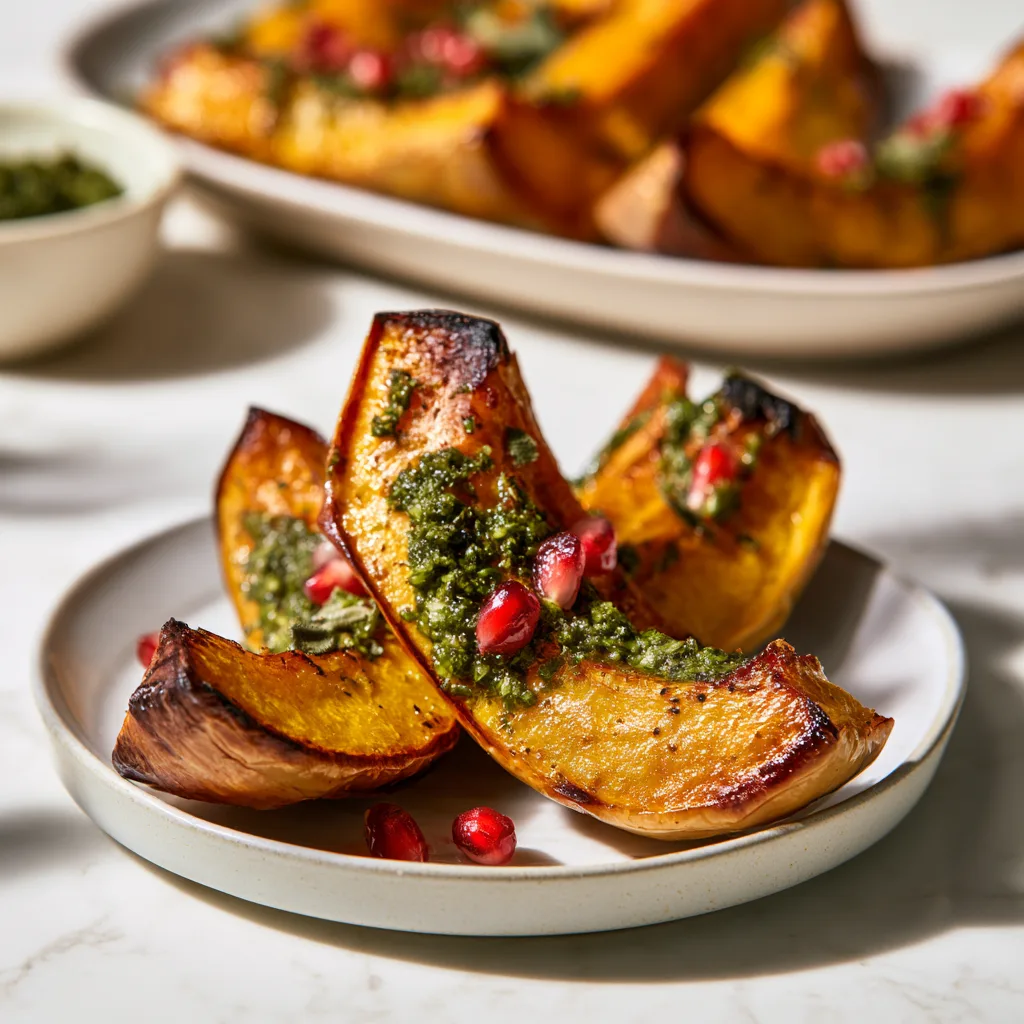
For Thanksgiving or another holiday gathering, place the wedges on a wide platter rather than stacking them in a deep bowl.
Spoon on just enough pesto to create green ribbons between the orange pieces, then bring the remaining sauce to the table separately.
This presentation looks abundant, lets guests see the squash, and avoids making the surfaces soggy.
If you have leftovers, tuck a few chilled wedges into a salad with arugula, cooked grains, and a lemony dressing.
Warm squash is wonderful, but it also works well at room temperature when the flavors have had time to settle.
Make-Ahead, Storage, and Reheating
For holiday planning, the best approach is to prepare the components separately.
You can peel and slice the squash a day ahead, then refrigerate the pieces in a covered container.
Keep them dry and do not toss them with maple syrup until you are ready to roast.
The pesto can also be prepared in advance.
Spoon it into an airtight container, press a piece of food-safe wrap directly against its surface if desired, and refrigerate.
Because fresh herbs can darken when exposed to air, give the sauce a stir before serving.
A splash of water or lemon juice can restore its spoonable texture after chilling.
Store cooked squash and pesto separately in airtight containers in the refrigerator for up to 3 days.
To reheat the squash, spread it on a baking sheet and warm at 375°F (190°C) for about 10–15 minutes, or until heated through.
For the best color and flavor, keep the pesto cold or let it approach room temperature and add it after reheating.
Freezing the finished dish is not ideal because the squash can become softer after thawing and the fresh pesto may lose some of its texture.
If you need a freezer-friendly component, plain cooked squash is more adaptable than an already assembled platter.
Frequently Asked Questions
Do I Have to Peel Butternut Squash Before Roasting?
For this recipe, peeling gives the wedges a tender, consistent texture and makes them easier to eat with a fork.
Butternut squash skin can soften when cooked, but it may still feel chewy on larger wedges.
If you prefer to leave the skin on, scrub the squash thoroughly and expect a slightly different eating experience.
Can I Make Roasted Butternut Squash with Sage Pesto Without a Food Processor?
Yes. Finely chop the sage, parsley, and toasted walnuts with a sharp knife.
Grate or crush the garlic into a paste, then stir everything together with Parmesan, lemon juice, salt, and olive oil.
The result will be rustic and a little chunkier, which can be excellent on roasted vegetables.
Why Is My Roasted Squash Soft Instead of Browned?
The most common causes are overcrowding, uneven pieces, or too much surface moisture.
Make sure the wedges are spread apart, cut to a similar thickness, and roasted in a fully preheated oven.
If you need to cook a large batch, divide it between two trays.
Is Sage Pesto the Same as Basil Pesto?
They share a basic idea—fresh herbs, nuts, olive oil, garlic, and cheese—but the flavors are quite different.
Sage tastes more earthy and aromatic than basil.
Combining sage with parsley makes this particular pesto balanced enough to accompany the sweetness of roasted butternut squash.
Can I Serve This Dish at Room Temperature?
Absolutely.
It is especially convenient for a buffet or potluck because the wedges remain pleasant once they are no longer piping hot.
Add the pesto shortly before serving and follow normal food-safety practices; do not leave perishable prepared food at room temperature for more than two hours.
A Colorful Addition to Your Fall Table
Roasted butternut squash with sage pesto turns a handful of seasonal ingredients into something genuinely inviting.
The maple-roasted wedges bring comforting sweetness, while fresh herbs, toasted walnuts, garlic, and lemon keep every bite interesting.
Whether you serve it for a family dinner or arrange it on a Thanksgiving platter, it is a practical recipe with enough color and flavor to stand out among the usual sides.
Roasted Butternut Squash with Sage Pesto
Ingredients
Equipment
Method
- Preheat the oven to 425°F (220°C). Line a large rimmed baking sheet with parchment paper, if desired.
- Halve the squash lengthwise, scoop out the seeds, peel, and cut into even 3/4-inch-thick wedges or crescent-shaped pieces.
- In a large bowl, toss the squash with 2 tablespoons olive oil, maple syrup, smoked paprika, 3/4 teaspoon salt, and black pepper until evenly coated.
- Spread squash in a single layer with space between pieces. Roast for 30–35 minutes, flipping once around the 20-minute mark, until deeply golden at the edges and tender when pierced with a fork.
- Meanwhile, toast the walnuts in a dry skillet over medium-low heat for 3–5 minutes, stirring frequently. Transfer to a plate and cool briefly.
- Add toasted walnuts, sage, parsley, Parmesan, garlic, lemon juice, and 1/4 teaspoon salt to a food processor. Pulse until finely chopped.
- With the machine running in short bursts, stream in 1/3 cup extra-virgin olive oil and pulse to a spoonable pesto. Add 1–2 tablespoons cold water if a looser consistency is preferred. Taste and adjust lemon or salt.
- Arrange hot squash on a serving platter. Spoon or drizzle sage pesto over the wedges, add optional pomegranate arils, and serve with remaining pesto on the side.