
South Dakota Chislic Recipe – Crispy, Juicy Fried Steak Bites
If you love tender, juicy steak with a beautifully browned exterior, South Dakota Chislic deserves a place on your recipe list. This beloved Midwestern specialty transforms simple cubes of beef into irresistible, savory bites that are perfect for sharing. With a handful of ingredients, a little hot oil, and a generous sprinkle of garlic salt, you can recreate one of South Dakota’s most recognizable comfort foods right in your kitchen.
Unlike complicated appetizers that require lengthy marinating, breading, or elaborate sauces, this South Dakota chislic recipe celebrates the natural flavor of good-quality meat. The beef is cut into bite-sized pieces, quickly fried until golden brown, and seasoned while still hot. The result is a plate of delicious fried steak bites that are slightly crisp on the outside and wonderfully tender inside.
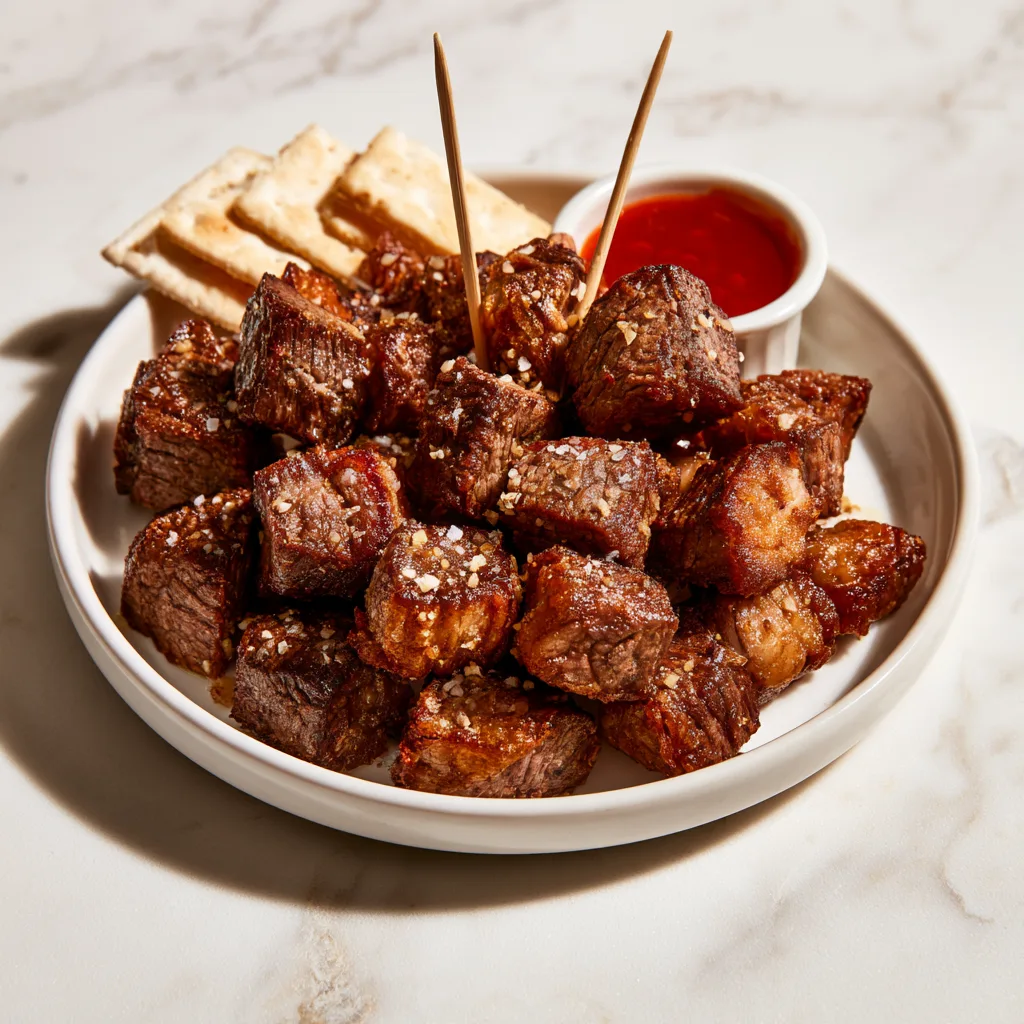
Traditionally served with wooden toothpicks, saltine crackers, and sometimes a splash of hot sauce, chislic is a fantastic choice for game-day gatherings, casual family dinners, backyard parties, or whenever you’re craving something hearty and satisfying.
The best part? This homemade version takes approximately 35 minutes from start to finish, making it surprisingly convenient for such a flavorful dish.
What Is South Dakota Chislic?
South Dakota Chislic is a regional American specialty made from small cubes of meat that are typically deep-fried or grilled and seasoned with salt or garlic salt.
The dish has particularly strong roots in southeastern South Dakota, where it has been a favorite at restaurants, bars, community celebrations, and family gatherings for generations.
Traditionally, chislic was prepared using lamb or mutton. Over time, however, beef became another popular option, especially in restaurants and households where steak was more readily available.
Today, beef chislic is one of the most approachable versions of this classic dish.
What makes chislic special is its simplicity. Rather than covering the meat with a thick coating or overwhelming it with spices, the traditional preparation allows the flavor of the meat to shine.
The signature combination usually includes:
- Bite-sized cubes of tender meat.
- A beautifully browned exterior.
- A generous sprinkle of garlic salt.
- Wooden toothpicks or small skewers for serving.
- Saltine crackers and optional hot sauce.
Although the ingredients are straightforward, cooking the meat correctly makes all the difference between tender, flavorful chislic and dry, chewy steak bites.
Why You’ll Love This South Dakota Chislic Recipe
There are plenty of reasons why this simple Midwestern specialty has remained popular for so long.
Simple Ingredients
You don’t need an extensive spice collection or specialty ingredients to make delicious chislic. Beef, frying oil, garlic salt, and a few classic accompaniments are enough to create an incredibly satisfying appetizer.
Quick Cooking Time
Because the meat is cut into small pieces, it cooks much faster than a whole steak. Once the oil reaches the correct temperature, each batch takes only a few minutes.
Perfect for Sharing
Chislic is naturally suited to casual entertaining. Arrange the meat on a large serving platter with toothpicks, crackers, and dipping sauces, and guests can easily help themselves.
Versatile Meat Options
Although this recipe uses beef sirloin, you can prepare other versions using lamb, mutton, or venison. Each type of meat brings a slightly different flavor to the dish.
No Breading Required
One of the most appealing qualities of traditional chislic is that the meat itself develops the delicious browned exterior. There’s no need for flour, breadcrumbs, or a complicated batter.
South Dakota Chislic Ingredients
This homemade South Dakota chislic recipe uses just a few ingredients to achieve its signature savory flavor.
For the Chislic
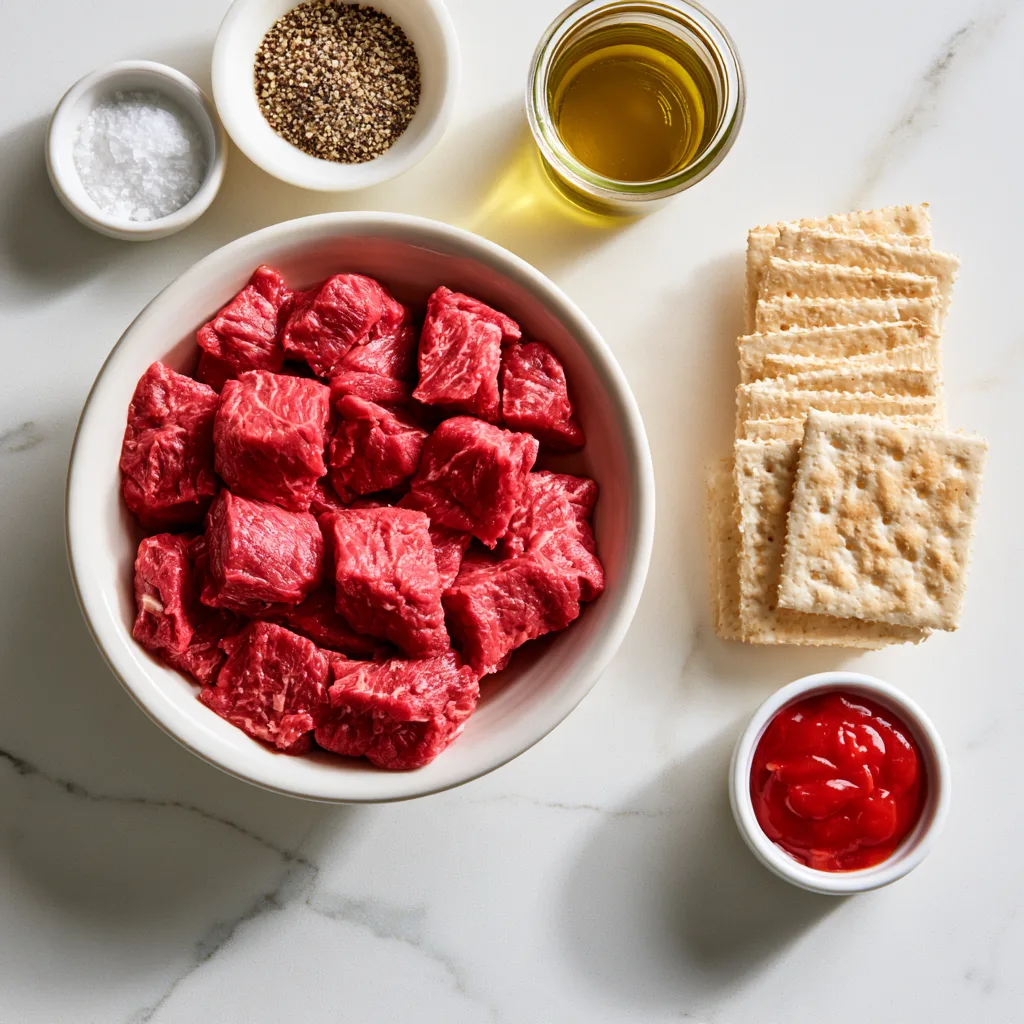
- 1½ pounds beef sirloin steak, trimmed and cut into 1-inch cubes
- 3 cups vegetable or canola oil, or enough for approximately 1–1½ inches of oil in a suitable deep pot
- 1 teaspoon garlic salt, plus additional seasoning to taste
- ¼ teaspoon freshly ground black pepper (optional)
For Serving
- 24 saltine crackers
- ¼ cup hot sauce (optional)
- Wooden toothpicks or small serving skewers
Ingredient Notes and Substitutions
Beef sirloin: Top sirloin is an excellent choice because it offers a good balance of tenderness, flavor, and affordability. Choose a steak with relatively little connective tissue and trim away any tough silver skin before cutting.
Vegetable or canola oil: A neutral oil with a relatively high smoke point is ideal for frying. It allows the beef to brown quickly without introducing strong competing flavors.
Garlic salt: This is the signature seasoning for many traditional chislic preparations. Start with the recommended amount and adjust after tasting. Since garlic salt already contains salt, additional plain salt is usually unnecessary.
Black pepper: Although not essential to traditional chislic, a little freshly ground black pepper adds gentle warmth without overpowering the beef.
Saltine crackers: These simple crackers are a classic accompaniment. Their mild, salty flavor and crisp texture contrast nicely with the richness of the meat.
Hot sauce: A vinegar-based hot sauce provides a tangy contrast to the fried beef. Serve it on the side so everyone can adjust the heat to their preference.
Equipment You’ll Need
You don’t need specialized restaurant equipment to prepare homemade chislic.
A few basic kitchen tools will make the process easier and safer:
- Heavy-bottomed Dutch oven or deep saucepan
- Sharp kitchen knife and cutting board
- Deep-fry or candy thermometer
- Heat-resistant slotted spoon or spider strainer
- Wire rack and paper towels
- Instant-read meat thermometer
- Serving plate and wooden toothpicks
A heavy-bottomed pot is particularly helpful because it maintains a more consistent oil temperature during frying.
The thermometer is equally important. Proper oil temperature helps the beef brown quickly while limiting unnecessary oil absorption.
How to Make South Dakota Chislic
Making authentic-style chislic at home is surprisingly straightforward. The secret is cutting the meat evenly, maintaining the correct frying temperature, and seasoning immediately after cooking.
Step 1: Prepare the Beef
Place the sirloin steak on a clean cutting board and trim away excess fat, tough connective tissue, and visible silver skin.
Cut the steak into approximately 1-inch cubes, keeping the pieces as uniform as possible.
Uniform pieces cook more evenly, preventing smaller cubes from becoming dry while larger ones remain undercooked.
Pat the beef thoroughly dry using paper towels.
Removing excess surface moisture is an important step because wet meat can cause hot oil to splatter and may interfere with proper browning.
Step 2: Prepare the Frying Station
Place a heavy-bottomed pot on the stove and add enough vegetable or canola oil to reach approximately 1–1½ inches deep.
The exact quantity depends on the size of your pot. Never fill the pot more than halfway with oil.
Position a wire rack over a baking sheet lined with paper towels. This will provide a convenient place to transfer the cooked meat.
Keep your garlic salt, black pepper, and serving platter nearby.
Having everything prepared before frying makes the process easier because chislic cooks quickly.
Step 3: Heat the Oil
Heat the oil over medium-high heat until it reaches approximately 365°F (185°C).
A frying temperature between 350°F and 375°F (175–190°C) works well for chislic.
Use a deep-fry thermometer to monitor the temperature rather than relying on appearance.
If the oil is too cool, the meat may absorb more oil and develop a less appealing exterior.
If the oil becomes excessively hot, the surface can darken before the center has cooked sufficiently.
Step 4: Fry the Beef in Batches
Carefully lower a small batch of beef cubes into the hot oil using a heat-resistant slotted spoon or spider strainer.
Avoid dropping the meat into the pot from above, as this can cause dangerous splashing.
Fry the cubes for approximately 3–5 minutes, turning occasionally, until the exterior is attractively browned.
The exact cooking time depends on the size of the cubes, the oil temperature, and the thickness of the meat.
For food safety, check the center of a representative piece with an instant-read thermometer. The USDA recommends cooking whole cuts of beef to 145°F (63°C), followed by a minimum three-minute rest.
Work in several small batches rather than overcrowding the pot.
Overcrowding lowers the oil temperature and makes it more difficult to achieve consistent browning.
Step 5: Drain the Chislic
Once the beef reaches the appropriate internal temperature, carefully remove it from the oil using a slotted spoon or spider strainer.
Transfer the pieces to the prepared wire rack.
Allow any excess oil to drain away.
Avoid stacking the hot beef in a deep bowl immediately after frying, as trapped steam can soften the browned exterior.
Step 6: Season While Hot
While the chislic is still hot, sprinkle it evenly with garlic salt and the optional black pepper.
Gently toss the meat to distribute the seasoning.
Adding garlic salt immediately after frying helps it adhere to the surface of the beef.
Taste a piece after its required resting period and add a little more seasoning if necessary.
Step 7: Repeat With Remaining Beef
Allow the frying oil to return to approximately 365°F (185°C) before adding another batch.
Repeat the frying, draining, and seasoning process until all the beef is cooked.
Let each batch rest for at least three minutes before serving.
Maintaining a consistent oil temperature is one of the simplest ways to produce juicy, evenly browned chislic.
Step 8: Serve and Enjoy
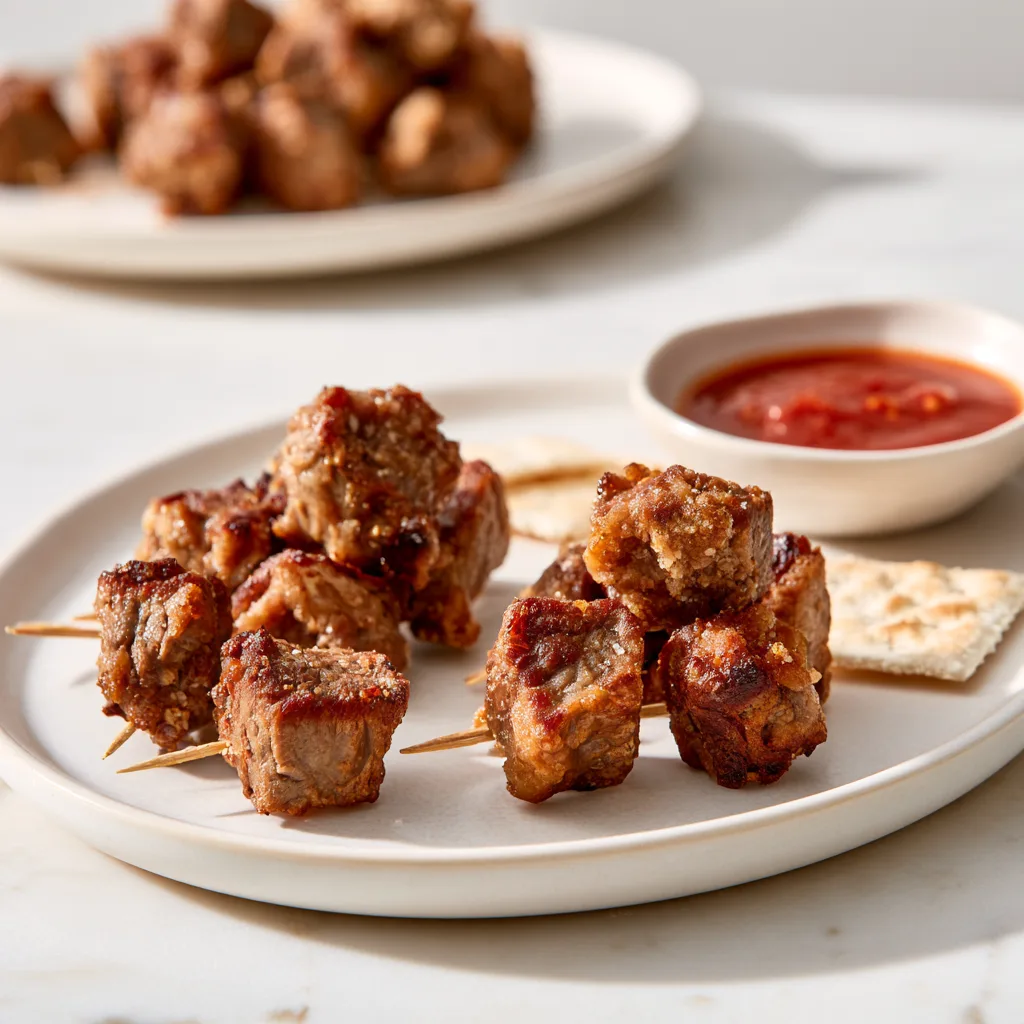
Arrange the finished South Dakota Chislic on a white serving plate or shallow bowl.
Place wooden toothpicks nearby so guests can easily pick up individual pieces.
Serve with saltine crackers and a small dish of hot sauce.
For the best flavor and texture, serve the chislic warm, shortly after its resting period.
What Is the Best Meat for Chislic?
Choosing the right cut of meat is one of the most important decisions when preparing homemade chislic.
Since the recipe contains very few ingredients, the tenderness and flavor of the meat play a major role in the finished dish.
Beef Sirloin
Top sirloin is the recommended choice for this recipe.
It has a satisfying beef flavor, relatively little connective tissue, and a texture that works well with quick frying.
It’s also generally more affordable than premium cuts such as beef tenderloin.
Beef Tenderloin
For an especially tender version, beef tenderloin is an excellent alternative.
Its naturally soft texture makes it particularly enjoyable when cooked as small steak bites.
However, tenderloin is more expensive, and its delicate flavor may be less pronounced than sirloin.
Lamb
Lamb is an important part of traditional South Dakota chislic.
It offers a distinctive, rich flavor that pairs beautifully with garlic salt.
Boneless lamb leg is a practical option, provided the meat is properly trimmed and cut into evenly sized cubes.
Mutton
Mutton, which comes from mature sheep, has a stronger flavor than lamb.
It is closely associated with the traditional versions served in parts of southeastern South Dakota.
Because mutton can vary considerably in tenderness, selecting an appropriate cut and trimming it carefully are especially important.
Venison
Venison chislic is another regional variation, particularly appealing to people who enjoy wild game.
Because venison is generally lean, careful cooking is essential to prevent it from becoming dry.
Regardless of which meat you choose, removing tough connective tissue and keeping the pieces evenly sized will improve the final result.
Tips for Making Perfect Fried Steak Bites
Although chislic is simple, a few techniques can noticeably improve its texture and flavor.
1. Start With Good-Quality Meat
Fresh, tender meat produces better results than tough cuts intended for long, slow cooking.
Avoid heavily marbled pieces with large sections of connective tissue that will not soften during quick frying.
2. Cut the Meat Evenly
Try to keep your beef cubes close to one inch in size.
Inconsistent sizes make it difficult to determine when the entire batch is ready.
3. Dry the Surface Before Frying
Moisture is one of the biggest obstacles to achieving a nicely browned exterior.
Patting the cubes dry also helps reduce splattering when the meat enters the oil.
4. Don’t Overcrowd the Pot
Adding too much beef at once causes the oil temperature to drop.
Instead of frying quickly, the meat may cook unevenly and develop a softer exterior.
Small batches are worth the extra few minutes.
5. Monitor the Temperature
A thermometer takes the guesswork out of frying.
Check the oil temperature between batches and adjust the heat as necessary.
For the meat itself, use a thin-tipped instant-read thermometer inserted into the center of one of the larger cubes.
6. Season Immediately After Frying
The classic chislic with garlic salt combination is best when the seasoning is added while the beef is still hot.
This gives the finished meat an even coating without requiring a complicated marinade.
7. Serve It Fresh
Chislic tastes best when the surface is still lightly crisp and the center is juicy.
Although leftovers can be reheated, freshly cooked chislic has the most appealing texture.
Delicious South Dakota Chislic Variations
Traditional chislic is wonderfully simple, but there are several ways to adapt the recipe to your preferences.
Classic Lamb Chislic
Replace the beef with 1½ pounds of boneless lamb leg.
Trim the lamb carefully and cut it into evenly sized cubes before frying.
Season with garlic salt and serve with traditional saltine crackers.
This version is especially appropriate if you want to explore the dish’s historical roots.
Spicy Chislic
For a spicier appetizer, add a small pinch of cayenne pepper or crushed red pepper to the garlic salt.
Serve with your favorite hot sauce.
The heat complements the savory beef without requiring a heavy sauce.
Worcestershire Beef Chislic
For a more deeply seasoned variation, toss the cubed beef with 1–2 teaspoons of Worcestershire sauce before cooking.
Allow the meat to sit briefly, then pat it thoroughly dry before frying.
This creates a more pronounced savory flavor, although it moves away from the simplest traditional preparation.
Garlic and Herb Chislic
Mix a little dried parsley and onion powder with the garlic salt.
Sprinkle the mixture over the freshly fried beef for a slightly more aromatic version.
This is a good option when serving chislic as part of a larger appetizer spread.
Grilled Chislic
If you prefer cooking outdoors, thread the beef cubes onto skewers and cook them over a preheated grill.
Turn regularly until browned and cooked to a safe internal temperature.
Sprinkle with garlic salt after cooking.
Grilled chislic has a smoky flavor and is particularly well suited to summer gatherings.
What to Serve With South Dakota Chislic
Traditionally, chislic doesn’t need an elaborate assortment of side dishes.
Its strong, savory flavor pairs well with simple accompaniments.
Saltine Crackers
Saltine crackers are one of the most recognizable accompaniments to traditional chislic.
Their light crunch and mild flavor balance the richness of the fried meat.
Hot Sauce
A tangy, vinegar-based hot sauce cuts through the richness of the beef.
Serve it in a small bowl so guests can dip their steak bites as desired.
French Fries
For a more substantial meal, pair chislic with crispy French fries.
This combination works especially well for casual dinners or game-day gatherings.
Coleslaw
A refreshing coleslaw provides a crisp, slightly acidic contrast to the meat.
Choose a simple vinegar-based slaw if you want to keep the overall meal from feeling too heavy.
Pickles
Dill pickles or pickled vegetables are another excellent addition.
Their acidity helps balance the savory, salty flavors of the chislic.
Fresh Green Salad
If you’re serving chislic as a main course, a fresh salad with a light vinaigrette can round out the meal without competing with the meat.
For a traditional presentation, however, garlic salt, saltine crackers, and toothpicks are all you really need.
Common Mistakes to Avoid When Making Chislic
Even straightforward recipes can go wrong when a few small details are overlooked.
Using tough meat: Cuts with substantial connective tissue may remain chewy after quick frying. Choose sirloin, tenderloin, or another suitable tender cut.
Adding wet meat to hot oil: Excess surface moisture can cause splattering and interfere with browning. Always dry the cubes thoroughly before frying.
Frying too many pieces at once: Overcrowding makes it harder to maintain the correct temperature and achieve consistent results.
Using excessively hot oil: Oil that is too hot can darken the outside before the center reaches the recommended temperature.
Adding too much garlic salt: Garlic salt varies between brands. Season gradually and taste before adding more.
Skipping the resting period: Allow the cooked meat to rest for at least three minutes after reaching the recommended internal temperature.
Leaving the meat in the oil too long: Small beef cubes cook quickly. Use a thermometer rather than relying entirely on cooking time.
Serving the meat cold: Chislic is most enjoyable warm, when the exterior retains its lightly crisp texture.
Can You Make South Dakota Chislic Ahead of Time?
South Dakota Chislic is best enjoyed immediately after cooking, but you can prepare several components in advance.
Preparing the Beef
You can trim and cube the sirloin up to one day before cooking.
Place the prepared beef in an airtight container and refrigerate it at 40°F (4°C) or below.
When you’re ready to cook, remove the meat from the refrigerator, pat it dry, and proceed with the recipe.
Preparing the Accompaniments
Saltine crackers, garlic salt, toothpicks, and hot sauce can all be arranged before guests arrive.
This makes serving especially convenient when you’re preparing chislic for a party.
Cooking in Advance
Fully cooked chislic can be refrigerated, but its exterior will soften as it cools.
For the best results, fry the meat shortly before serving rather than cooking it several hours ahead.
How to Store and Reheat Leftover Chislic
If you have leftover fried steak bites, proper storage helps preserve their flavor and quality.
Refrigeration
Allow the cooked chislic to cool briefly, then transfer it to an airtight container.
Refrigerate within two hours of cooking, or within one hour if the surrounding temperature is above 90°F (32°C).
Store leftovers in the refrigerator for up to 3–4 days.
Freezing
Cooked chislic can be frozen for longer storage.
Place cooled pieces in a freezer-safe container or resealable freezer bag, removing as much excess air as possible.
For the best texture, use within approximately 2–3 months.
Freezing may slightly change the texture of the cooked beef.
Reheating
For the best reheating results, use an oven or air fryer.
Arrange the leftover chislic in a single layer and heat at approximately 350°F (175°C) until thoroughly warmed.
Reheat leftovers to an internal temperature of 165°F (74°C).
Avoid prolonged reheating, which can make the meat tough and dry.
A microwave is convenient, but it is more likely to soften the browned exterior.
The History of South Dakota Chislic
Chislic has a fascinating cultural history that reflects the traditions of immigrants who settled in the American Midwest.
The dish is closely associated with Germans from Russia who arrived in southeastern Dakota Territory during the nineteenth century.
Its roots are commonly linked to shashlik, a style of skewered meat prepared in parts of Eastern Europe and the surrounding regions.
As immigrant communities established new homes in South Dakota, their food traditions evolved according to locally available ingredients and cooking practices.
Over time, the preparation became associated with cubes of lamb or mutton, often cooked in hot fat and seasoned simply with salt or garlic salt.
Communities around Freeman and other southeastern South Dakota towns helped preserve the tradition.
Chislic became a familiar sight at family celebrations, local restaurants, and community events.
Its popularity eventually extended beyond the communities where it first became established.
In 2018, South Dakota officially designated chislic as the state’s official “nosh,” recognizing its significance as a distinctive regional snack.
Today, the dish remains an important part of South Dakota’s culinary identity.
Although modern restaurants offer beef, lamb, venison, and other variations, the traditional combination of flavorful meat, garlic salt, and simple accompaniments continues to define chislic.
Frequently Asked Questions About South Dakota Chislic
What exactly is chislic made of?
Chislic consists of small cubes of meat, traditionally lamb or mutton, that are fried or grilled and seasoned with salt or garlic salt.
Beef and venison are also popular options.
This recipe uses beef sirloin because it is tender, flavorful, and relatively easy to find in grocery stores.
Is chislic the same as steak bites?
Chislic is similar to steak bites, but it has a specific regional history and traditional preparation.
While many steak bite recipes use butter, garlic, and pan-searing techniques, South Dakota Chislic is commonly deep-fried and finished with garlic salt.
Its traditional presentation with toothpicks and saltine crackers also makes it distinctive.
What is the best cut of beef for chislic?
Top sirloin is one of the best choices for homemade beef chislic.
It offers good tenderness and a satisfying beef flavor without the higher price of tenderloin.
Avoid very tough cuts that require extended cooking to become tender.
Does chislic need to be marinated?
No, traditional chislic does not require marinating.
The meat can be cooked without a marinade and seasoned immediately after frying.
Some modern recipes use Worcestershire sauce, garlic, or other seasonings, but these additions are optional.
What temperature should the oil be for chislic?
An oil temperature between 350°F and 375°F (175–190°C) works well.
This recipe recommends approximately 365°F (185°C) for consistent frying.
Use a thermometer and allow the oil to return to the desired temperature between batches.
How long should you fry chislic?
One-inch beef cubes generally take around 3–5 minutes per batch, depending on the oil temperature and meat thickness.
However, cooking time is only a guide.
Use an instant-read thermometer to confirm that the center reaches the recommended safe temperature of 145°F (63°C), followed by a three-minute rest.
Why is my chislic chewy?
Chewy chislic can result from using a tough cut of meat, leaving connective tissue attached, or cooking the beef for too long.
Choose tender sirloin, trim it properly, and monitor its internal temperature carefully.
Can I prepare chislic without a deep fryer?
Absolutely.
A heavy-bottomed Dutch oven or deep saucepan works very well.
You only need enough oil to cook the meat in small batches, along with a thermometer to monitor the frying temperature.
Is South Dakota Chislic spicy?
Traditional chislic is not necessarily spicy.
Its primary seasoning is usually salt or garlic salt.
Hot sauce is commonly served as an optional accompaniment, allowing guests to control the level of heat.
Is chislic gluten-free?
The basic combination of beef, oil, and garlic salt can be gluten-free if all ingredients are verified.
However, traditional saltine crackers contain wheat and are not gluten-free.
For a gluten-free serving, replace the crackers with a suitable gluten-free alternative and check all seasoning and sauce labels.
Why South Dakota Chislic Is Perfect for Parties
One of the reasons chislic has remained popular for generations is that it naturally brings people together.
Unlike a formal steak dinner, chislic is designed for relaxed, casual eating.
Guests can gather around a serving platter, pick up individual pieces with toothpicks, and enjoy the meat alongside crackers and dipping sauces.
It’s particularly practical for:
- Football parties and game-day gatherings
- Backyard cookouts
- Family celebrations
- Casual holiday entertaining
- Potluck-style appetizer spreads
- Weekend dinners with friends
If you’re serving a larger group, the recipe can easily be doubled or tripled.
Keep the beef refrigerated until needed, fry in manageable batches, and maintain the correct oil temperature.
For larger gatherings, consider serving several dipping sauces alongside the traditional garlic salt and crackers.
A simple hot sauce, creamy ranch dressing, or tangy mustard-based dip can add variety without changing the basic preparation.
Just remember that the meat itself should remain the centerpiece.
Final Thoughts
South Dakota Chislic proves that delicious food doesn’t have to be complicated.
With tender beef sirloin, hot frying oil, and a generous sprinkle of garlic salt, you can create an appetizer that is rich in flavor and deeply connected to Midwestern food traditions.
The slightly crisp exterior, juicy center, and classic accompaniments make these fried steak bites an excellent choice for everything from family dinners to game-day celebrations.
Whether you’re discovering chislic for the first time or recreating a familiar South Dakota favorite, this straightforward recipe brings a regional classic into your own kitchen.
Serve it warm, add a few saltine crackers and toothpicks, and let the delicious simplicity of traditional chislic speak for itself.
South Dakota Chislic
Ingredients
Equipment
Method
- Trim excess fat and connective tissue from the beef sirloin. Cut into approximately 1-inch cubes, keeping the pieces uniform in size. Pat thoroughly dry with paper towels.
- Pour vegetable or canola oil into a heavy-bottomed Dutch oven or deep saucepan to a depth of approximately 1–1.5 inches. Do not fill the pot more than halfway. Prepare a wire rack over a baking sheet lined with paper towels.
- Heat the oil over medium-high heat until it reaches approximately 365°F (185°C). Maintain the temperature between 350°F and 375°F throughout frying.
- Carefully lower a small batch of beef cubes into the hot oil using a slotted spoon or spider strainer. Fry for approximately 3–5 minutes, turning occasionally, until browned. Check the center of a representative piece with an instant-read thermometer. Cook to at least 145°F (63°C).
- Remove the cooked beef from the oil and transfer it to the prepared wire rack. Allow excess oil to drain away.
- Immediately sprinkle the hot beef with garlic salt and optional black pepper. Toss gently to distribute the seasoning. Allow the meat to rest for at least 3 minutes before serving.
- Repeat the frying and seasoning process with the remaining beef, allowing the oil to return to approximately 365°F between batches. Let each batch rest for at least 3 minutes.
- Arrange the finished South Dakota Chislic on a serving plate. Serve warm with wooden toothpicks, saltine crackers, and optional hot sauce.


