Michigan Cherry, Sausage & Herb Stuffing: A Sweet and Savory Thanksgiving Side
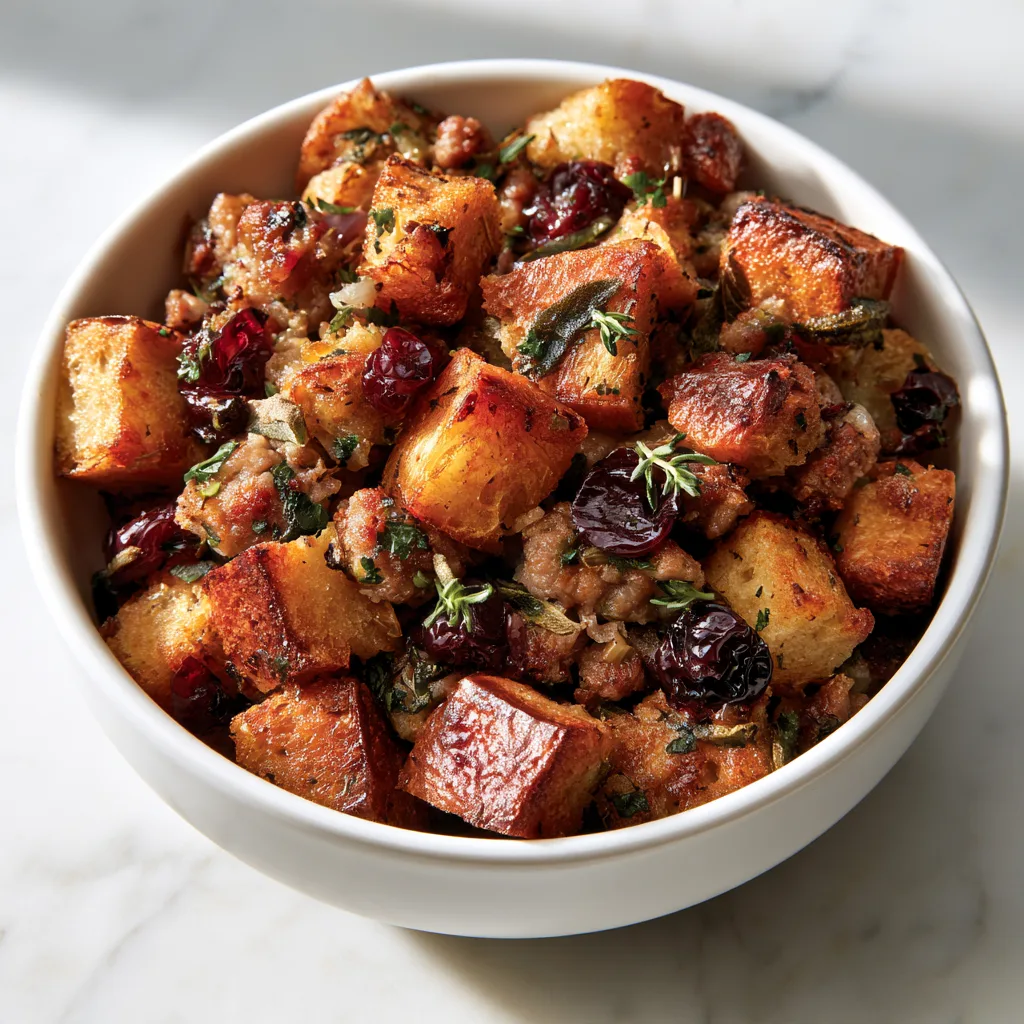
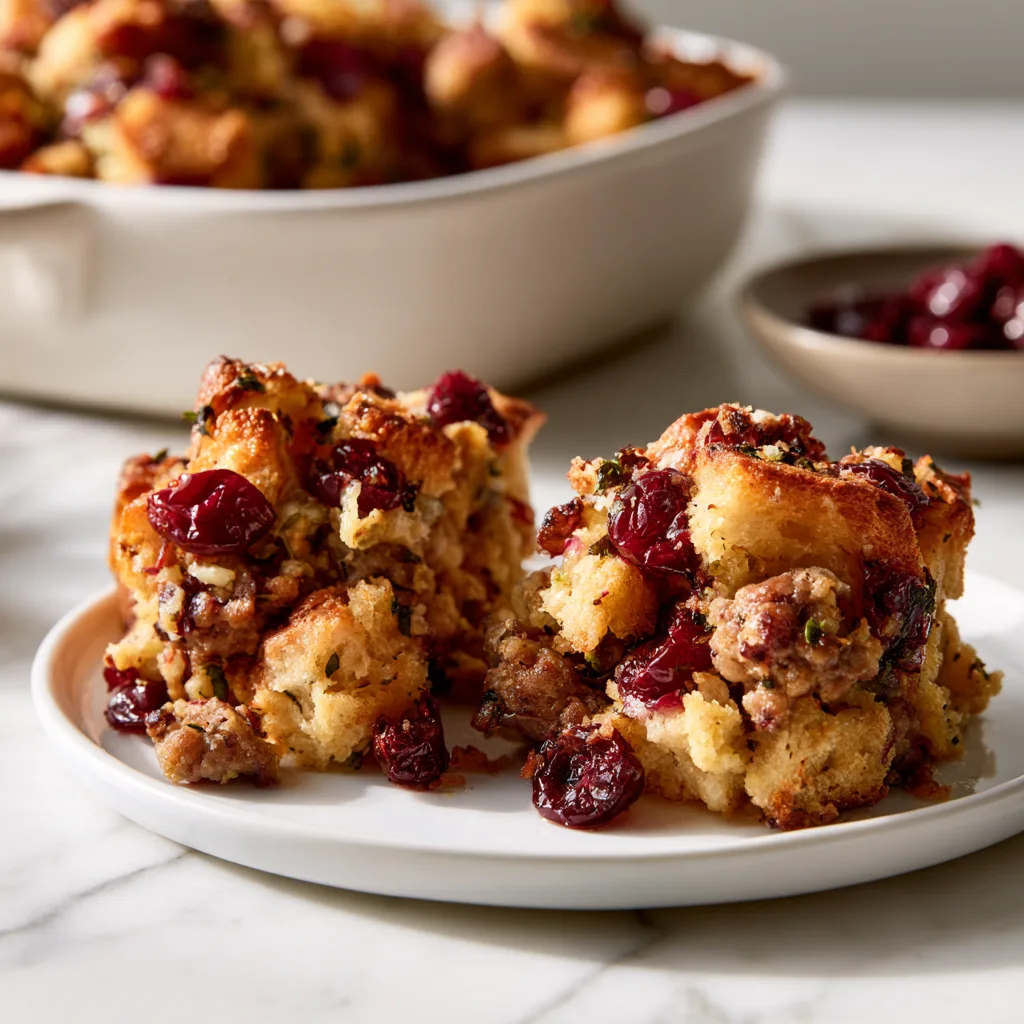
Michigan Cherry, Sausage & Herb Stuffing brings together everything people love about a classic Thanksgiving stuffing: golden bread, savory sausage, soft onions and celery, and the unmistakable aroma of fresh herbs. The unexpected ingredient is dried Michigan tart cherries. Their gentle tang cuts through the richness of the sausage and butter, giving each bite a little brightness without turning a traditional holiday side dish into something overly sweet.
This Michigan cherry sausage stuffing is baked in its own casserole dish, so it develops a crisp, golden top while the middle stays tender and flavorful. It is hearty enough to stand beside roast turkey and gravy, yet interesting enough to become a favorite part of the holiday menu. Even better, much of the preparation can be done ahead, which is especially useful when the oven and kitchen are busy on Thanksgiving Day.
If you have been searching for a Thanksgiving sausage stuffing with cherries that feels special but relies on familiar ingredients and straightforward techniques, this recipe is an excellent fit. The key is balance: enough stock to moisten the bread, enough herbs to keep the stuffing fragrant, and just enough tart fruit to complement the meat.
Why This Thanksgiving Stuffing Works
Traditional bread stuffing is comforting because it is built on simple, satisfying textures. This version adds several layers without losing that familiar character.
First, mild Italian sausage brings savory depth. As it browns, it creates flavorful bits in the skillet that later mix with the softened onions and celery. These cooked vegetables add sweetness and moisture, while garlic, sage, thyme, and rosemary make the kitchen smell unmistakably like Thanksgiving.
Second, the dried cherries add contrast. Rather than disappearing into the bread, they remain as little pockets of chewy, pleasantly tart fruit. When they are plumped briefly in warm broth, they soften without becoming jammy. They also pair beautifully with roasted poultry, which makes the finished stuffing a natural side for turkey.
Finally, the combination of covered and uncovered baking creates two textures in one dish. The covered stage lets the bread absorb the seasoned liquid. Removing the foil for the final portion of baking encourages a lightly crunchy surface.
The result is moist, never soupy, with plenty of golden pieces to scoop from the edges.
What Makes the Michigan Cherry Special?
Michigan is particularly associated with Montmorency tart cherries, a variety prized for its lively, sour-sweet flavor. Unlike fresh sweet cherries, dried tart cherries are available throughout the year, making them convenient for a November holiday meal.
The Michigan Department of Agriculture and Rural Development identifies the state as a major producer of Montmorency tart cherries. michigan.gov
For the most distinctly Michigan-inspired version, look for a package specifically labeled Michigan-grown dried tart cherries.
Some dried cherries are sweetened, which is perfectly usable here, but choose a variety without heavy added flavorings. If the cherries taste very sweet, start with slightly less and adjust next time. The point is a pleasant fruity contrast, not dessert-like sweetness.
Cherries may be familiar in pies, sauces, and salads, but they are just as interesting in savory dishes. Alongside sausage, toasted bread, and herbs, their acidity makes a rich holiday plate feel more balanced.
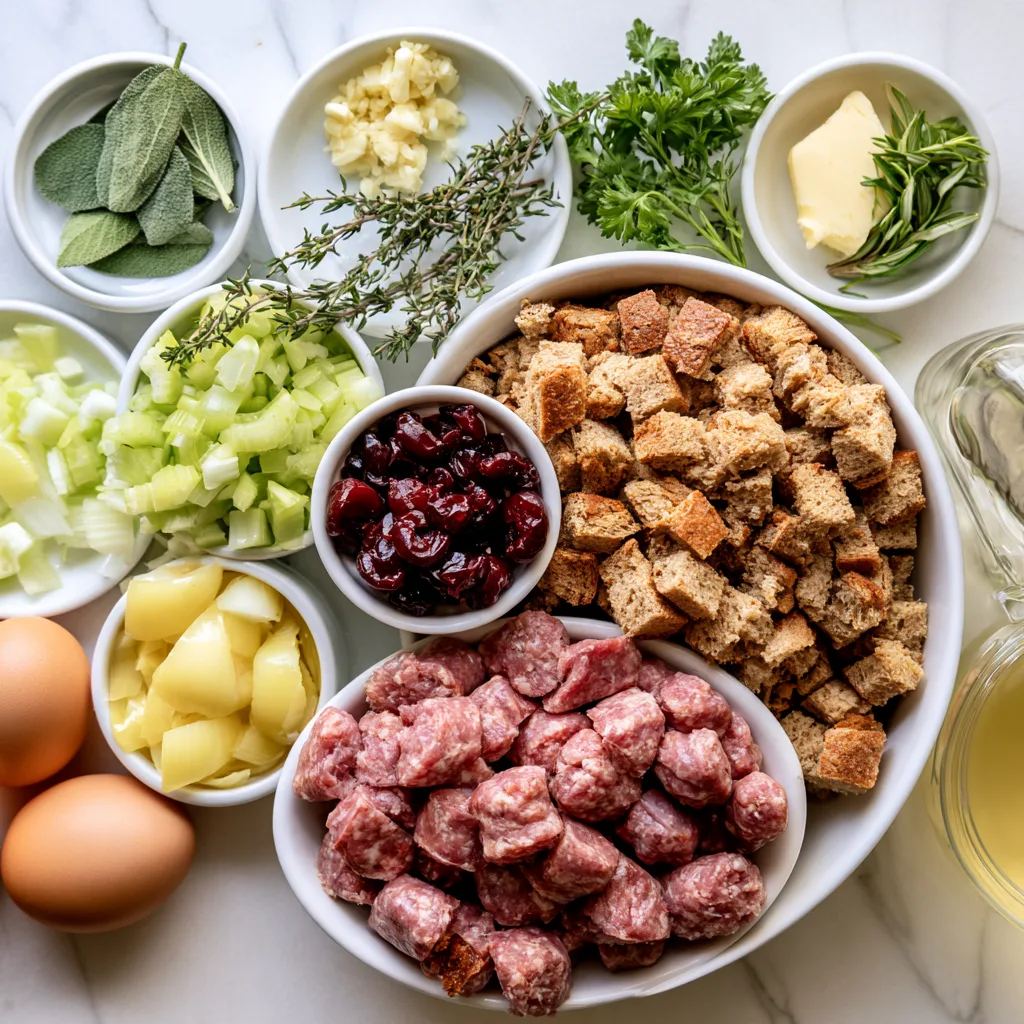
Ingredients for Michigan Cherry, Sausage & Herb Stuffing
This recipe makes approximately 12 side-dish servings and fits a 9-by-13-inch baking dish.
- 12 cups day-old rustic bread cubes (about 1 pound/450 g), cut into approximately 3/4-inch pieces
- 1 pound (450 g) mild Italian pork sausage, removed from its casing if needed
- 4 tablespoons unsalted butter, plus a little extra to grease the dish
- 1 1/2 cups diced yellow onion, about 1 large onion
- 1 cup diced celery, about 3 medium stalks
- 3 garlic cloves, minced
- 3/4 cup dried Michigan tart cherries
- 2 tablespoons chopped fresh sage
- 1 tablespoon fresh thyme leaves
- 1 teaspoon finely minced fresh rosemary
- 2 tablespoons chopped fresh flat-leaf parsley, divided if you want garnish
- 2 large eggs
- 2 1/2 cups low-sodium chicken broth, divided, warmed slightly
- Up to 1/2 cup additional low-sodium chicken broth, only if needed
- 1/2 teaspoon kosher salt, or to taste
- 1/2 teaspoon freshly ground black pepper
Choosing the Right Bread
Bread is the foundation of good stuffing. A sturdy French loaf, country loaf, or mild sourdough works especially well because the cubes maintain some structure after absorbing stock.
Very soft sandwich bread can turn pasty, while heavily seeded or strongly flavored bread may compete with the cherries and herbs.
Aim for dry, day-old bread rather than fresh, springy cubes. If you only have fresh bread, spread the cubes on baking sheets and dry them in a 275°F (135°C) oven for about 20–25 minutes, stirring once.
They should feel dry on the surface but need not become deeply toasted. Let them cool before assembling. This optional drying step adds extra time to the recipe.
Fresh Herbs Versus Dried Herbs
Fresh sage and thyme give this sausage and herb stuffing its signature Thanksgiving aroma. Rosemary is stronger, so a teaspoon is plenty. Parsley adds freshness at the end and a little color on top.
If fresh herbs are unavailable, you can substitute approximately one-third of the stated amount with dried herbs.
Crush the dried herbs between your fingers as you add them so their fragrance disperses more evenly. Avoid using too much dried rosemary, which can overwhelm the cherries.
How to Make Michigan Cherry, Sausage & Herb Stuffing
The cooking process is simple: plump the cherries, brown the sausage, soften the vegetables, combine everything with the bread, and bake.
Keeping each component distinct until the final mixing stage makes the moisture level easier to control.
Instructions
1. Prepare the oven and pan. Preheat the oven to 375°F (190°C). Lightly butter a 9-by-13-inch baking dish. Place the dry, day-old bread cubes in a large mixing bowl. If the bread is still soft, dry it first using the optional method described above.
2. Soften the cherries. Put the dried tart cherries in a small bowl and pour 1/2 cup of the warm chicken broth over them. Leave for about 10 minutes while you cook the sausage and vegetables. Keep both the cherries and their soaking broth; that broth will be added to the stuffing.
3. Brown the sausage. Set a large skillet over medium heat. Add the sausage and break it into bite-size crumbles with a spoon. Cook for about 8–10 minutes, stirring occasionally, until thoroughly cooked and nicely browned. Transfer the sausage to the mixing bowl with the bread, leaving any flavorful browned bits in the skillet. Drain off excess fat if the sausage releases a large amount.
4. Cook the vegetables. Add the butter to the skillet, then stir in the onion and celery. Cook over medium heat for about 6–8 minutes, until softened but not browned. Add the minced garlic, sage, thyme, and rosemary. Stir for another minute, just until fragrant.
5. Combine the savory ingredients. Scrape the vegetables and herbs into the bowl containing the bread and sausage. Add the soaked cherries, the reserved cherry-soaking broth, and most of the parsley. Toss gently with a large spoon so the sausage, vegetables, and fruit are evenly distributed.
6. Add the liquid and eggs. In another bowl, whisk the eggs with the remaining 2 cups of warm—not hot—chicken broth, salt, and black pepper. Pour this mixture gradually over the bread while gently folding. Let it absorb for a minute. The cubes should be moist throughout without liquid pooling at the bottom. If the bread is unusually dry, add up to 1/2 cup more broth, a little at a time.
7. Fill and cover the baking dish. Transfer the mixture to the prepared dish, spreading it into an even layer without packing it down tightly. Cover the dish with foil. Loose layering helps the stuffing retain a pleasant texture rather than becoming compressed.
8. Bake until heated through. Bake covered for 25 minutes. Remove the foil and continue baking for another 20–25 minutes, until the top is golden brown and the center registers at least 165°F (74°C) on a food thermometer. If the top colors too quickly, loosely replace the foil.
9. Rest and serve. Let the casserole stand for about 5 minutes, then scatter the remaining fresh parsley over the top. Serve warm, using a broad spoon to scoop up both the crisp surface and tender bread underneath.
How to Get the Best Stuffing Texture
Stuffing should be moist, but the bread should still be recognizable. One of the most common mistakes is pouring all the broth in too quickly.
Different loaves absorb liquid differently: dense sourdough may need more moisture than airy French bread, and very dry cubes drink up broth faster than day-old cubes.
Look for bread that feels hydrated when pressed gently with a spoon but does not release a puddle of stock.
The eggs help the mixture hold together without turning it into a firm bread pudding. If you like a looser, more rustic stuffing, you can leave the eggs out, although the finished portions will be less cohesive.
Do not compress the bread as you fill the casserole. A gently piled surface creates more small edges that can brown in the oven.
And resist the urge to leave the foil on for the entire cooking time. That final uncovered bake is what gives the dish its appealing mix of soft interior and crisp top.
Another small but important detail is the size of the sausage crumbles.
Very large pieces make the meat dominate individual bites. Smaller, irregular pieces spread the flavor through the stuffing, so the cherries and herbs remain noticeable.
Can You Make This Stuffing Ahead of Thanksgiving?
Yes—with a little planning, this can be a practical make-ahead Thanksgiving stuffing.
The safest and most reliable method is to prepare components separately rather than refrigerating a fully assembled, unbaked mixture.
Up to a day ahead, cube and dry the bread, then store it in a covered container at room temperature.
Cook the sausage and vegetable-herb mixture, cool it promptly, and refrigerate it in a sealed container. Measure the cherries and prepare the baking dish.
On Thanksgiving Day, warm the cooked sausage mixture briefly if it is refrigerator-cold, plump the cherries, whisk the eggs with the broth, and combine everything immediately before baking.
This approach avoids leaving moist, raw-egg stuffing sitting overnight and preserves the bread’s texture.
If the assembled ingredients are cold, allow additional oven time and rely on the center temperature rather than the clock.
You can also bake the stuffing completely a day ahead.
Cool it promptly, refrigerate in shallow portions or an appropriately sized container, and reheat covered in a 325–350°F oven until the center reaches 165°F.
Remove the cover briefly at the end if you want to refresh the crisp top. Refrigerate cooked leftovers within two hours of serving. ask.fsis.usda.govask.fsis.usda.gov
Easy Variations to Match Your Thanksgiving Menu
This dried cherry stuffing recipe is flexible enough to suit different holiday tables while keeping its sweet-and-savory character.
Add toasted pecans.
Fold in 1/2 cup of roughly chopped toasted pecans just before baking. They add crunch and a mild nutty flavor that works especially well with the fruit. For a nut-free table, simply keep the original recipe.
Use turkey sausage.
A mild turkey sausage makes a somewhat lighter-tasting version. Since it may release less fat, keep the full amount of butter and check the moisture before baking.
Add a little orange zest.
A small amount—about 1/2 teaspoon—can bring out the brightness of the tart cherries. Keep it restrained so the stuffing still tastes savory.
Make it vegetarian.
Replace the sausage with about 1 pound of well-browned chopped mushrooms, use vegetable broth, and season generously with herbs. This variation has its own earthy appeal, although it will taste different from the classic sausage version.
Choose a different dried fruit.
Dried cranberries make an easy substitute when Michigan tart cherries are unavailable, but they have a sharper, more familiar holiday flavor.
Dried cherries are worth seeking out for the distinctive balance that makes this particular recipe memorable.
What to Serve with Cherry Sausage Stuffing
The obvious companion is roast Thanksgiving turkey, especially slices of white meat with a spoonful of pan gravy.
The stuffing has enough flavor to be interesting on its own, but it also absorbs gravy beautifully. Herb-roasted chicken is an equally good choice for smaller gatherings when cooking a whole turkey would be excessive.
For side dishes, think about contrast.
Creamy mashed potatoes provide comfort, while roasted Brussels sprouts, green beans, or a crisp fall salad bring freshness to the plate.
A tart cranberry sauce can work, too, although you may want a smaller portion since the cherries already add fruity accents to the meal.
If you are setting up a Thanksgiving buffet, serve the stuffing in its baking dish with a large spoon.
Keep the garnish simple: a scatter of chopped parsley or a few small thyme sprigs is enough. The ruby-colored cherries and golden bread already make an attractive presentation without extra decoration.
Leftovers are particularly good alongside sliced turkey the following day.
You can also warm a portion in a covered skillet with a small splash of broth, then uncover briefly to crisp the bottom. It is an easy way to bring the texture back without drying out the bread.
Storing and Reheating Leftovers
Transfer leftovers to shallow airtight containers and refrigerate within two hours.
Properly refrigerated stuffing is generally best used within 3–4 days. For longer storage, freeze individual portions in freezer-safe containers for up to about 2 months for best quality. ask.fsis.usda.gov
To reheat from the refrigerator, place the stuffing in a baking dish, sprinkle with a little broth if it looks dry, and cover with foil.
Warm in a 325–350°F oven until the center reaches 165°F (74°C).
Uncover for the last few minutes to restore some browning. Frozen stuffing should be thawed safely in the refrigerator before reheating.
As a food-safety reminder, baking stuffing separately from the turkey is the approach recommended by the USDA for more uniform cooking. Use a thermometer rather than color alone to confirm that the center reaches a safe temperature. content.govdelivery.com
Frequently Asked Questions
Can I use fresh cherries instead of dried cherries?
Dried cherries are the better choice because their concentrated flavor stands up to sausage and herbs without releasing a lot of juice.
Fresh cherries contain much more moisture and may make parts of the stuffing wet. If using fresh fruit, pit and chop it, reduce the initial broth slightly, and expect a different texture.
Should I use sweet or hot Italian sausage?
Mild Italian sausage is the easiest match for this recipe. It supports the herbs and lets the tart cherries shine.
Hot sausage can be used if your family likes heat, but it will make the stuffing noticeably spicier and change the balance of flavors.
Can I bake the stuffing inside the turkey?
This recipe is designed for a separate baking dish.
That method makes it easier to achieve a golden top and verify an even internal temperature. Stuffing cooked inside poultry requires additional food-safety precautions and must also reach 165°F in its center.
How do I fix stuffing that seems too dry before baking?
Add extra warm broth in small splashes and fold gently until the cubes feel evenly damp.
Start with just a few tablespoons; the final amount depends on how dry and dense your bread is.
Avoid pouring so much liquid into the bowl that it collects at the bottom.
Can I double the recipe for a large Thanksgiving dinner?
Yes. Use two 9-by-13-inch baking dishes rather than piling everything into one deep pan.
The shallower layers heat more evenly and provide more golden surface area. Check the internal temperature of both dishes before serving.
A Thanksgiving Side Worth Bringing Back
The best holiday recipes feel familiar while giving guests something new to talk about.
Michigan Cherry, Sausage & Herb Stuffing does exactly that. Its foundation is classic bread-and-sausage stuffing, but the tart cherries bring a welcome contrast to the rich ingredients and generous fresh herbs.
Whether you serve it with a full Thanksgiving turkey or make it for a smaller autumn dinner, this is a side dish with enough texture, color, and flavor to earn its place on the table.
Prepare the components ahead, bake until the top is crisp and the center is hot, and serve it while the herbs are still fragrant.
Michigan Cherry, Sausage & Herb Stuffing
Ingredients
Equipment
Method
- Preheat oven to 375°F (190°C). Lightly butter a 9-by-13-inch baking dish. Put 12 cups of dry, day-old bread cubes in a large mixing bowl.
- Soak dried cherries in 1/2 cup of the warm chicken broth for about 10 minutes. Reserve the cherries and all of the soaking broth.
- Brown sausage in a skillet over medium heat for 8–10 minutes, breaking it into small crumbles. Transfer cooked sausage to the bread bowl; drain excessive skillet fat if necessary.
- Melt butter in the same skillet. Cook onion and celery 6–8 minutes until soft. Add garlic, sage, thyme and rosemary and cook for 1 more minute.
- Add the cooked vegetables, herbs, soaked cherries, reserved soaking broth and most of the parsley to the bread and sausage. Toss gently.
- Whisk eggs with the remaining 2 cups of warm (not hot) chicken broth, salt and black pepper. Fold gradually into the bread until evenly moist; add up to 1/2 cup additional broth only if required.
- Transfer stuffing to the prepared baking dish without pressing it down firmly. Cover with foil and bake for 25 minutes.
- Remove foil and bake another 20–25 minutes, until the top is golden and the center reaches at least 165°F (74°C).
- Rest for about 5 minutes, garnish with the remaining parsley and serve warm.