Saffron Rice with Barberries, Pistachios and Mixed Herbs: Jewel-Toned Side Dish
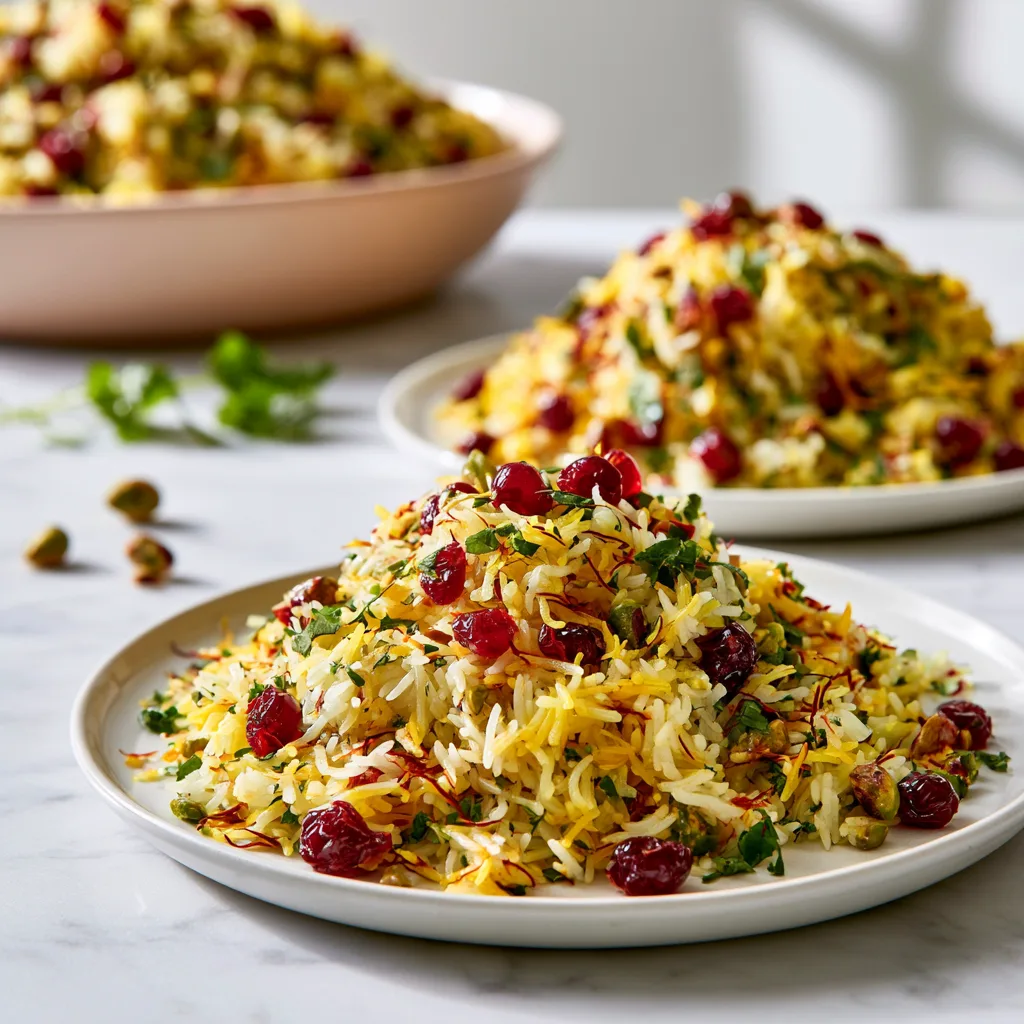
Few rice dishes can transform a table as effortlessly as saffron rice with barberries, pistachios and mixed herbs. Long, fluffy grains of basmati rice are accented with fragrant saffron, tart ruby-colored barberries, crunchy pistachios and a generous scattering of fresh green herbs. The finished dish is colorful without feeling complicated, aromatic without being overpowering, and elegant enough to serve at a celebration while still being practical for a family dinner.
Inspired by the flavors and presentation associated with Persian rice cookery, this recipe combines some of the most appealing contrasts in one dish. Saffron contributes its distinctive floral aroma and brilliant golden color. Barberries add sharp, fruity bursts that keep the buttery rice from becoming heavy. Pistachios bring richness and crunch, while parsley, dill and mint provide freshness.
The result is a saffron basmati rice dish that works beautifully alongside roasted chicken, grilled lamb, fish, kebabs, and vegetable-centered meals.
Although the finished platter looks impressive, the method is approachable. The most important details are choosing good basmati rice, rinsing it thoroughly, treating saffron carefully and avoiding excessive stirring while the rice cooks. Once those fundamentals are handled correctly, the garnishes do most of the visual work.
Why Saffron Rice with Barberries Works So Well
A memorable rice dish needs more than seasoning. Texture, aroma and balance are equally important, and this combination delivers all three.
Basmati rice provides the foundation. Its slender grains cook into a light, separate texture and have a naturally appealing fragrance. Saffron adds an earthy-floral aroma and turns part of the rice a striking golden yellow.
Then come the contrasts.
Barberries are intensely tart, so even a relatively small amount wakes up an entire platter of rice. Their bright red color also looks dramatic against the yellow and white grains. Pistachios soften that acidity with their buttery richness and provide a gentle crunch.
Fresh herbs finish the dish by adding another layer of aroma and a vivid green color.
Every spoonful can therefore taste slightly different. One bite might contain more saffron and pistachio, while the next delivers a bright pop of barberry followed by fresh mint or dill.
What Are Barberries?
Barberries are small, tart berries used in several culinary traditions and are particularly associated with Persian cuisine. Dried barberries have a striking red color and a concentrated sour flavor.
They may look somewhat like tiny dried cranberries, but their flavor is generally sharper and more acidic. That tartness is exactly what makes a barberry rice recipe distinctive.
Because dried barberries can contain grit or small debris, they should be sorted and rinsed carefully before cooking. A brief soak can help soften particularly dry berries.
Barberries are often available from Persian, Middle Eastern and specialty grocery stores. If they are difficult to find, dried cranberries can provide a sweet-tart fruit element, although the finished dish will taste noticeably sweeter and should be considered a variation rather than an exact substitute.
Why Saffron Deserves Special Treatment
Saffron is one of the defining ingredients in this rice, but simply dropping dry threads into the pot does not make the best use of it.
Blooming saffron in warm water helps release its color and aroma before it reaches the rice. Crush the threads gently between your fingers or with a mortar and pestle, then combine them with warm—not aggressively boiling—water.
Allow the mixture to stand for about 10 minutes.
The liquid gradually develops a deep yellow-orange color and can then be distributed over part of the cooked rice. Keeping some rice white creates the beautiful marbled effect that makes saffron rice particularly striking on a serving platter.
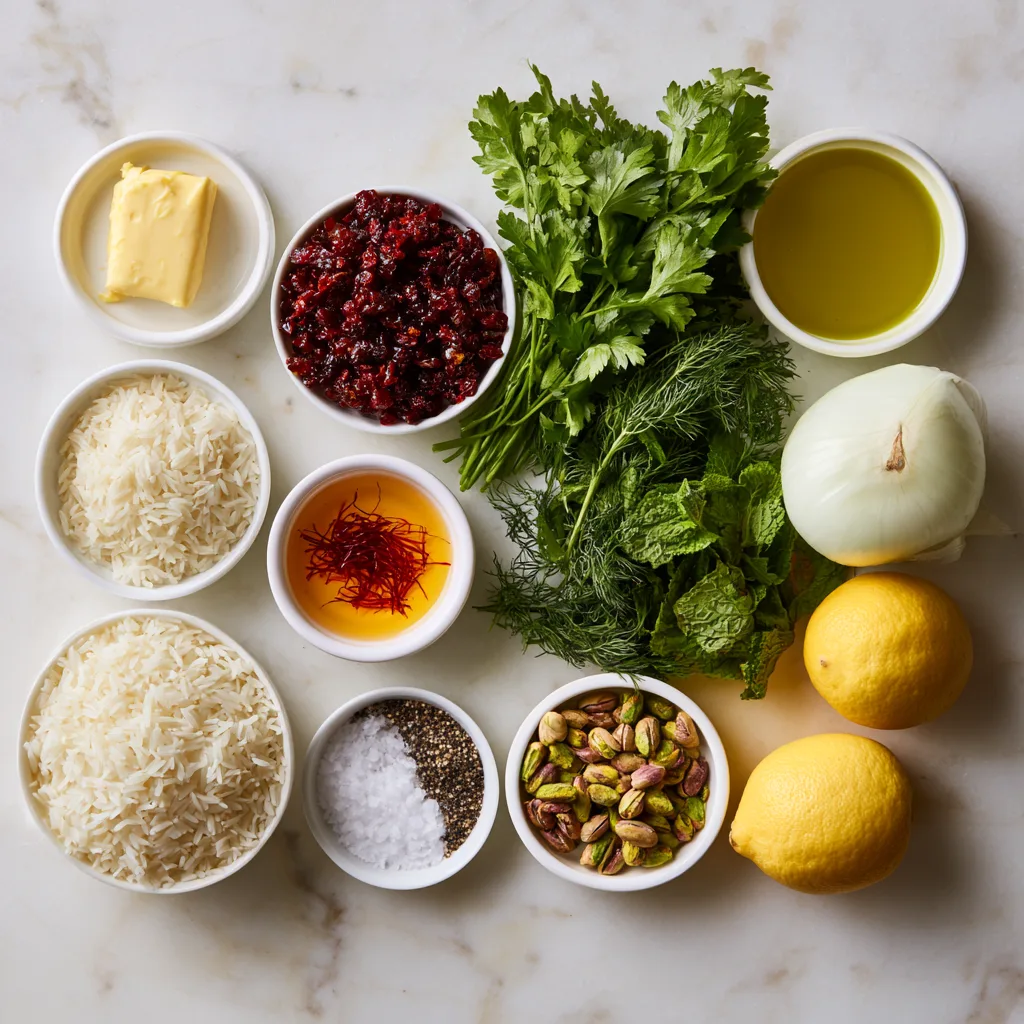
Ingredients
For the Saffron Rice
- 2 cups basmati rice
- 3 cups water
- 1 teaspoon salt
- 2 tablespoons unsalted butter
- 1 tablespoon olive oil
- 1/2 teaspoon saffron threads
- 3 tablespoons warm water
For the Barberry and Pistachio Topping
- 1/2 cup dried barberries
- 1 tablespoon unsalted butter
- 1 tablespoon honey or sugar
- 1/2 cup shelled pistachios, roughly chopped
- 1/4 teaspoon black pepper
For the Mixed Herbs
- 1/3 cup fresh parsley, finely chopped
- 1/4 cup fresh dill, finely chopped
- 2 tablespoons fresh mint, finely chopped
- 2 tablespoons fresh cilantro, finely chopped, optional
- 1 tablespoon fresh lemon juice
Instructions
- Rinse the basmati rice. Place the rice in a fine-mesh strainer or large bowl and rinse repeatedly under cool water until the water becomes mostly clear. This removes excess surface starch and helps the grains remain separate.
- Bloom the saffron. Lightly crush the saffron threads and place them in a small bowl. Pour 3 tablespoons of warm water over the saffron and leave it to infuse for approximately 10 minutes.
- Cook the rice. Add the rinsed basmati rice, 3 cups water and salt to a medium saucepan. Bring to a boil, then reduce the heat to low and cover tightly. Cook for approximately 12–15 minutes, or until the water has been absorbed and the rice is tender.
- Rest the rice. Remove the saucepan from the heat without lifting the lid and allow the rice to rest for 10 minutes. Resting gives the remaining steam time to distribute through the grains.
- Fluff and season. Add 2 tablespoons butter and the olive oil to the rice. Gently fluff with a fork, taking care not to crush or overwork the grains.
- Create the saffron rice. Transfer approximately 1 1/2 cups of cooked rice to a separate bowl. Pour the bloomed saffron and its liquid over this portion and fold gently until the grains become evenly golden.
- Prepare the barberries. Carefully sort and rinse the dried barberries, then drain thoroughly. Melt 1 tablespoon butter in a small skillet over low to medium-low heat. Add the barberries and cook for about 1 minute.
- Balance their tartness. Add the honey or sugar and gently toss the barberries for another 30–60 seconds. Do not cook them for too long, as they can burn quickly and become unpleasantly bitter.
- Prepare the herbs and pistachios. Combine the chopped parsley, dill, mint and optional cilantro. Roughly chop the pistachios so there is a mixture of larger and smaller pieces.
- Assemble the rice. Transfer the plain rice to a large serving platter. Scatter the golden saffron rice over it, creating natural streaks of yellow rather than completely mixing the colors together.
- Add the toppings. Spoon the warm barberries across the rice, followed by the chopped pistachios and mixed herbs. Finish with black pepper and fresh lemon juice.
- Serve. Gently toss only if desired, or leave the ingredients layered for a more dramatic presentation. Serve warm as a side dish or as part of a larger Middle Eastern-inspired meal.
The Secret to Light, Fluffy Basmati Rice
The difference between excellent saffron rice and an average version often comes down to how the basmati is handled.
Rinsing is particularly important. Dry rice carries loose starch on its surface, and that starch can make the grains stick together during cooking. Several rinses remove much of it.
Once the rice begins cooking, resist the temptation to stir it repeatedly. Stirring encourages starch release and can break the delicate grains.
The resting period is equally valuable. Ten minutes covered and off the heat allows trapped steam to finish cooking the rice gently. When the lid is finally removed, use a fork or rice paddle to lift the grains rather than vigorously stirring them.
For an especially attractive presentation, choose high-quality aged basmati rice with long grains.
How to Cook Barberries Without Burning Them
Barberries require only minimal cooking.
Their small size means they can go from glossy and plump to dark and scorched surprisingly quickly. Use relatively low heat and keep the cooking time brief.
A little butter adds richness, while honey or sugar rounds out the berries’ natural acidity. The goal is not to turn them into candied fruit. They should remain noticeably tart because their acidity provides an important counterpoint to the saffron rice and pistachios.
If your dried barberries seem especially firm, soak them in cool water for approximately 10 minutes before draining and sautéing.
Choosing the Best Herbs
Parsley, dill and mint create a balanced mixture for this dish.
Parsley contributes a clean, grassy flavor without dominating the saffron. Dill is more distinctive and works particularly well with rice. Mint introduces cooling freshness that complements both the berries and pistachios.
Cilantro is optional. Those who enjoy its flavor can add a small amount, but it is not necessary.
Whatever combination you choose, use fresh herbs rather than dried herbs for the finishing mixture. Fresh herbs contribute color and texture that dried versions cannot reproduce.
Add them near serving time so they remain bright and fragrant.
Helpful Tips for the Best Saffron Rice
Use genuine saffron sparingly. A small quantity has substantial aromatic power. Adding more does not automatically create better rice.
Don’t skip rinsing the basmati. This is one of the simplest ways to improve the final texture.
Bloom the saffron separately. It distributes the color and fragrance much more effectively than adding dry threads directly to the cooking water.
Watch the barberries closely. Their brief time in the skillet is enough to soften and glaze them.
Keep some rice white. Mixing saffron through every grain is possible, but combining golden and white rice creates a more visually interesting presentation.
Add herbs at the end. Cooking fresh herbs for too long dulls both their color and flavor.
Use unsalted pistachios when possible. They allow better control over the overall seasoning.
Recipe Variations
One of the advantages of rice with pistachios and herbs is that the basic combination can easily be adapted.
Almond and Pistachio Saffron Rice
Add 1/4 cup toasted slivered almonds along with the pistachios. Almonds create additional crunch while maintaining the elegant character of the dish.
Orange Saffron Rice
Add 1 teaspoon finely grated orange zest to the barberry mixture. Citrus emphasizes the floral characteristics of saffron and works especially well for holiday meals.
Sweeter Celebration Rice
Increase the honey or sugar slightly and add golden raisins or finely chopped dried apricots. The result moves toward a sweeter fruit-and-nut rice suitable for festive meals.
Herb-Forward Version
Double the parsley and dill for a greener, fresher dish. This version pairs particularly well with grilled fish.
Vegan Saffron Rice
Replace the butter with additional olive oil or a plant-based butter. The remaining ingredients are naturally suitable for a plant-based meal.
Nut-Free Variation
Omit the pistachios and substitute toasted pumpkin seeds if appropriate for your dietary needs. They provide crunch and attractive green color without using tree nuts.
What to Serve with Saffron Rice with Barberries
This rice can play several roles on the table.
For a simple dinner, serve it with roasted chicken thighs and a cucumber-yogurt salad. The tangy yogurt and cooling cucumber work beautifully with the saffron and herbs.
Grilled or roasted lamb is another excellent partner. The acidity of the barberries helps balance richer meat.
The rice also pairs naturally with kebabs, grilled chicken, roasted salmon or white fish. For a vegetarian meal, combine it with roasted eggplant, chickpeas, grilled zucchini or spiced cauliflower.
A platter also works beautifully on a holiday or dinner-party table because the red, green, white and golden colors immediately stand out among other dishes.
Making It Ahead
Several parts of this dish can be prepared in advance.
The herbs can be washed and thoroughly dried earlier in the day, although chopping them shortly before serving preserves their best color.
Pistachios can be chopped ahead and kept in an airtight container.
The barberries can also be cleaned in advance. For their best appearance and texture, however, sauté them shortly before assembling the rice.
The rice itself is best freshly cooked, but leftovers reheat well. Add a teaspoon or two of water before reheating so steam can restore moisture to the grains.
Storage and Reheating
Allow leftover rice to cool promptly and refrigerate it in an airtight container. For best quality, use it within 3 days.
When reheating, place the rice in a microwave-safe container with a small splash of water and cover loosely. Heat until thoroughly hot, then fluff gently.
Alternatively, reheat it in a covered skillet over low heat with a tablespoon or two of water.
If possible, reserve some fresh herbs and pistachios separately. Adding them after reheating gives leftovers a fresher texture and appearance.
A Colorful Rice Dish for Special Occasions
One reason Persian saffron rice and related rice preparations make such an impression is their ability to turn a basic staple into the visual centerpiece of a meal.
This version deliberately emphasizes that effect.
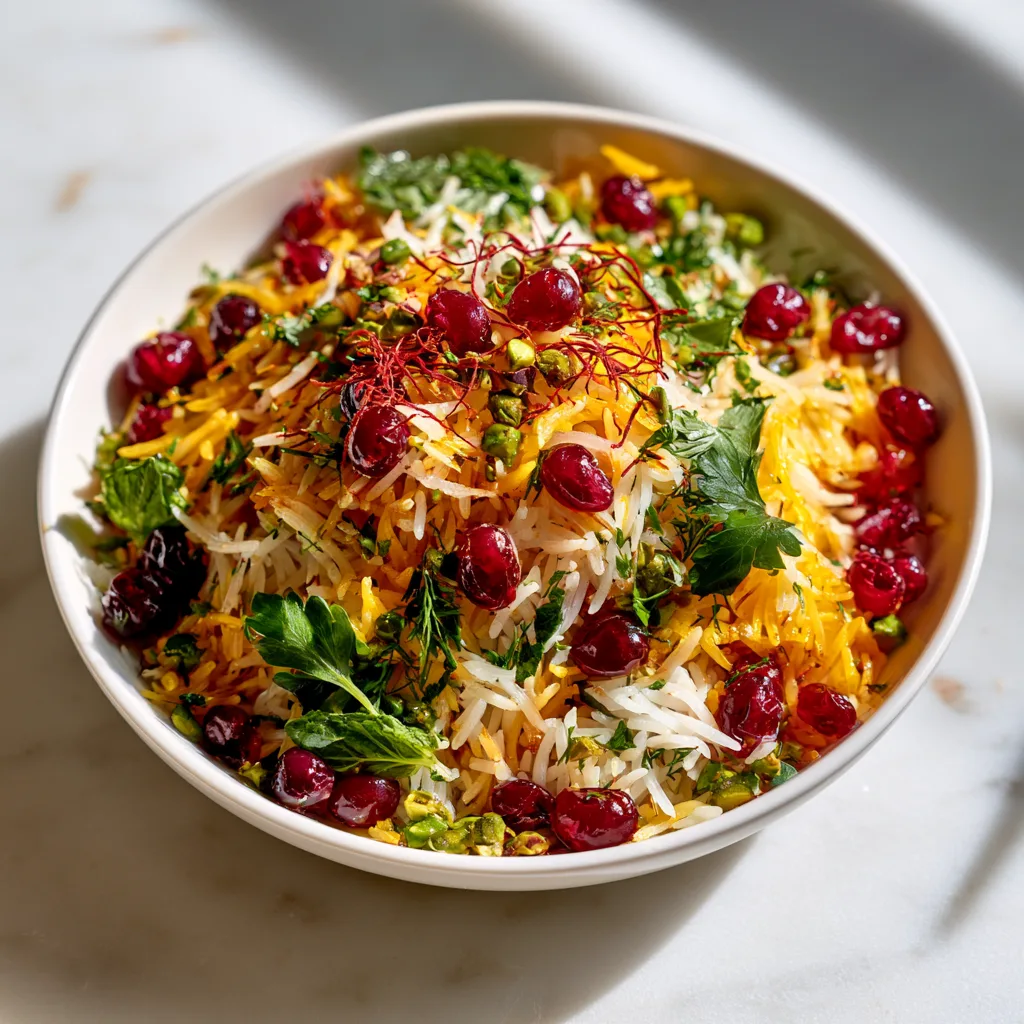
The white basmati creates a neutral canvas. Saffron adds golden streaks, barberries provide ruby-red highlights, herbs introduce vibrant green, and pistachios contribute another layer of green with a softer, earthy tone.
For the most attractive presentation, use a broad white platter instead of a deep bowl. Spread the rice loosely across the platter, then distribute the saffron rice unevenly across the surface. Follow with barberries, pistachios and herbs.
The ingredients should look abundant but not completely mixed together. That contrast allows each component to remain visible.
Frequently Asked Questions
Can dried cranberries replace barberries?
Yes, when barberries are unavailable, but the flavor will be sweeter. Choose unsweetened or reduced-sugar dried cranberries when possible and chop them into smaller pieces.
Can jasmine rice be used?
It can, but basmati is preferred. Jasmine rice has a softer, slightly stickier texture and a different fragrance. Long-grain basmati provides the characteristic separate grains that suit this dish especially well.
Is saffron necessary?
Saffron defines much of the character of the recipe. Turmeric can create a yellow color but does not reproduce saffron’s distinctive aroma or flavor.
Should pistachios be toasted?
They can be. Toasting intensifies their nutty flavor, but raw shelled pistachios provide a particularly beautiful green color. Either option works.
Is the dish spicy?
No. Black pepper provides mild warmth, but the overall flavor profile is aromatic, tart, buttery, nutty and herbaceous rather than spicy.
Final Thoughts
Saffron rice with barberries, pistachios and mixed herbs demonstrates how a handful of carefully chosen ingredients can turn basmati rice into an extraordinary side dish. Golden saffron, jewel-like barberries, crunchy pistachios and fresh herbs create a combination that is as visually striking as it is flavorful.
The key is restraint: keep the rice fluffy, bloom the saffron, cook the barberries only briefly and add the fresh herbs at the end.
Serve it beside roasted meats, kebabs, fish or vegetables, or place a large platter in the center of a festive table. With its combination of fragrance, color, acidity, richness and freshness, this barberry rice recipe brings something distinctive to both everyday dinners and special occasions.
Saffron Rice with Barberries, Pistachios and Mixed Herbs
Ingredients
Equipment
Method
- Rinse the basmati rice thoroughly under cool water until the water runs mostly clear.
- Lightly crush the saffron threads and combine with 3 tablespoons warm water. Allow to bloom for 10 minutes.
- Combine rinsed rice, 3 cups water and salt in a medium saucepan. Bring to a boil, reduce heat to low, cover and cook for 12–15 minutes until the water is absorbed.
- Remove the rice from the heat and let it rest, covered, for 10 minutes. Add 2 tablespoons butter and olive oil, then gently fluff with a fork.
- Transfer about 1 1/2 cups cooked rice to a separate bowl. Pour the bloomed saffron over the rice and gently fold until evenly golden.
- Melt 1 tablespoon butter in a small skillet over low to medium-low heat. Add the rinsed barberries and cook for about 1 minute. Add honey or sugar and cook for another 30–60 seconds.
- Combine the chopped parsley, dill, mint and optional cilantro. Roughly chop the pistachios.
- Arrange the plain basmati rice on a serving platter and scatter the saffron rice over the top.
- Top with the warm barberries, chopped pistachios and mixed herbs. Season with black pepper and drizzle with fresh lemon juice.
- Serve warm, leaving the colorful toppings layered or gently folding them through the rice before serving.