Chicharrones: Crispy Homemade Pork Belly with Irresistible Crunch
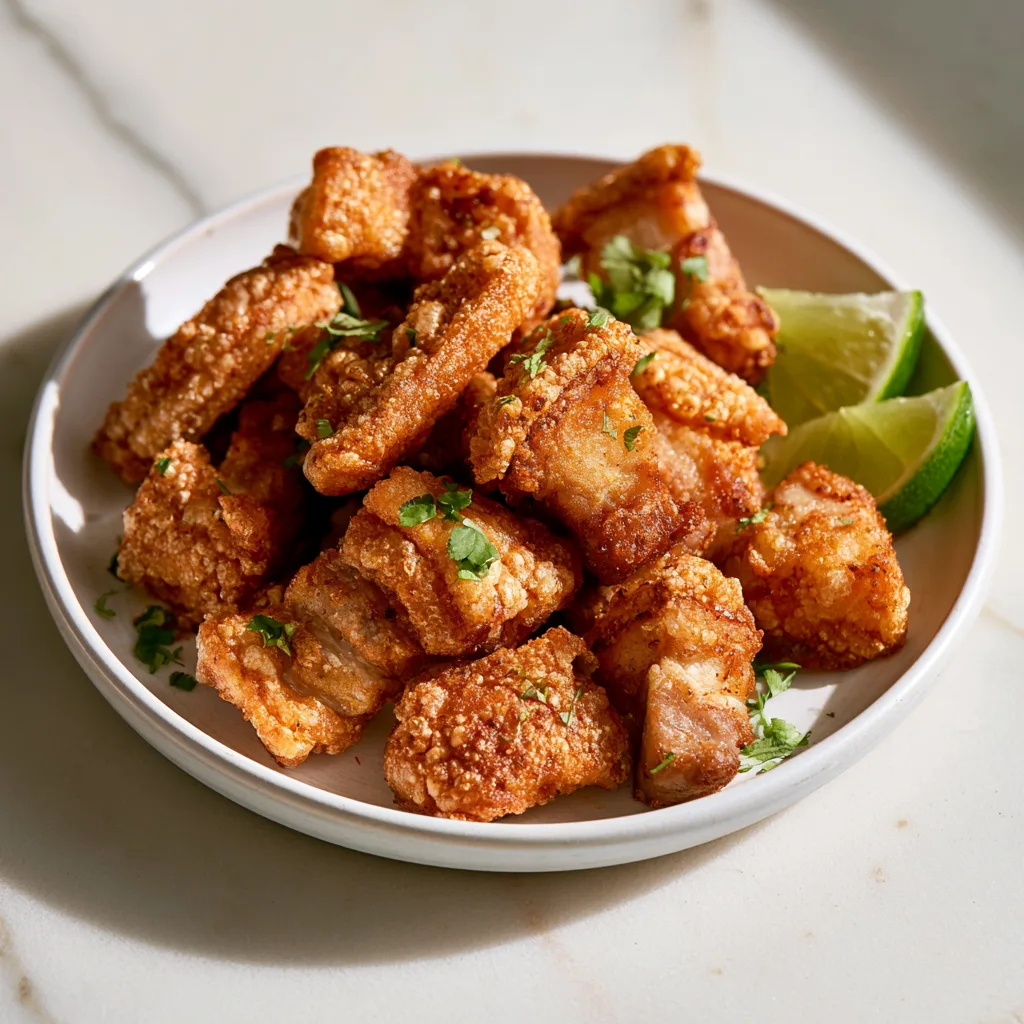
Golden, salty, rich, and unbelievably crisp, Chicharrones are one of those foods that can disappear from the serving plate almost as quickly as they are cooked. This homemade version transforms thick pieces of skin-on pork belly into crunchy, deeply browned bites with crackling skin, rendered fat, and tender pork underneath.
While the word chicharrones can describe slightly different preparations depending on the country or region, the basic idea is wonderfully simple: pork is cooked until its fat renders and the exterior becomes crisp. Some versions focus almost entirely on puffed pork skin, while others include substantial layers of meat and fat. This pork belly chicharrones recipe belongs firmly in the second category.
The method is especially satisfying because the pork essentially fries in the fat it releases during cooking. A small amount of water gets the process started and gives the meat time to cook before serious browning begins. As the water evaporates, the pork belly releases its own fat, and that rendered fat becomes the cooking medium that creates the characteristic golden exterior.
The finished Chicharrones need very little decoration. A pinch of salt and a squeeze of fresh lime can be enough. Serve them as a hearty appetizer, pile them onto a party platter, add them to tacos, or pair them with rice, beans, avocado, salsa, or fresh vegetables for a more substantial meal.
Why You’ll Love These Homemade Chicharrones
Making homemade chicharrones requires some patience, but the ingredient list is remarkably short. Pork belly does most of the work.
The biggest appeal is the contrast in textures. Properly cooked chicharrones have a crisp exterior while retaining enough meat to keep each bite juicy and satisfying. Using skin-on pork belly creates an additional crackling layer that becomes even better after the pork rests for a few minutes.
This recipe is also naturally suited to sharing. A large plate of hot, crispy pork surrounded by lime wedges works beautifully for game-day gatherings, casual parties, family meals, or weekend appetizers.
Another advantage is that no complicated breading or batter is required. There is no flour coating to prepare and no separate bowl of frying oil to heat. The pork slowly renders its own fat before crisping in it.
The seasoning is deliberately simple. Salt provides the essential savory base, while garlic, cumin, and black pepper add depth without overpowering the pork. Fresh lime at serving time cuts through the richness and gives the finished dish a brighter flavor.
What Are Chicharrones?
Chicharrones are fried or crispy pork preparations popular throughout many Spanish-speaking and Latin American cuisines, although the exact meaning varies considerably from one place to another.
In some regions, chicharrón refers primarily to fried pork skin or pork rinds. Elsewhere, especially when served as part of a meal, chicharrones may contain generous portions of pork meat and fat along with the skin.
That variation is part of what makes the dish so interesting. There is no single presentation that represents every regional tradition.
This recipe uses skin-on pork belly, creating substantial pieces with three distinct characteristics: crisp skin, rich rendered fat, and tender pork meat. It is closer to a hearty meat-centered preparation than the lightweight packaged pork rinds often sold as snacks.
Ingredients
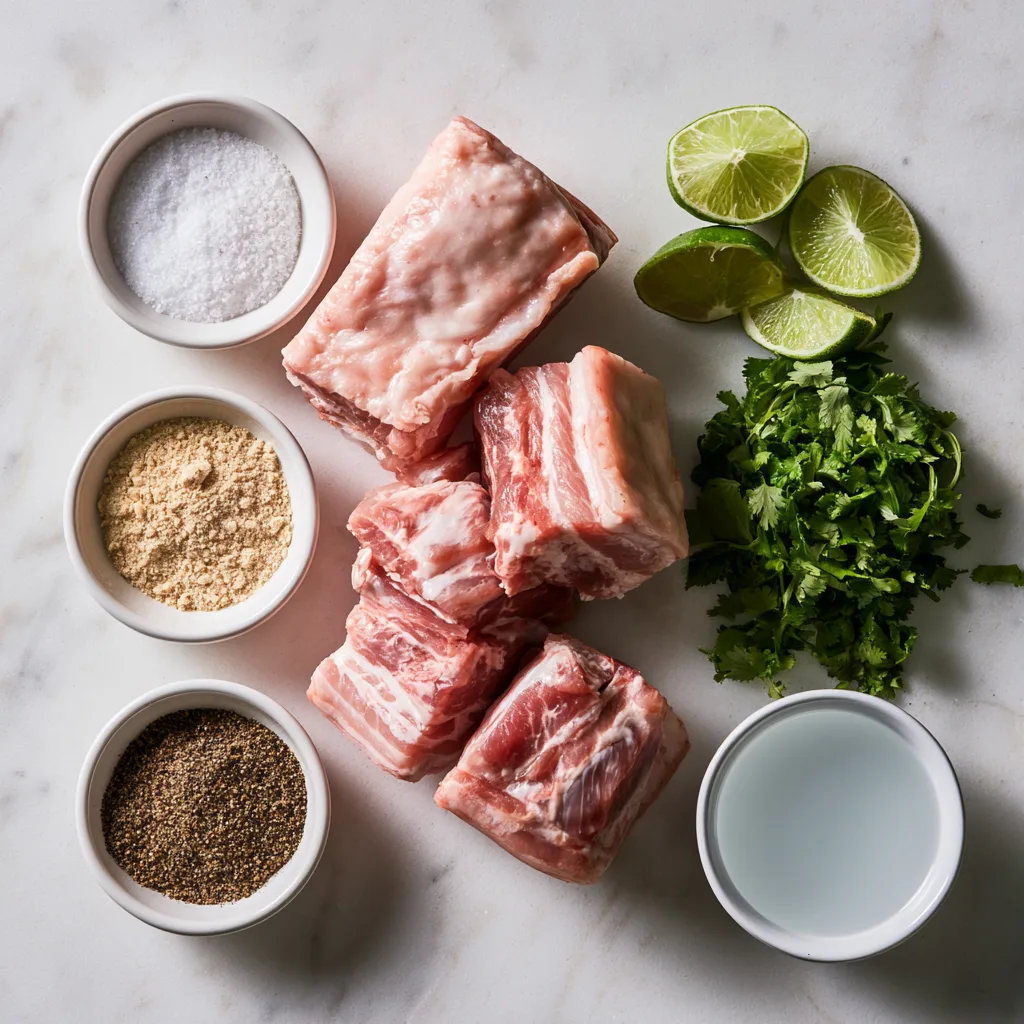
You only need a handful of ingredients to prepare these crispy Chicharrones.
- 2 lb skin-on pork belly, cut into approximately 1 1/2-inch pieces
- 1 tablespoon kosher salt, plus additional salt to taste
- 1 teaspoon garlic powder
- 1/2 teaspoon ground cumin
- 1/2 teaspoon freshly ground black pepper
- 1/2 cup water
- 1 lime, cut into wedges for serving
- 2 tablespoons fresh cilantro, chopped, optional
Choosing the Best Pork Belly
The pork belly is easily the most important ingredient in this Latin American pork recipe, so choosing a good piece makes a noticeable difference.
Look for skin-on pork belly with fairly even layers of meat and fat. A piece containing almost nothing but fat can produce extremely rich chicharrones without much meaty texture, while very lean pork belly may not render enough fat to crisp as efficiently.
Keeping the skin attached is important if you want the distinctive crunchy exterior. The skin will initially seem firm, but after simmering and slowly frying in the rendered pork fat, it develops a dramatically different texture.
Try to cut the pork into pieces of similar size. Uniform pieces cook more predictably and are less likely to leave you with some pieces that are pale while others are already overly browned.
Pieces around 1 1/2 inches work well because they are large enough to remain juicy but small enough to develop plenty of crisp surface area.
Why Start Chicharrones with Water?
Adding water to pork that you eventually want to fry may sound unusual, but it serves an important purpose.
The water creates a gentle cooking environment during the first stage. Rather than immediately exposing the outside of the pork to intense dry heat, it allows the pieces to begin cooking while the fat slowly warms and starts to render.
Eventually, the water evaporates.
Once it is gone, you will notice the sound in the pot change as the pork transitions from simmering to frying. At this stage, the rendered pork fat takes over as the primary cooking medium.
This gradual transition is one of the keys to producing crispy pork belly without aggressively browning the outside before the center has had enough time to cook and soften.
Instructions
1. Prepare the Pork Belly
Pat the skin-on pork belly thoroughly dry with paper towels.
Cut it into approximately 1 1/2-inch chunks. Try to keep the pieces relatively uniform so they finish cooking at roughly the same time.
2. Season the Pork
Place the pork belly pieces in a bowl and season with kosher salt, garlic powder, ground cumin, and black pepper.
Toss until the seasoning is distributed over all sides of the pork.
3. Add the Pork and Water to the Pot
Transfer the seasoned pork to a heavy-bottomed pot or Dutch oven.
Arrange the pieces in a mostly even layer rather than stacking them deeply on top of one another.
Pour in 1/2 cup of water.
4. Simmer Gently
Place the pot over medium heat and bring the water to a gentle simmer.
Cook uncovered for approximately 20 to 25 minutes, stirring and turning the pork occasionally.
During this stage, the pork will begin releasing fat. Continue cooking until most or all of the visible water has evaporated.
5. Render the Pork Fat
Once the water has cooked away, reduce the heat to medium-low.
Continue cooking the pork for another 30 to 40 minutes.
Turn the pieces frequently as more fat renders into the bottom of the pot. The pork will slowly become golden and the skin will begin crisping.
Do not rush this step with very high heat. Slow rendering gives the fat time to melt while the meat remains tender.
6. Crisp the Chicharrones
During the final 5 to 10 minutes, increase the heat slightly if necessary.
Continue turning the pieces so several sides develop deep golden-brown color.
Be cautious during this stage because rendered pork fat can splatter.
Remove individual pieces when they are deeply golden and crisp rather than waiting for every piece to look identical.
7. Drain and Rest
Transfer the cooked Chicharrones to a wire rack set over a tray or to a paper towel-lined plate.
Allow them to rest for approximately 5 minutes.
This brief resting period allows excess fat to drain and gives the exterior time to firm up.
8. Season and Serve
Taste one piece once it has cooled enough to eat.
Add another small pinch of salt if needed.
Serve the Chicharrones hot with fresh lime wedges and chopped cilantro.
Tips for Extra-Crispy Chicharrones
Dry the Pork Thoroughly
Excess moisture and crispness work against one another. Patting the pork belly dry before seasoning helps the skin eventually develop a better texture.
Use a Heavy Pot
A Dutch oven or another sturdy, heavy-bottomed pot distributes heat more evenly and reduces the chance of localized scorching as the pork spends a long time rendering.
Give the Pork Enough Space
Crowding traps steam between the pork pieces and can slow browning. If your pot is small, cooking the recipe in smaller batches may produce better results.
Keep Turning the Pieces
As the amount of rendered fat increases, turn the pork regularly. This encourages even browning and prevents one surface from sitting against the hot pot for too long.
Don’t Rush the Rendering Stage
Increasing the heat dramatically may brown the exterior faster, but it does not necessarily produce better Chicharrones.
Slow rendering allows excess fat to melt from the pork and creates the right conditions for the final crisping stage.
Watch Closely Near the End
The difference between beautifully golden pork and overly dark pork can become quite small during the final minutes.
Once the pork is nearly finished, stay near the stove.
How to Know When Chicharrones Are Done
Visual cues are especially useful.
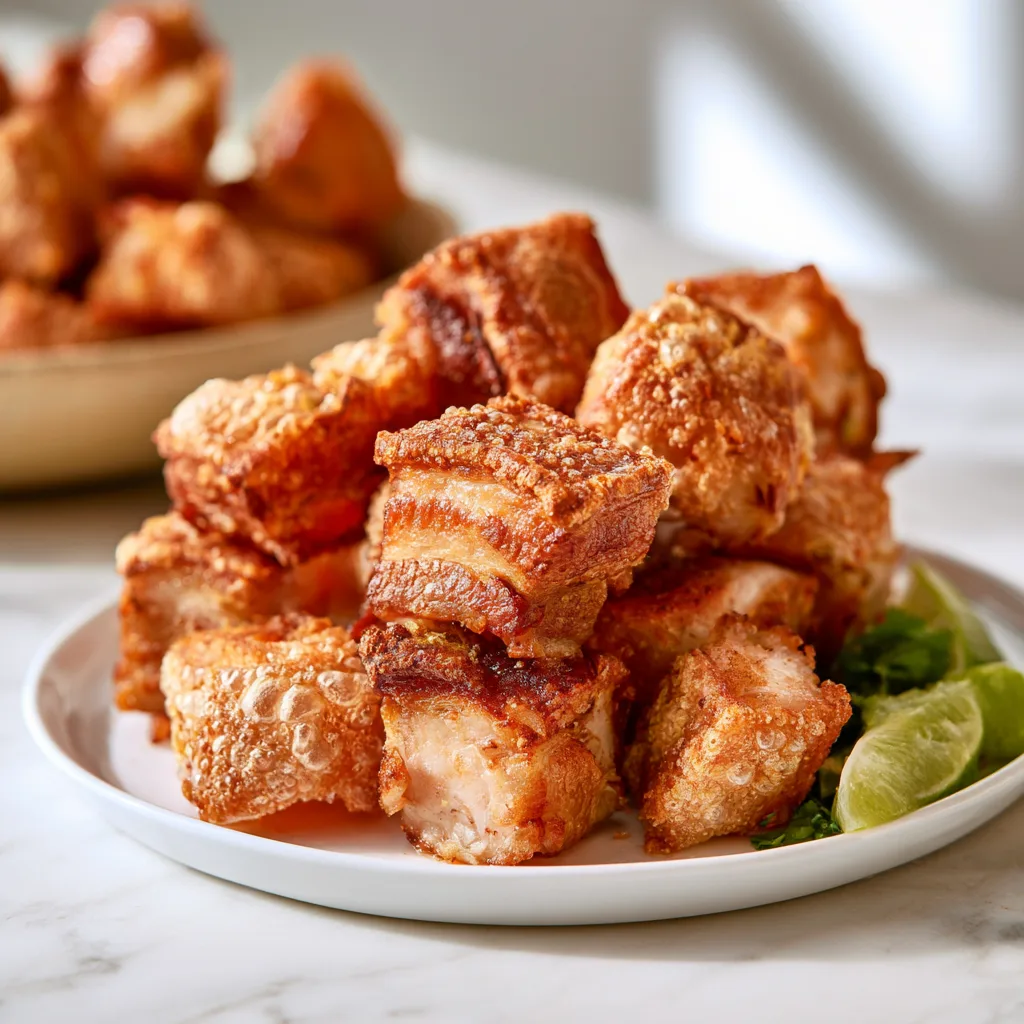
The exterior should be richly golden rather than pale beige. The skin should look noticeably crisp and may develop bubbles or blistered areas. The pieces will also shrink as a significant amount of fat renders away.
The sound in the pot changes throughout cooking as well. At the beginning, the pork simmers gently in water. Later, the sound becomes sharper as the meat begins frying in rendered fat.
If the pork still looks soft and pale, it probably needs additional time.
Keep in mind that pieces containing different proportions of meat and fat may finish at slightly different speeds.
Easy Chicharrones Variations
The basic technique is versatile enough to support several seasoning combinations.
Garlic-Lime Chicharrones
Increase the garlic powder slightly and finish the hot pork with plenty of lime juice. The acidity works especially well against the richness of pork belly.
Spicy Chicharrones
Add a small amount of cayenne pepper, chipotle powder, or another favorite dried chili to the seasoning mixture.
A spicy salsa served alongside the pork is another option if you want to keep the main batch mild.
Smoky Chicharrones
Add approximately 1/2 teaspoon smoked paprika to the seasoning mixture. It adds smoky depth without changing the cooking technique.
Simple Salted Chicharrones
For an extremely traditional, pork-forward flavor, omit the garlic, cumin, and pepper and season the meat primarily with salt.
This allows the flavor of the pork and crisp skin to dominate.
What to Serve with Chicharrones
Chicharrones are rich, so fresh, acidic, spicy, or vegetable-based accompaniments provide excellent contrast.
Fresh lime wedges are nearly essential. A squeeze of citrus immediately brightens the fatty pork.
Salsa is another natural pairing. Tomato salsa, salsa verde, pico de gallo, or a hotter chile-based salsa can all work well.
For a fuller meal, serve the pork with:
- Warm corn tortillas
- Mexican-style rice
- Black beans or pinto beans
- Avocado or guacamole
- Pickled onions
- Fresh tomato salsa
- Cabbage slaw
- Grilled vegetables
- Fresh cilantro
- Lime wedges
You can also use pork belly chicharrones as a taco filling. Chop larger pieces into slightly smaller bites and place them inside warm tortillas with salsa, onions, cilantro, and lime.
Chicharrones for Parties and Game Day
Because Chicharrones are easy to pick up and eat in small portions, they make excellent party food.
Serve them on a large platter with several lime wedges and small bowls of different sauces. A mild salsa, spicy salsa, and creamy avocado sauce provide enough variety for guests to customize each bite.
For parties, avoid covering freshly cooked Chicharrones tightly with foil. Trapped steam will soften the exterior.
If they need to sit briefly before serving, keep them uncovered on a rack so air can circulate around them.
How to Store Leftover Chicharrones
Chicharrones are at their best shortly after cooking, when the skin and exterior are at maximum crispness.
If you have leftovers, allow them to cool and place them in an airtight container in the refrigerator. Use refrigerated leftovers within about three to four days.
The refrigerator will soften the crispy exterior, but that can be corrected during reheating.
How to Reheat Chicharrones
An oven or air fryer is a better choice than the microwave if maintaining crispness is important.
For the oven, arrange the pork on a baking sheet and reheat at approximately 375°F until hot and crisp.
An air fryer can also work particularly well because the circulating heat helps restore the exterior.
Microwaving is fast, but it tends to soften the skin and may create a chewier texture.
Only reheat the amount you plan to serve.
Can Chicharrones Be Made Ahead?
The pork can be cut and seasoned several hours ahead and kept refrigerated until cooking time.
For the best final texture, however, the actual rendering and frying process should happen reasonably close to serving.
If you need to cook the Chicharrones earlier, reheat them in the oven or air fryer shortly before serving.
Frequently Asked Questions
Are chicharrones the same as pork rinds?
Not always.
In some contexts, chicharrones are indeed fried pork skin very similar to what English speakers commonly call pork rinds. However, the name is also used for preparations containing substantial amounts of meat and fat.
These homemade Chicharrones use skin-on pork belly, so they are much meatier than packaged pork rinds.
Why aren’t my Chicharrones crispy?
Too much moisture, overcrowding, insufficient rendering, or removing the pork too early can all contribute to a softer exterior.
Allow the initial water to evaporate fully and give the pork enough time to render before expecting substantial crispness.
Do I need additional oil?
Usually not.
Skin-on pork belly contains plenty of fat, and a significant amount will render into the pot as it cooks. That rendered fat eventually becomes the frying medium.
Can I use skinless pork belly?
You can cook skinless pork belly using a similar rendering method, and it can still become nicely browned and crisp around the edges.
However, it will not develop the same crackling skin that gives traditional pork-belly Chicharrones much of their distinctive texture.
Why does the pork shrink so much?
Pork belly contains a significant amount of fat.
During cooking, some of that fat melts and collects in the pot. Moisture also leaves the meat. Both processes reduce the size of the finished pieces.
Can I save the rendered pork fat?
Yes, provided it has not burned.
Carefully strain the cooled rendered fat to remove browned solids, then refrigerate it in a clean covered container. Rendered pork fat can add savory flavor when cooking potatoes, beans, vegetables, or other dishes.
The Secret to Great Pork Belly Chicharrones
The ingredient list may be short, but the cooking process rewards patience.
The best Chicharrones are not created by immediately blasting raw pork belly over the highest possible heat. They develop gradually.
First, the water gently cooks the pork. Then the pork releases fat. The rendered fat slowly fries the pieces. Finally, a modest increase in heat creates the deep golden finish and crisp exterior.
Understanding those stages makes the recipe much easier to control.
The result is worth the extra attention: crispy skin, browned edges, rich pork, and enough crunch to make every piece feel like a special treat.
Served simply with salt and fresh lime or built into tacos and larger meals, homemade Chicharrones prove that a few basic ingredients can produce extraordinary texture and flavor.
For parties, weekend cooking, game-day spreads, or whenever a plate of deeply crispy pork sounds irresistible, this is a recipe worth keeping close.
Chicharrones
Ingredients
Equipment
Method
- Pat the pork belly completely dry with paper towels. Cut into roughly 1 1/2-inch pieces, keeping the skin attached.
- Season the pork with salt, garlic powder, cumin, and black pepper, tossing until evenly coated.
- Place the seasoned pork belly in a heavy-bottomed pot or Dutch oven and add the water. Arrange the pieces in a mostly even layer.
- Bring to a gentle simmer over medium heat. Cook uncovered for 20–25 minutes, stirring occasionally, until the water has mostly evaporated and the pork begins releasing its own fat.
- Reduce the heat to medium-low and continue cooking for 30–40 minutes, turning the pieces frequently as the fat renders. The pork should gradually become golden and crisp.
- During the final 5–10 minutes, increase the heat slightly if needed to deepen the color and crisp the skin, watching carefully to prevent burning and protecting against hot fat splatters.
- Transfer the chicharrones with tongs or a slotted spoon to a wire rack or paper towel-lined tray. Let rest for 5 minutes so excess fat drains and the exterior firms up.
- Taste and season with an extra pinch of salt if needed. Serve hot with lime wedges and chopped cilantro, if desired.